Many people habitually put leftover rice directly into the refrigerator's fresh food compartment, but experts warn this practice poses food safety risks. Doctor Yen Tsung Hai, director of the Clinical Toxicology Center at Chang Gung Hospital (Taiwan), states that bacillus cereus bacteria have caused numerous large-scale food poisoning incidents in schools. Most of these cases involved improper storage of starchy foods like rice and pre-packaged meals. The key factor is not whether to choose the refrigerator or freezer, but when the rice is placed in cold storage.
Addressing concerns about storing white rice in the fresh food compartment, many rice industry experts suggest that the optimal way to handle leftover rice is to place it in an airtight container and store it in the freezer. They explain that the fresh food compartment's temperature is often not cold enough for perfect rice preservation, making the grains susceptible to absorbing food odors and losing surface moisture, resulting in a dry, hard, and less palatable texture. The ideal approach is to divide the rice into specialized containers and transfer it to the freezer while it is still fresh.
A microwave oven is the best method to restore frozen rice to its freshly cooked texture. When using this method, the rice does not need to be thawed beforehand; simply spray a little water on its surface and microwave it at 500W for about 3 minutes 30 seconds. Alternatively, reheating rice in a rice cooker for about 15 to 20 minutes is also a suitable option.
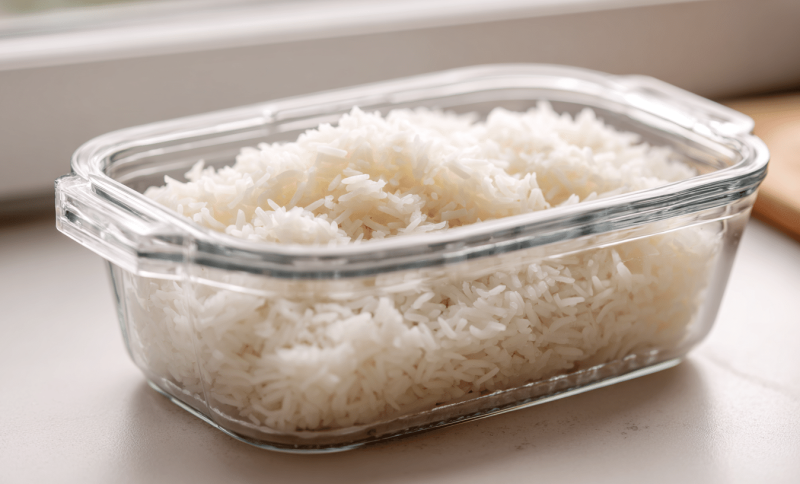 |
Photo: Suzie The Foodie.
According to Doctor Yen, simply placing food in the freezer does not guarantee absolute safety. The key lies in storage methods, meaning cooked food should be refrigerated as soon as possible. If white rice is left at room temperature for several hours before storage, bacillus cereus bacteria may have already multiplied and released toxins. In such cases, even if the rice is steamed, reheated, or fried the next day, high temperatures cannot destroy these harmful toxins.
Food poisoning caused by bacillus cereus bacteria is primarily divided into two forms. Based on health education materials from Taiwan's Food and Drug Administration, this type of poisoning includes emetic and diarrheal forms. The emetic form is mainly associated with starchy foods and dishes made from rice.
Patients typically experience symptoms such as nausea, vomiting, abdominal pain, and other discomforts. The incubation period is short, with symptoms usually appearing within 30 minutes to 6 hours. In Taiwan, most past large-scale food poisoning incidents related to school meals stemmed from improper rice storage, leading to bacillus cereus contamination.
The diarrheal form of poisoning often originates from a more diverse range of food sources. The doctor notes that, unlike the emetic form, bacillus cereus poisoning leading to diarrhea has a relatively longer incubation period. Foods that can easily trigger diarrheal symptoms are varied, including sausages, sauces, broths, jams, salads, and puddings.
Doctor Yen emphasizes that some toxins released by bacillus cereus bacteria are extremely heat-resistant, which is the origin of "fried rice syndrome". The emetic toxin is so persistent that once rice is contaminated, even if it is reheated or fried at high temperatures, the toxin remains active and is not destroyed.
He further explains that the temperature in the fresh food compartment of a refrigerator is usually maintained at 4 degrees C. This temperature only inhibits microbial growth; it does not kill bacteria. If rice is already contaminated with the emetic toxin from bacillus cereus bacteria, this toxin becomes extremely "stubborn" and cannot be eliminated by conventional reheating methods.
According to Doctor Yen, there is a concept in medicine called the "danger zone", specifically from 7 degrees C to 60 degrees C. Most microorganisms, including staphylococcus aureus, E. coli bacteria, bacillus cereus, and salmonella, can easily multiply rapidly within this temperature range.
Average indoor temperatures typically hover around 20 degrees C, falling entirely within the aforementioned danger zone. Therefore, it is ideal to refrigerate rice within one hour in summer and two hours in winter. Maintaining a refrigerator temperature of about 4 degrees C helps food avoid the danger zone, significantly reducing the risk of bacillus cereus contamination.
By Binh Minh (According to HK01)