Doctor Dam Thi Thuy Hong, Head of the Aesthetics Department at Tam Anh General Hospital in Hanoi, diagnosed the patient with Topical Steroid Withdrawal (TSW) syndrome. This condition involves a severe inflammatory flare-up after prolonged use of topical corticosteroids, especially on facial skin.
Hoa had used a cream advertised to "treat allergic dermatitis", and her skin quickly improved, becoming bright and smooth. However, when her skin became thinner, revealing underlying capillaries and becoming more sensitive, she stopped the cream. Subsequently, her face developed persistent redness, a burning sensation, and stinging. When she entered an air-conditioned room, her skin felt dry, tight, and flaky around her mouth.
 |
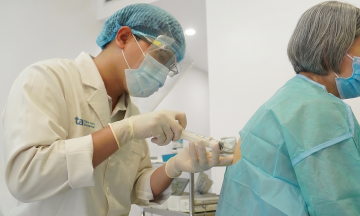
Doctor Hong is consulting a patient on treatment methods. Photo: Tam Anh General Hospital |
Doctor Hong explained that corticosteroids are potent anti-inflammatory medications, commonly prescribed for skin conditions such as atopic dermatitis, eczema, allergies, and psoriasis. However, the choice of corticosteroid type, concentration, formulation, and duration of use must depend on the severity of the condition and the location of the lesions for each individual.
When the medication is stopped abruptly, blood vessels dilate to compensate, causing a rebound inflammatory reaction. Meanwhile, the epidermis thins, and the skin's protective lipid structure breaks down after prolonged exposure to corticosteroids. This weakened barrier impairs the skin's ability to self-regulate against sun, heat, wind, and cosmetics. As a result, the face becomes red, hot, and dry, with flaking that can last for months or even years.
TSW syndrome presents with typical symptoms, including sensitivity to sunlight and temperature changes, and is easily misdiagnosed as allergic dermatitis. If a detailed history of topical corticosteroid use is not thoroughly investigated, patients may continue to be prescribed a milder corticosteroid, prolonging the cycle of dependence and making it difficult to control, according to Doctor Hong.
Hoa completely discontinued corticosteroids, simplified her skincare routine, and focused on restoring her skin barrier with specialized moisturizers, sun protection, heat avoidance, and strict adherence to treatment. After her skin barrier stabilized for a period, the doctor prescribed vascular laser treatment to address the visible capillaries and reduce redness.
After nearly 6 months of treatment and minimalist skincare, Hoa's skin redness decreased, the burning sensation subsided, and the dilated capillaries disappeared.
Doctor Hong noted that corticosteroids play a crucial role in treating many dermatological conditions. However, they must be prescribed by a doctor and used correctly in terms of type, location, dosage, and duration, while being closely monitored. Patients should not self-medicate with corticosteroid-containing products, as they are a double-edged sword.
If facial skin exhibits persistent redness and burning after discontinuing topical creams, patients should seek early consultation with a dermatologist or aesthetic specialist. Depending on the extent of the damage, skin may require 6-24 months to recover.
Thanh Ba