"The current outbreak in Africa shows several unusual signs, including clusters of community deaths, a rapid increase in suspected cases across a wide area, a high positive test rate, and cross-border transmission," said Doctor Hoang Minh Duc, Director of the Department of Preventive Medicine, Ministry of Health, at an online meeting on Ebola virus disease surveillance and prevention on 22/5.
Although the World Health Organization (WHO) currently assesses the global transmission risk as low, the Ministry of Health believes Vietnam still needs to strengthen surveillance. This is due to the possibility of the virus entering the country via passengers arriving from affected areas.
To date, Vietnam has not recorded any Ebola cases.
Ebola is a highly dangerous Group A infectious disease, capable of rapid spread with a mortality rate that can reach 90%. Ebola transmits from wild animals to humans, then spreads through direct contact with blood, body fluids, or contaminated objects. Initial symptoms include fever, headache, muscle pain, and fatigue, which can progress to severe hemorrhage and multiple organ failure.
Currently, only vaccines and specific treatments exist for the classic Ebola strain, while there are no specific treatment measures for the Bundibugyo strain causing the current outbreak.
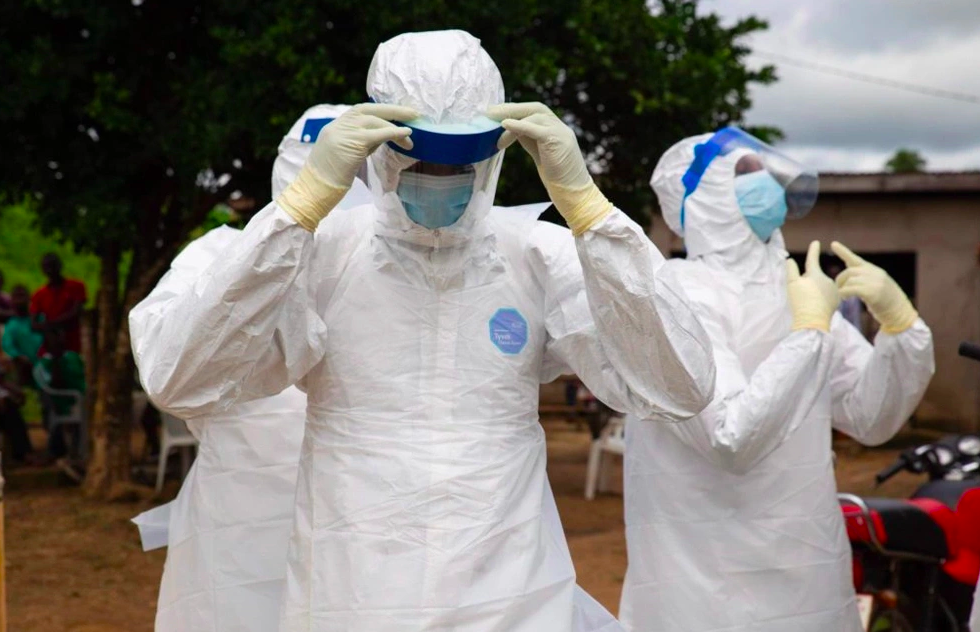 |
Health workers respond to an Ebola outbreak in Congo. Photo: Africa CDC
The Ministry of Health has instructed localities to intensify surveillance to detect early imported Ebola cases, especially at border gates, international airports, and medical examination and treatment facilities. Localities must maintain rapid response teams, ready to act immediately upon the appearance of suspected or imported cases. Individuals returning from Ebola-affected regions need to self-monitor their health for 21 days.
The Ministry of Health also requested localities to develop response scenarios for each risk level, from detecting a suspected case to a widespread epidemic. Simultaneously, the health sector is strengthening testing capacity, surveillance, and diagnosis of the Ebola virus at leading institutes and central hospitals to ensure early detection, forecasting, and epidemic response.
Currently, the National Institute of Hygiene and Epidemiology and the Pasteur Institute in TP HCM have sufficient personnel, equipment, and biosafety level III laboratories to perform Realtime PCR testing and gene sequencing for the Ebola virus. These two units have also ordered specific diagnostic biological products following WHO guidelines, which are expected to arrive in Vietnam within the next 7-10 days to prepare for potential outbreaks.
According to WHO, the current Ebola epidemic involves the Bundibugyo virus strain. Since early May, Ituri province in Congo has recorded hundreds of suspected cases. As of 18/5, the country reported 516 suspected Ebola cases, with 131 deaths. This marks the 17th Ebola outbreak in Congo since 1976.
WHO confirmed 4 health workers died from Ebola in this outbreak, raising concerns about transmission within healthcare facilities and gaps in infection control.
In Uganda, health officials recorded two cases, including one death, both individuals having traveled from Congo.
WHO declared this an international public health emergency of concern on 17/5.
Ebola disease has six strains, with the three most common being the Ebola virus strain, the Sudan virus strain, and the Bundibugyo virus strain. The Bundibugyo strain caused this outbreak in Congo and Uganda. Countries outside Africa, including the United States, Spain, the United Kingdom, and Italy, have reported imported cases. Most were health workers assisting in epidemic control or citizens returning from affected areas.
Le Nga