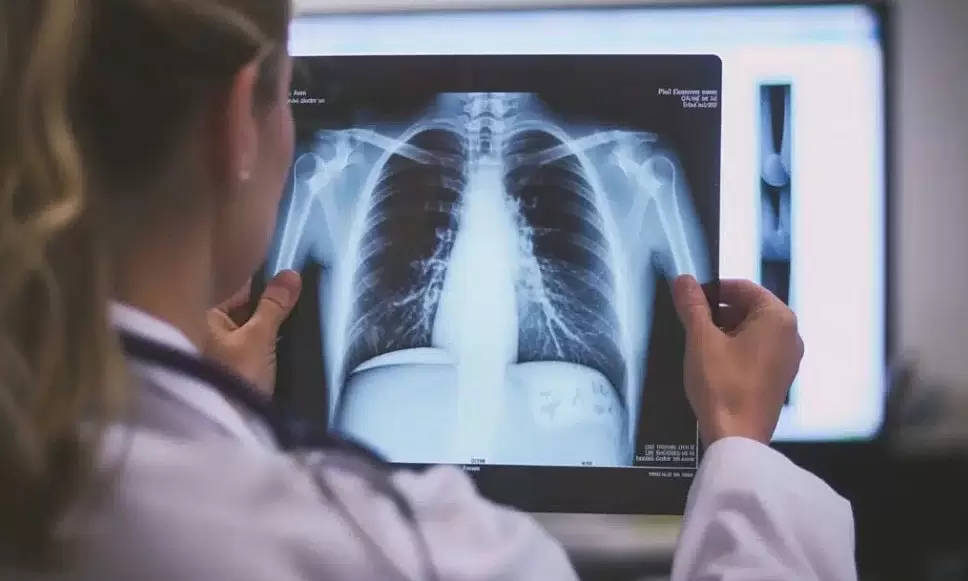
An electrocardiogram at Tam Anh General Hospital Ho Chi Minh City confirmed Phat experienced short episodes of ventricular tachycardia. Professor Doctor Vo Thanh Nhan, Director of the Interventional Cardiology Center, diagnosed him with ventricular tachycardia.
This type of arrhythmia causes the heart to beat abnormally fast, carrying a risk of sudden death. In healthy individuals, the resting heart rate is 60-100 beats per minute. Patients experiencing ventricular tachycardia have a heart rate of 150-220 beats per minute. An echocardiogram recorded three consecutive ventricular beats at a frequency of 120 beats per minute or higher.
To determine the cause of the supraventricular tachycardia, doctors diagnosed Phat with non-obstructive hypertrophic cardiomyopathy. This is a genetic condition caused by a gene mutation encoding proteins of the cardiac sarcomere structure, leading to thickened and stiff ventricles. This reduces the left ventricle's ability to fill and pump blood, causing arrhythmias such as atrial fibrillation, ventricular tachycardia, and potentially fainting or sudden death.
Phat has twin daughters; one died suddenly from an unknown cause at the age of 16. After Phat's hypertrophic cardiomyopathy diagnosis, doctors recommended screening for his remaining daughter, who is currently 19 years old. An echocardiogram, electrocardiogram, and gene test subsequently confirmed that his daughter also has this condition.
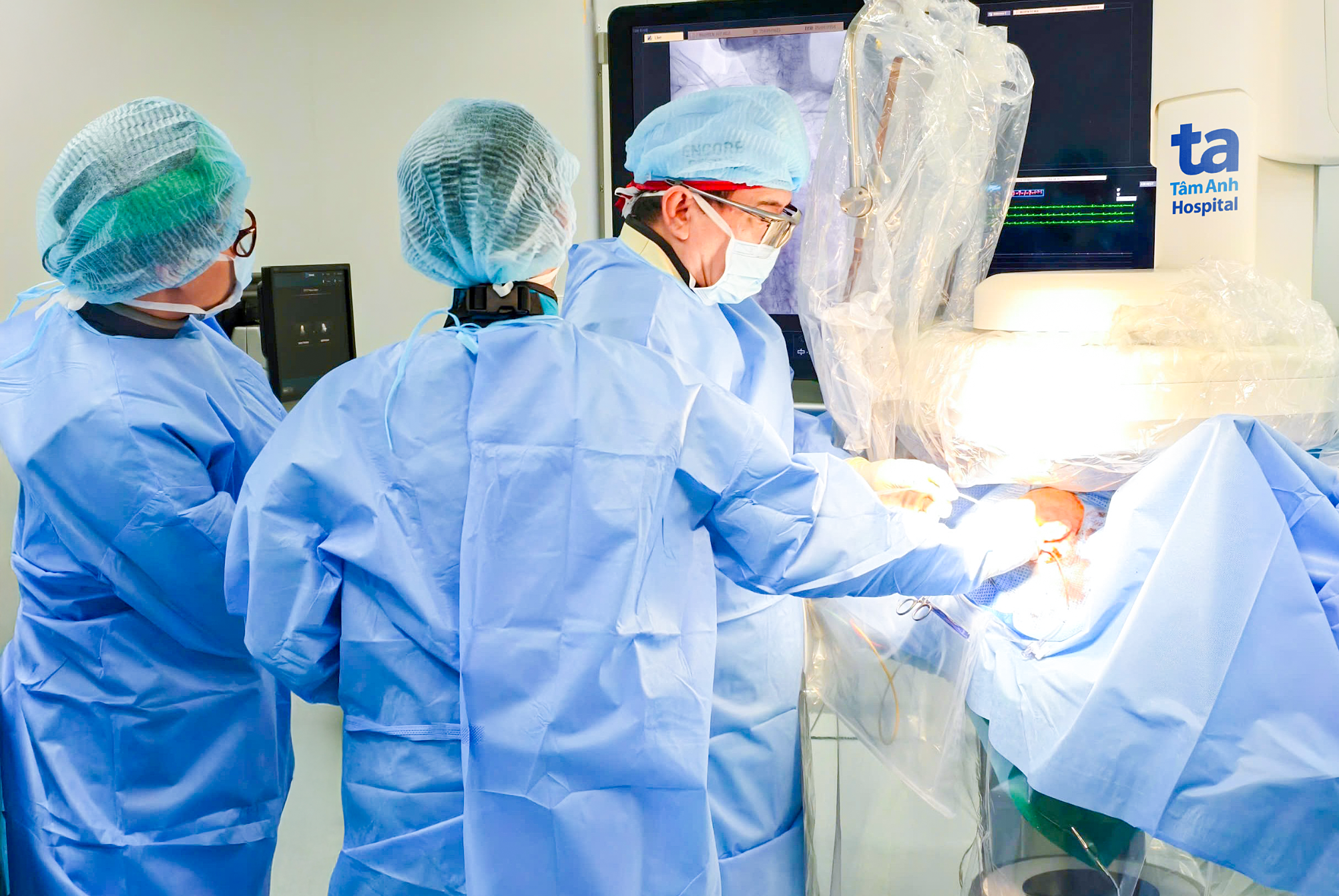 |
The intervention team implanted a defibrillator to prevent sudden death for the patient. *Photo: Tam Anh General Hospital* |
Professor Nhan noted that Phat's fainting and loss of consciousness indicated the disease was progressing uncontrollably, posing a constant risk of sudden death. The patient required an implantable cardioverter-defibrillator (ICD) to stabilize his heart rhythm. The device features a microprocessor to monitor heart rate. Upon detecting an arrhythmia, the ICD transmits electrical impulses through leads to the heart to synchronize the heart rhythm.
Following a 45-minute procedure, Phat's heart rate stabilized at 65-70 beats per minute, and he was discharged the following day. Phat's daughter is also expected to receive an ICD to prevent sudden death.
 |
Doctors checked the patient's health before discharge. *Photo: Tam Anh General Hospital* |
Doctor Nguyen Van Duong, Interventional Cardiology Center, Tam Anh General Hospital Ho Chi Minh City, stated that there are no effective preventive measures for hypertrophic cardiomyopathy. Patients diagnosed early can receive appropriate treatment to prevent complications. If a family member has the condition, other family members should undergo regular health check-ups.
Symptoms of hypertrophic cardiomyopathy are vague and easily confused with other conditions. Many young people experience chest pain, dizziness, lightheadedness, and transient fainting, mistakenly attributing them to pressure, stress, or intense physical activity. Without early diagnosis and intervention, the disease can worsen, leading to fainting or even sudden death. Therefore, everyone should have regular health check-ups and seek medical attention immediately for symptoms such as shortness of breath or sharp chest pain.
Thu Ha
*Patient's name has been changed
| Readers can send questions about cardiovascular health here for doctors to answer |