


Disc herniation occurs when the inner gel-like core of a spinal disc protrudes, compressing nerve roots or the spinal cord. Typically, patients are treated with medication and physical therapy. In severe cases, when conservative treatment is ineffective and significantly impacts the patient's quality of life, doctors may recommend surgery.
Dr. Vu Ngoc Bao Quynh, from the Department of Spine Surgery at Tam Anh General Hospital, Ho Chi Minh City, states that surgical methods for disc herniation include open surgery, endoscopic surgery to remove the herniated disc, and chemonucleolysis using chymopapain enzyme. Like any surgical procedure, disc herniation surgery carries risks, including post-operative paralysis.
 |
Dr. Quynh assesses the patient's spinal function. Photo: Tam Anh General Hospital
During surgery, doctors operate on the spine, which protects the spinal cord and houses vital nerves that control body movement and sensation. Therefore, even a minor surgical error can damage nerve roots, leading to loss of sensation and reduced mobility, according to Dr. Quynh.
If the spinal cord is damaged, consequences can be severe, such as paralysis or permanent loss of function. Post-operative bleeding or hematoma within the spinal canal, along with swelling of surrounding tissues, can cause blood to accumulate inside the spinal canal. This creates pressure on the spinal cord or nerve roots, potentially causing paralysis if not detected and treated promptly.
In some cases, patients undergo delayed surgery, leading to prolonged disc herniation and nerve root compression, which damages the nerve roots. At this point, even if surgery is successful, the patient may not regain motor function. Therefore, once surgery is indicated, patients should undergo treatment promptly.
Currently, with advancements in technology, medicine, and surgical expertise, the risk of complications during disc herniation surgery has decreased significantly.
Dr. Quynh cited the ultrasonic bone scalpel system as an example. This technology allows surgeons to remove bone structures with high-frequency ultrasound waves, minimizing bleeding and preventing damage to soft tissues, particularly nerve root structures, during the procedure. This reduces blood loss and injury, especially to nerves, thereby preventing the risk of post-operative paralysis.
Surgical procedures also often use intraoperative continuous X-ray imaging systems. These systems ensure precise, real-time identification of bone structures requiring intervention, assisting in accurate screw placement, drilling, or instrument insertion, thus enhancing safety in spinal surgery.
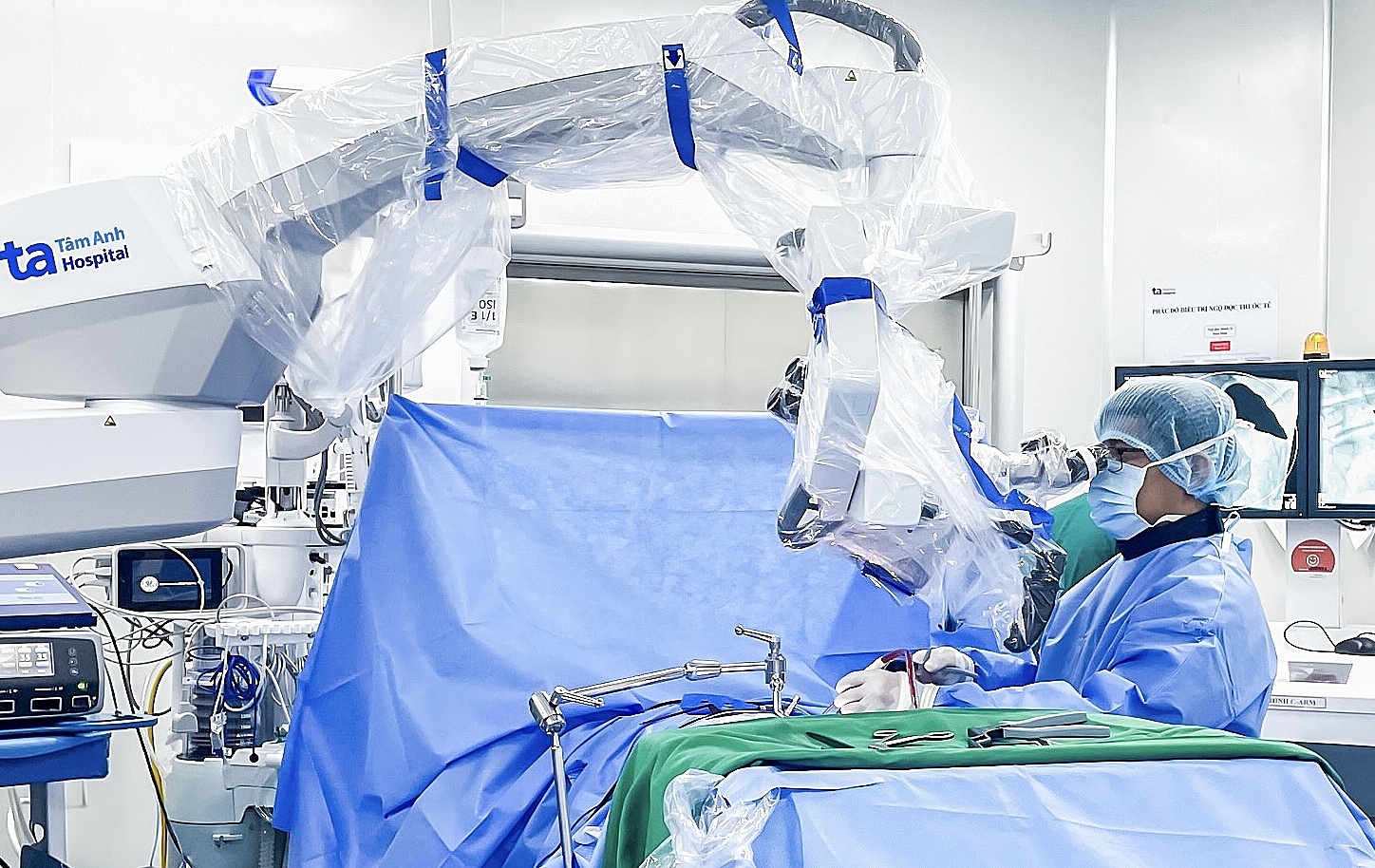 |
Dr. Quynh uses a microsurgical microscope system for clear visualization of small, deep spinal structures. Photo: Tam Anh General Hospital
To minimize the risk of weakness or paralysis complications during disc herniation surgery, Dr. Quynh advises patients to choose reputable medical facilities equipped with modern equipment. Additionally, post-operatively, patients need proper rest, daily activities, and physical therapy, strictly adhering to doctor's instructions.
Phi Hong


