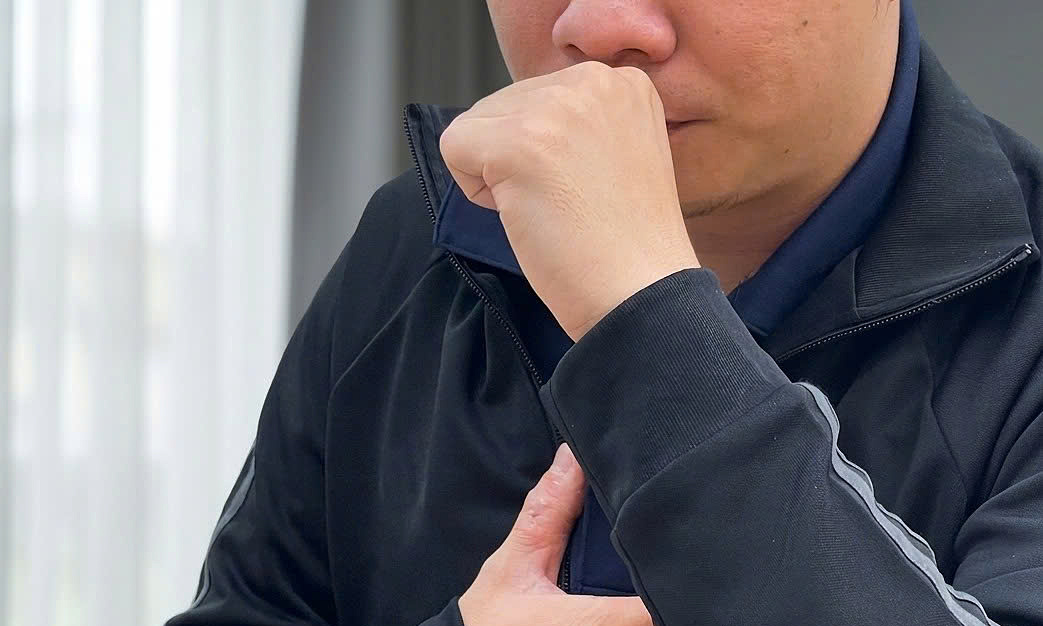
Minh Tam, 45, residing in Bay Hien ward, Ho Chi Minh City, experienced a headache, fatigue, and red spots on his skin on the second day of fever. He sought medical attention and was diagnosed with dengue fever, receiving instructions for home monitoring.
In the initial days, Tam was concerned about the illness, fearing it might worsen after a colleague reportedly died from dengue fever. He diligently followed his doctor's advice, monitored his symptoms, and attended follow-up appointments. His wife and two children also took precautions against mosquitoes while caring for him.
After one week, Tam’s health gradually stabilized. The family thoroughly inspected their living area, cleaned the rainwater storage jars, and introduced fish to control mosquito larvae. Tam and his family also learned about dengue fever vaccines and registered for a suitable vaccination schedule consultation.
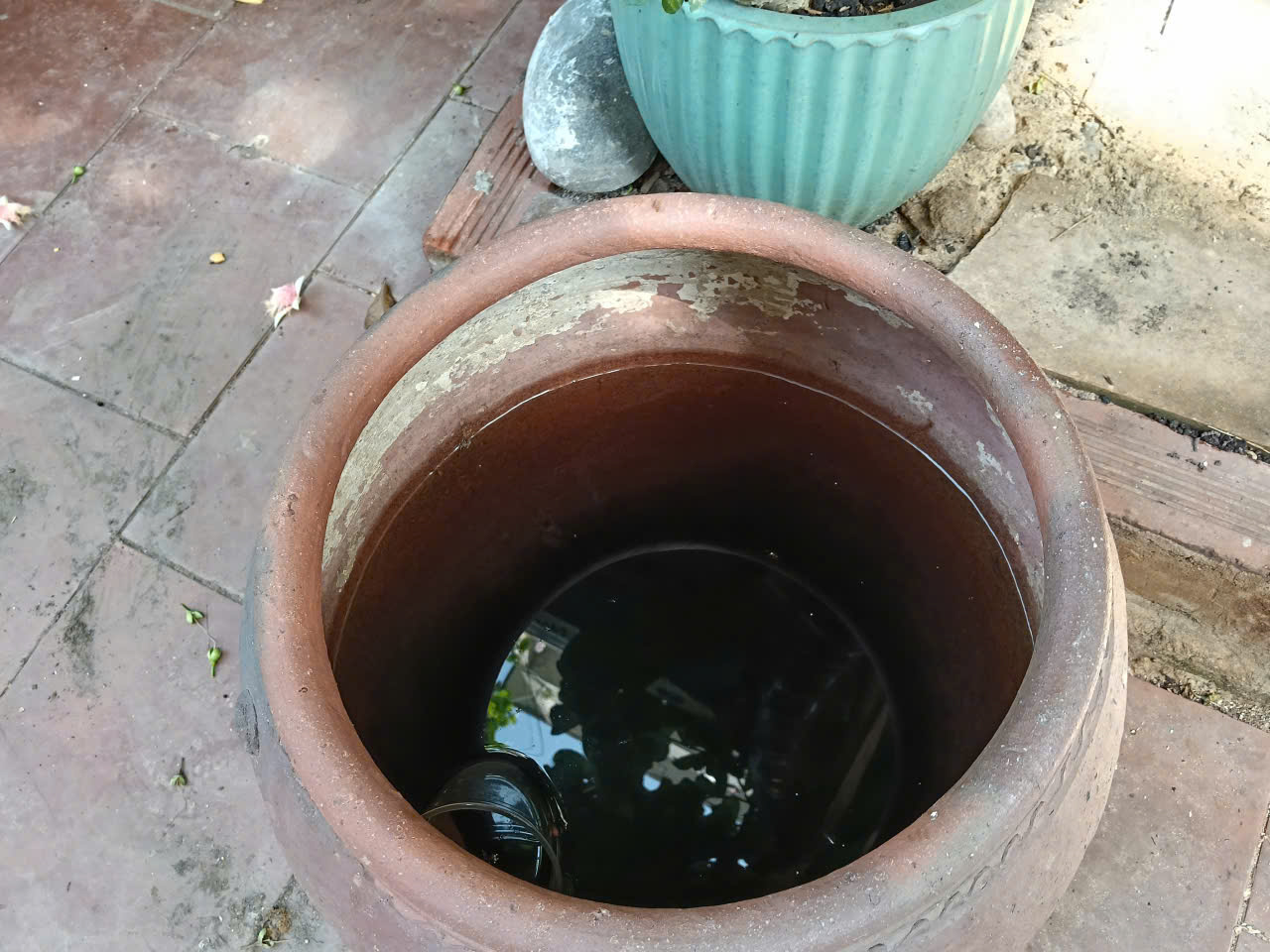 |
Rainwater jars, previously containing many mosquito larvae, were cleaned and now house ornamental fish in front of Tam’s house. Photo: Khanh Hoa
Nguyen Van Thai, 38, a ride-hailing driver in Ho Chi Minh City, also became more vigilant about dengue prevention after a colleague contracted a severe case of the illness.
His job often keeps him outdoors, increasing his risk of mosquito bites. Consequently, he wears long-sleeved clothing when appropriate, uses mosquito repellent products, and clears stagnant water around his home.
Thai also took his family members for vaccination consultations. He believes that collective family action helps integrate preventive measures into daily routines.
Doctor Huynh Tran An Khuong, Medical Specialist at VNVC Vaccination System, stated that dengue fever can affect individuals of various ages. Most patients can be monitored and treated according to guidelines, but close attention is crucial during the initial days.
According to Doctor Khuong, patients should not be complacent once their fever subsides. The critical monitoring period typically falls between days 3-7. Those diagnosed with dengue fever must adhere to their follow-up appointments and healthcare staff instructions.
Dengue fever is caused by the Dengue virus, which has four serotypes: Den-1, Den-2, Den-3, and Den-4. During the rainy season, hot and humid weather, along with stagnant water sources, create ideal conditions for disease-carrying mosquitoes to thrive. Rapid urbanization also contributes to the proliferation of these mosquitoes.
To prevent dengue fever, every family should inspect their homes weekly. Clean water storage containers must be tightly covered and regularly cleaned. Fish can be introduced into ornamental pots to control larvae. Any objects that can collect water should be inverted or discarded. Residents should sleep under mosquito nets, even during the day, wear long clothing, and use mosquito repellent products.
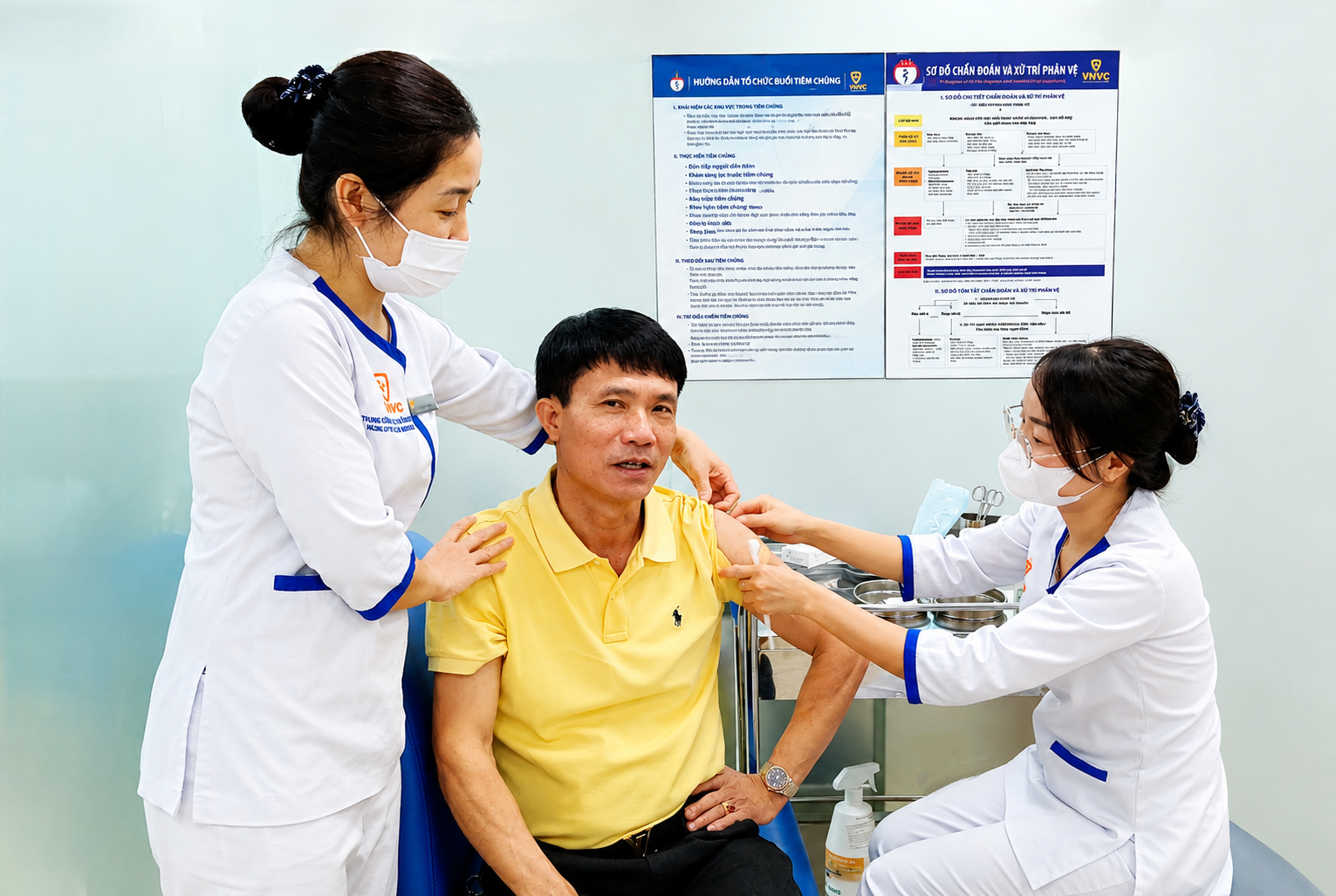 |
A man receives a dengue fever vaccine at the VNVC Vaccination System for disease prevention. Photo: Khanh Hoa
When monitoring at home, patients should seek immediate medical attention if they experience severe abdominal pain, continuous vomiting, unusual bleeding, lethargy, cold extremities, infrequent urination, or difficulty breathing. Patients or their relatives must not self-administer intravenous fluids or use unauthorized medications.
Vaccination is a proactive preventive measure, but it does not replace mosquito control and larval elimination efforts. The dengue fever vaccine is currently approved for individuals from four years of age, administered in two doses three months apart. Individuals with underlying medical conditions, compromised immune systems, or those who are pregnant or planning pregnancy should consult a doctor for appropriate advice.
Khanh Hoa
*Names of individuals have been changed.