Many families clean floors, vacuum, and organize belongings on weekends, often focusing only on visible areas. However, disease-carrying mosquitoes can breed in tiny amounts of water found in overlooked items inside homes, on balconies, or in gardens, as detailed below:
Drip trays located behind or under refrigerators, portable air conditioners, dehumidifiers, and hot and cold water dispensers are often out of sight. Leaking or condensed water that accumulates for several days can create a breeding ground for mosquito larvae. When cleaning, disconnect the appliance's power as per instructions, remove the tray if possible, empty the water, scrub the tray sides clean, and dry it before reassembling. Additionally, check drainage pipes for blockages or leaks.
Flower vases on altars, decorative flower pots, hydroponic plants, and plant pot saucers are easily overlooked spots. Simply replacing the water without scrubbing the vase's sides can leave mosquito eggs clinging above the old water line. Water should be changed, and vase sides and saucers thoroughly scrubbed each week. For potted plants, avoid overwatering to prevent prolonged standing water.
Small cups on altars, ant traps beneath cabinet legs, or decorative items holding water also require inspection. If water must be maintained, implement mosquito larvae control measures as advised by local health authorities. Do not mix chemicals or insecticides into household water.
Buckets, basins, containers, watering cans, plastic boxes, children's toys, and bottles left on balconies can collect rainwater. A tilted cup, a bottle cap, or a sagging plastic bag can also hold enough water. Unused items should be stored under cover or turned upside down. Valueless items must be disposed of properly.
Pet water bowls should not be left for days, simply by adding fresh water. They require regular water changes and scrubbing. Fish tanks, ornamental ponds, or large water storage containers must be covered or managed according to local mosquito prevention recommendations.
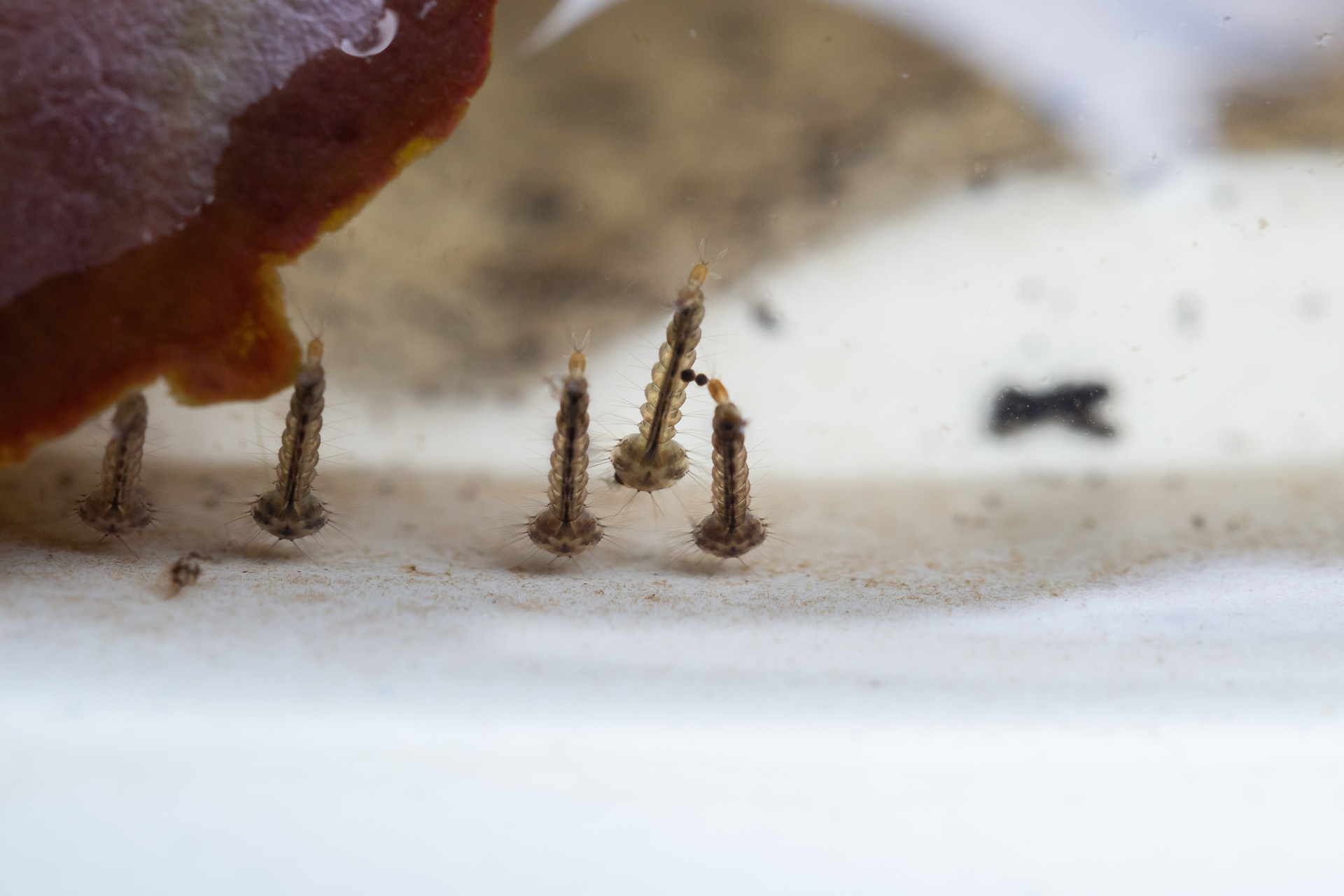 |
Mosquito larvae thrive in stagnant water, later developing into adult mosquitoes. Photo: Vecteezy. |
Mosquito larvae thrive in stagnant water, later developing into adult mosquitoes. Photo: Vecteezy.
Leaves, debris, and mud can clog gutters, causing rainwater to accumulate in sections. Water also often collects in floor drains, gaps in awnings, tarpaulins covering items, outdoor umbrella bases, or old tires. After rain, inspect balconies, rooftops, and gardens. Clear drainage paths, flatten tarpaulins, and remove any standing water.
Tree hollows, leaf axils, and depressions in construction materials can also retain water. If a container cannot be removed, it should be covered or treated according to professional guidance. Larvicide should only be used for water sources that cannot be emptied or covered, and product label instructions must be strictly followed.
Aedes mosquitoes, which transmit dengue fever, typically lay their eggs on the sides of water-holding containers. Eggs can remain even after water has dried up and will hatch when they encounter water again. Therefore, simply emptying the water is insufficient; containers need to be scrubbed, overturned, or tightly covered. The U.S. Centers for Disease Control and Prevention (CDC) recommends inspecting and cleaning items that can hold water at least each week.
Adult mosquitoes may rest in dark, damp corners, behind curtains, under furniture, or inside wardrobes. However, spraying these areas does not replace eliminating standing water, as larvae develop in water. When cleaning, combine removing water sources with installing door screens, closing doors during peak mosquito activity, wearing long clothing, and using mosquito repellent products as directed.
Mosquitoes can bite both day and night. Therefore, sleeping under a net at night is not enough to prevent dengue fever. Families should dedicate about 10 minutes each week to circulate through the kitchen, bathroom, altar room, balcony, and garden, simultaneously identifying standing water and scrubbing containers.
Additionally, people can prevent the disease with a dengue fever vaccine. This vaccine is currently licensed in Vietnam. Those interested should consult a doctor or vaccination center for assessment and appropriate scheduling advice. The vaccine does not replace eliminating larvae, removing water sources, avoiding mosquito bites, and early monitoring for suspected illness symptoms.
By Van Ha