Vietnam faces a significant challenge with cancer cases projected to increase by 60-70% by 2050, according to global cancer burden projections published in The Lancet journal. This alarming forecast highlights an urgent need for enhanced prevention, early detection, and optimized treatment strategies across the nation.
Associate Professor, Doctor Bui Dieu, Chairman of the Vietnam Cancer Society, pointed to several factors driving this increase. Speaking at the Scientific Workshop on Oncology (Oncology Summit), organized by AstraZeneca Vietnam in collaboration with the Cancer Society on 11/4, Dr. Dieu stated, "Factors such as an aging population, rapid urbanization, and lifestyle changes like smoking, overweight and obesity, and physical inactivity are contributing to the rise in cases."
Currently, Vietnam records approximately 180,000 new cancer cases and over 120,000 cancer deaths each year. The incidence and mortality rates stand at 150.8 and 99 per 100,000 population, respectively. These figures underscore a growing disease burden on both the healthcare system and society.
Common cancer types in Vietnam include breast, liver, lung, colorectal, and stomach cancers. A concerning trend is the increasing number of younger patients diagnosed with diseases like breast and colorectal cancer, which presents new challenges for early screening, diagnosis, and treatment. The high cancer mortality rate in Vietnam is largely attributed to diagnoses often occurring at late stages, which limits treatment effectiveness. Furthermore, common cancers among Vietnamese people, such as liver and lung cancer, often carry poor prognoses.
Addressing this escalating burden and the trend of younger patients, Associate Professor Dieu emphasized that adopting medical advancements is crucial. He stated that it is no longer an option but an urgent requirement to improve treatment effectiveness. "Promoting precision medicine, with a focus on individualized treatment regimens, opens a new era of healthcare based on evidence and each patient's unique characteristics", Associate Professor Dieu explained. The cornerstone of this new era involves implementing advanced diagnostic techniques. For example: liquid biopsy in molecular biology testing, coupled with digital data infrastructure and artificial intelligence applications for diagnosis and monitoring.
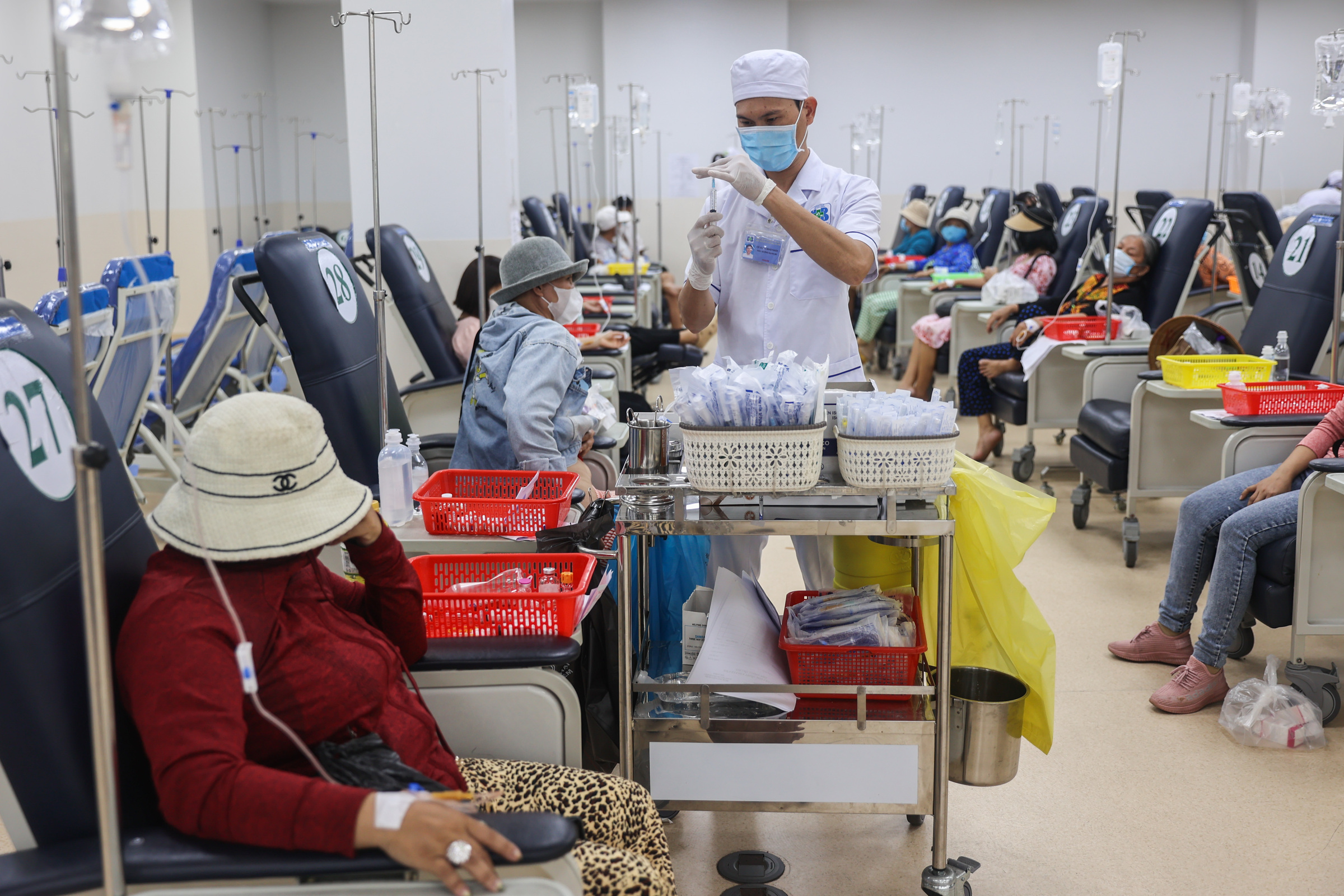 |
Cancer patients undergoing chemotherapy at Ho Chi Minh City Oncology Hospital, campus 2, Thu Duc City. Photo: Quynh Tran |
International experts at the summit reinforced the importance of digital transformation in cancer care. Doctor Jomtana Siripaibun, Director of the Oncology Center, Chulabhorn Hospital (Thailand), highlighted that promoting digital multidisciplinary team (MDT) consultations and liquid biopsy provides a foundation for individualized cancer treatment through precision medicine. International studies indicate that cancer patients can improve their survival time by over 15 months when MDT is incorporated into diagnosis and treatment, compared to cases where it is not applied.
Despite the benefits, the routine operation of MDT faces challenges, primarily due to a lack of digital infrastructure that leads to fragmented data. Experts shared that the solution involves deploying digital MDT platforms that connect directly with electronic medical records, enabling real-time monitoring of treatment outcomes. Dr. Siripaibun affirmed that MDT is a vital strategy in cancer treatment, and digital transformation is essential for its sustainable operation. "When we implement a digital MDT platform connecting clinical data, we observe a more efficient case preparation process and more complete, consistent treatment records", she stated. She advised starting with a priority disease group and a standard, fully monitored consultation process to gradually build system capacity for modern cancer care.
Further underscoring technological advancements, Doctor Chien-Feng Li, Head of Clinical Pathology and Laboratory Department at Chi Mei Medical Center and Professor at the School of Medicine, Sun Yat-sen National University, Taiwan, noted the transformative impact of liquid biopsy and artificial intelligence (AI) on cancer diagnosis and treatment. This approach facilitates the selection of more appropriate treatments for individual patients, optimizing the effectiveness of care.
Le Nga