Specialist Doctor Level II Than Thi Minh Trung from the Neurology Department, Neuroscience Center, Tam Anh General Hospital, Ho Chi Minh City, guided Ms. Nhung through a cognitive assessment, which revealed mild cognitive impairment.
Brain MRI scans of Ms. Nhung showed mild atrophy in the hippocampus and medial temporal lobe structures, regions crucial for forming and retaining memories. When this area is damaged, patients struggle to remember newly acquired information and easily forget recent events, while remote memories may remain relatively intact.
The patient underwent further cerebrospinal fluid (CSF) tests to identify Alzheimer's disease-related biomarkers. Results indicated reduced beta-amyloid 42 levels and increased total tau and phosphorylated tau, common changes in individuals with Alzheimer's disease.
Doctors diagnosed Ms. Nhung with early-stage Alzheimer's disease, a point where self-care abilities and independent living are largely maintained.
 |
Doctor Minh Trung guides Ms. Nhung through cognitive questions. *Photo: Tam Anh General Hospital*
Alzheimer's is a progressive neurodegenerative disease linked to abnormal changes in brain proteins, notably the accumulation of beta-amyloid and tau proteins. This process can disrupt neuronal connections, cause damage, and lead to a gradual loss of brain cells, resulting in memory decline and affecting other cognitive functions.
Following a consultation, doctors developed a long-term individualized treatment plan, combining medication appropriate for the disease stage. They also reviewed Ms. Nhung's current medications to limit any that could worsen confusion or cognitive impairment.
Doctors integrated transcranial magnetic stimulation with cognitive rehabilitation exercises, memory, attention, and language training, tailored to the level of impairment. The family received guidance on maintaining a stable schedule and using calendars, notebooks, or visual cues to help the patient remember daily tasks.
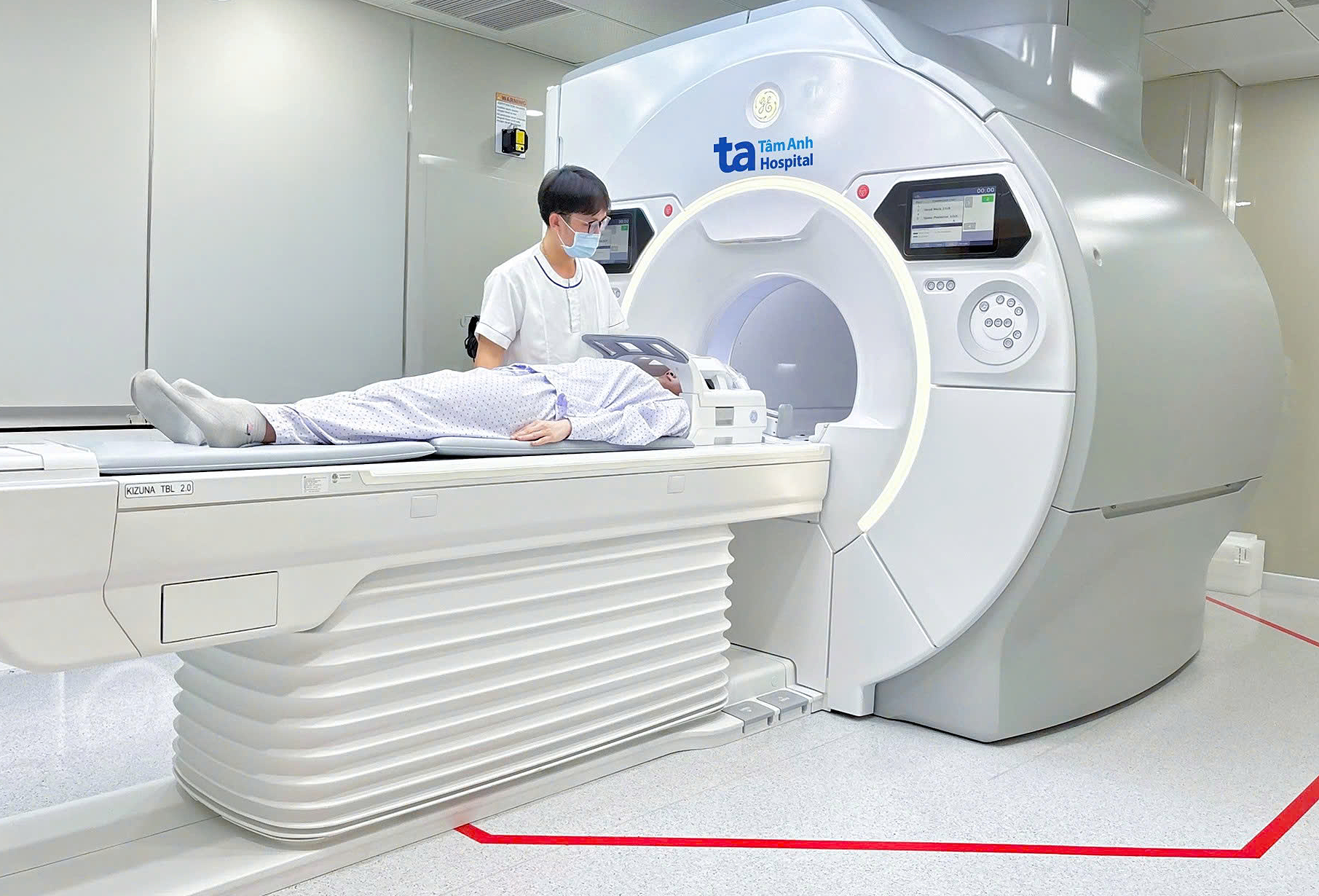 |
3 Tesla MRI helps detect Alzheimer's-related structural brain changes from an early stage. *Photo: Tam Anh General Hospital*
Doctor Minh Trung noted that signs of poor memory are often confused with Alzheimer's disease. Therefore, older adults should not be complacent about frequent forgetfulness or difficulty remembering. They should proactively seek medical examination for doctors to check, identify the cause, assess disease severity, and provide appropriate intervention. Many modern methods now support the diagnosis and screening of Alzheimer's and dementia, ranging from: cognitive assessments, 3 Tesla MRI, PET-CT to cerebrospinal fluid tests for biomarkers.
According to the World Health Organization (WHO), over 55 million people globally live with dementia. This number is projected to increase to 152 million by 2050, with around 75% of cases not diagnosed early. Annually on 21/9, World Alzheimer's Day is observed to raise public awareness about the disease, encourage early recognition of memory decline signs, and proactive medical check-ups.
Trong Nghia
| Readers can submit questions about neurological diseases here for doctors to answer |