Associate Professor Doctor Vu Huu Vinh, Director of the Thoracic - Vascular Surgery Center at Tam Anh General Hospital TP HCM, stated that glomus tumors typically appear in peripheral areas like under fingernails or on toes, rarely developing in the trachea. "Global medical literature currently lacks comprehensive statistics on this disease, primarily documenting it in isolated case reports, with fewer than 100 cases recorded to date," Associate Professor Vinh noted.
Approximately 6 years ago, Shokha began experiencing a dry cough, a sensation of something stuck in his throat, and chest tightness. Gradually, he developed episodes of dyspnea, particularly when lying down or engaging in strenuous activity. He sought treatment at several hospitals in Cambodia, where he was diagnosed with a tracheal tumor. Despite undergoing multiple tumor ablations, his condition did not improve, and his symptoms progressively worsened.
Shokha arrived at Tam Anh General Hospital TP HCM feeling fatigued and lethargic, with cyanotic skin and wheezing. A CT scan of his chest revealed a large tumor, measuring 19x15x18 mm, situated deep within the trachea, near the lung, and almost completely obstructing the airway.
Shokha was scheduled for surgery to remove the tumor. According to Associate Professor Vinh, the tumor's location was dangerous because it was deep inside the trachea, within the chest cavity, and hidden behind many large blood vessels in the neck. The surgical procedure required extreme caution to prevent massive bleeding.
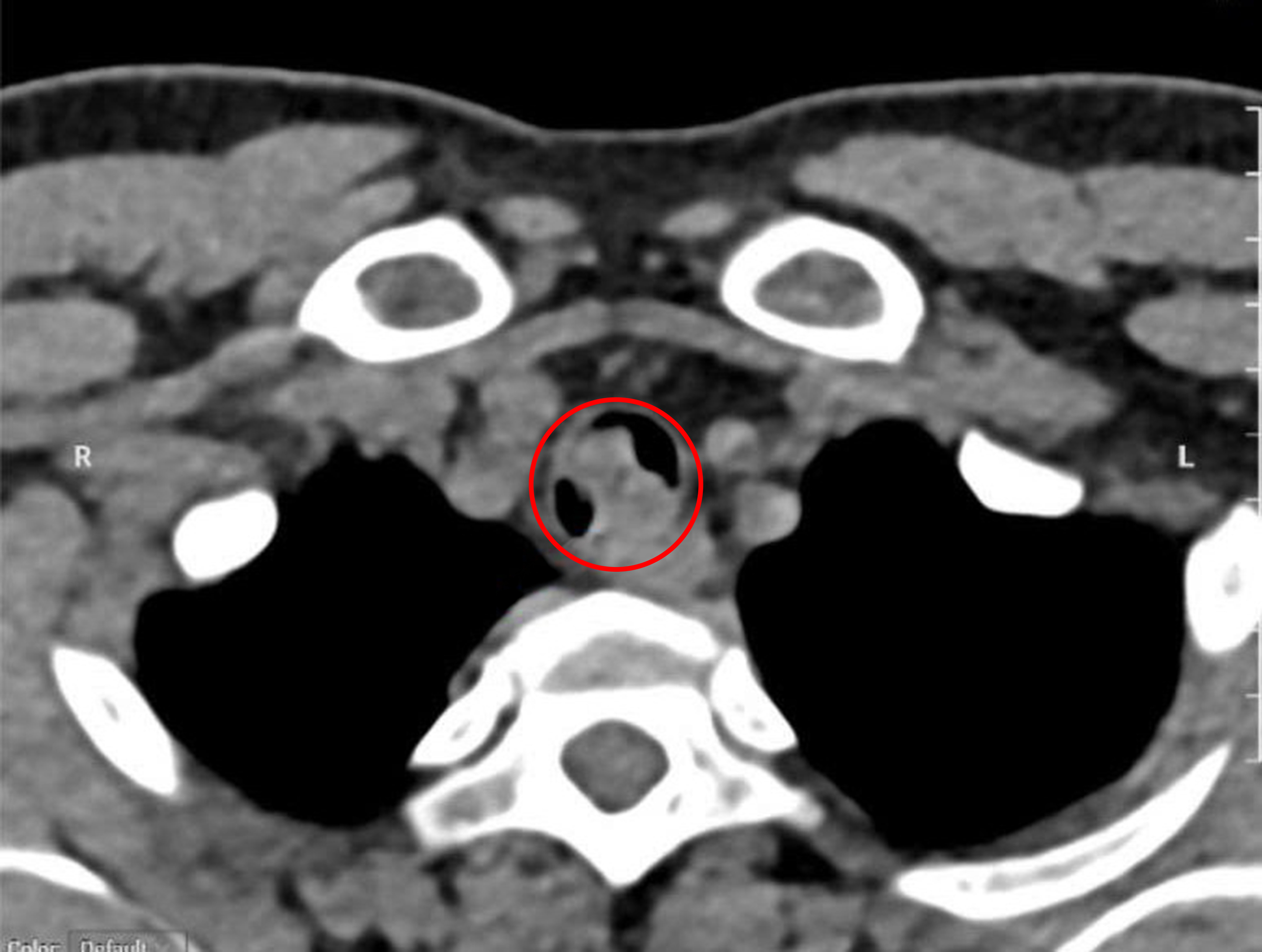 |
The tumor (circled in red) nearly completely obstructed the trachea, causing respiratory failure. *Photo: Tam Anh General Hospital* |
The patient received anesthesia via a laryngeal mask instead of conventional endotracheal intubation. This approach aimed to avoid further narrowing of the tracheal lumen and airway obstruction. It also ensured a continuous oxygen supply to the brain and other organs when the airway was interrupted during the resection and reconnection of the narrowed tracheal segment.
The surgical team accessed the trachea through the neck, without needing to split the sternum, then resected the segment of the trachea containing the tumor. When the tracheal segment was interrupted, the anesthesia team collaboratively inserted a distal tracheal tube to maintain oxygen supply to the patient.
After the complete removal of the tumor, Associate Professor Vinh reconnected the two ends of the trachea using an end-to-end anastomosis technique. An endotracheal tube was then reinserted orally, ensuring a clear airway.
 |
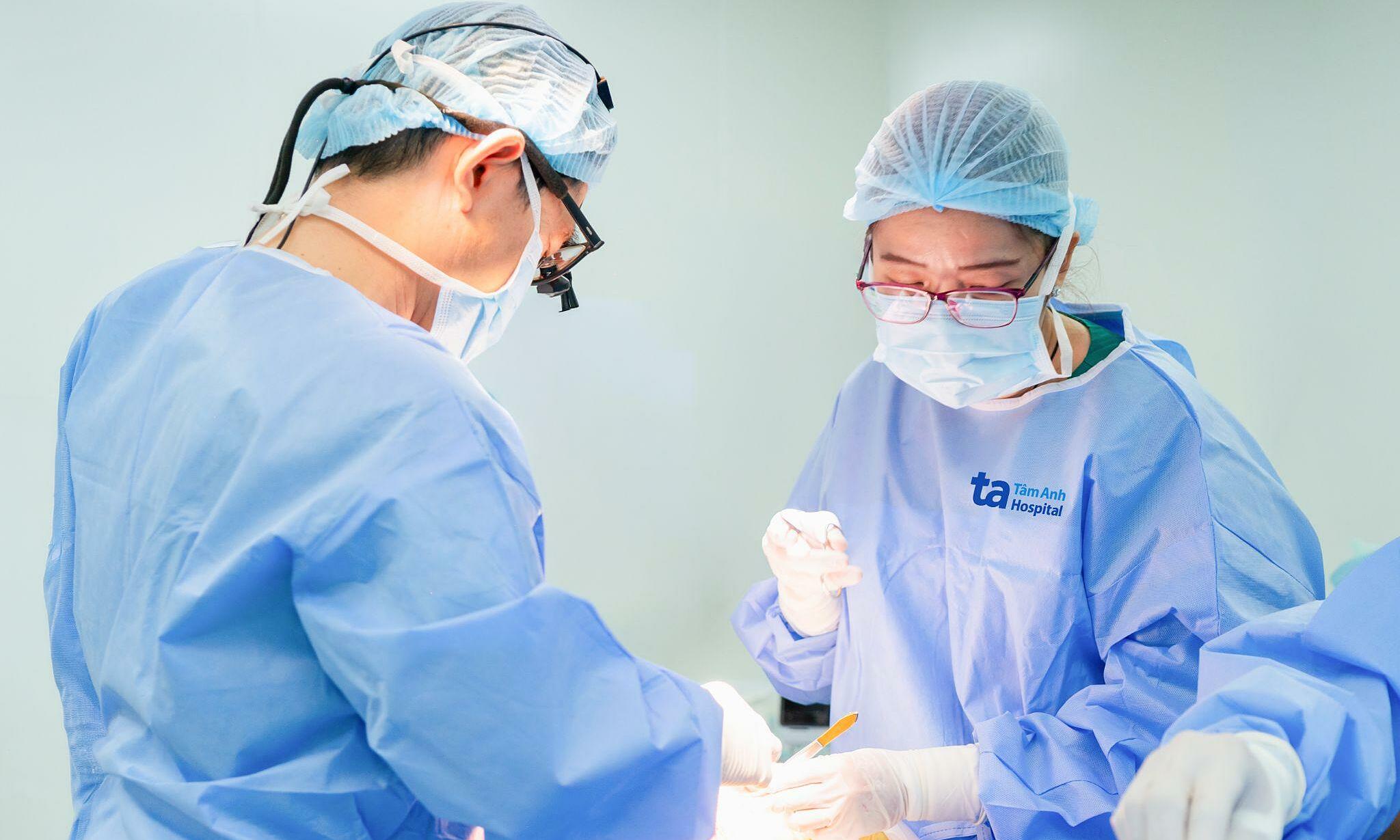
Associate Professor Vinh (left) and the surgical team performing tracheal tumor resection for the patient. *Photo: Tam Anh General Hospital* |
Post-surgery, Shokha experienced less pain, could sit up, and breathed easily. He no longer felt any obstruction in his throat and was discharged after 5 days.
Associate Professor Vinh explained that glomus tumors are mostly benign but possess a tough, firm, and highly vascular structure, adhering tightly to surrounding tissues. Consequently, endoscopic interventions such as tumor ablation might not completely eliminate the lesion, leading to a risk of recurrence.
For tumors located within the trachea, especially when they cause severe airway narrowing, doctors typically select treatment methods based on the tumor's position, size, invasiveness, and the patient's respiratory status.
Glomus tumors primarily form due to the benign and abnormal proliferation of smooth muscle cells, blood vessels, and local glomus cells. Patients experiencing persistent cough, dyspnea, prolonged wheezing, or unexplained throat obstruction and chest tightness should seek medical examination to determine the cause and receive timely treatment to prevent complications.
Bao Anh
* The patient's name has been changed
| Readers can ask questions about cancer here for doctors to answer |