Mr. Nick, 70, with a body mass index (BMI) of 28, has a history of hypertension and has taken medication for over 20 years. Six months prior, he felt fatigued and dizzy, arriving at Tam Anh General Hospital Ho Chi Minh City in a state of near-fainting and profuse sweating. Dr. Nguyen Anh Dung, Head of the Department of Thoracic and Vascular Surgery at the Center for Thoracic and Vascular Surgery, diagnosed the patient with 70-75% bilateral internal carotid artery stenosis.
The carotid arteries are large blood vessels on both sides of the neck that supply blood to the brain and head and neck region. Carotid artery stenosis often results from atherosclerotic plaque thickening the vessel walls and narrowing the lumen, potentially causing transient ischemic attacks or strokes.
Transient ischemic attacks are the most crucial warning sign of a stroke. Patients often exhibit symptoms like dizziness, lightheadedness, nausea, and vomiting, similar to Mr. Nick's experience. According to Dr. Dung, these seemingly harmless signs warn of a stroke risk that could occur at any time.
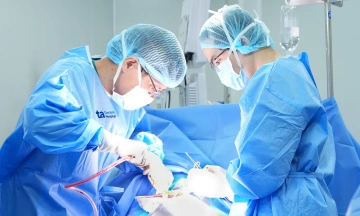
Doctors convened to determine that the patient's right internal carotid artery had more severe narrowing, necessitating immediate intervention. The team performed intubation anesthesia and made an incision to expose the carotid artery, which was blocked by atherosclerotic plaque. They temporarily clamped the artery to stop blood flow. Throughout the surgery, the patient's brain received blood from collateral arterial branches. After the right carotid artery was cleared, doctors repaired the vessel, released the clamp, and completed the operation. Blood flow to the brain improved, and the patient's dizziness resolved, leading to discharge.
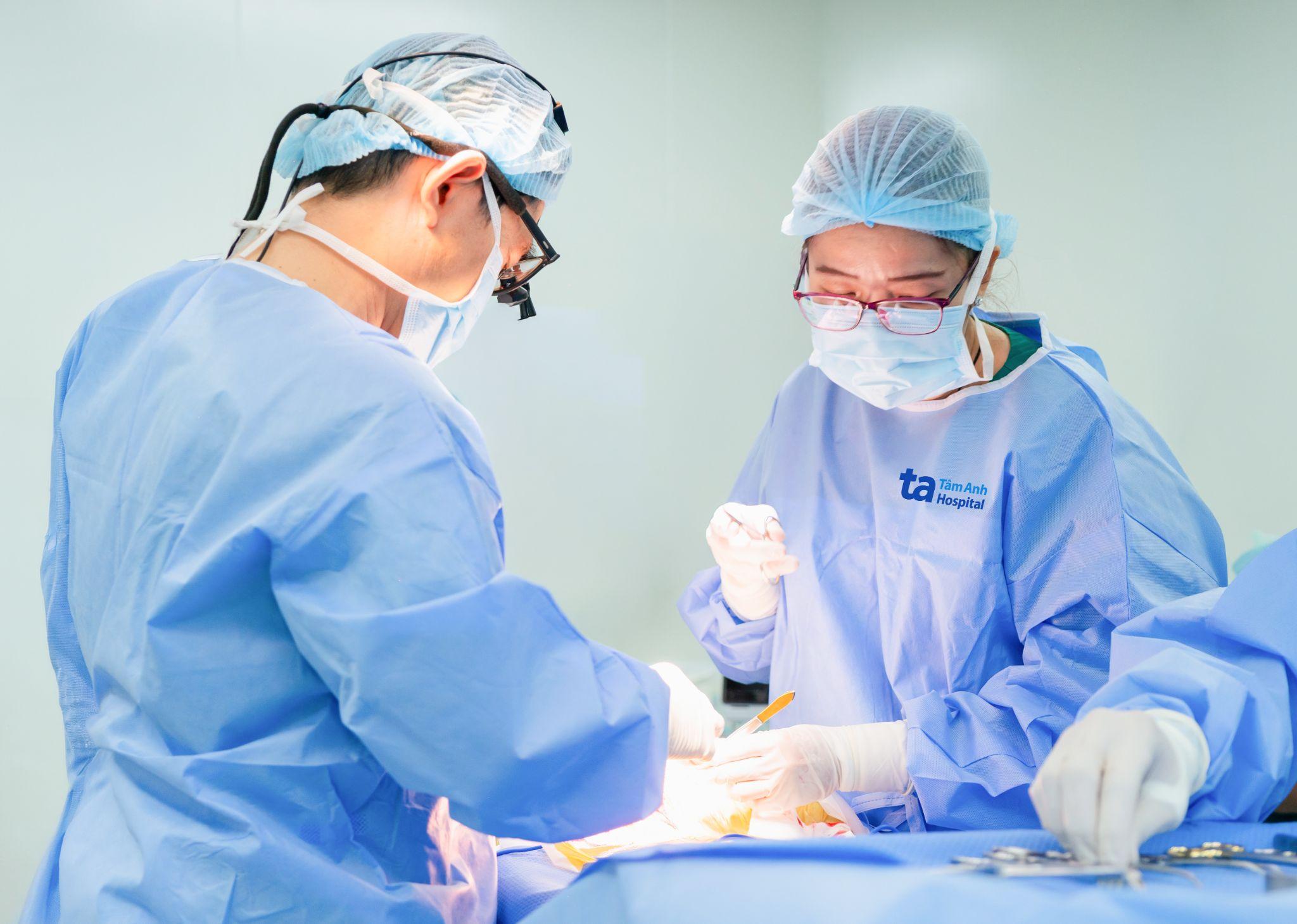 |
_Dr. Dung (left) and his team perform carotid endarterectomy for a patient. Photo: Tam Anh General Hospital_
Six months later, Mr. Nick's health was stable; however, the blood pressure difference between both arms was 40 mmHg (a difference over 10 mmHg indicates vascular disease). Dr. Dung discovered that in addition to severe left internal carotid artery stenosis, the patient also had left subclavian artery stenosis. The subclavian artery is the main blood vessel supplying the arm, and narrowing typically occurs due to the accumulation of atherosclerotic plaque within the vessel wall. This caused uneven blood circulation to both arms, leading to the significant blood pressure difference observed in Mr. Nick's case.
The surgical team performed a "2-in-1" procedure, addressing both narrowed arteries simultaneously. After successfully removing the atherosclerotic plaque from the left carotid artery, doctors created a bypass graft around the blocked subclavian artery to balance blood flow to both arms. Post-surgery, blood pressure in both arms was balanced, and the patient was discharged healthy after 3 days.
Carotid artery stenosis is dangerous and often difficult to detect because it may not present symptoms or can be mistaken for other conditions. Many cases of cerebrovascular accidents result in severe sequelae or even death due to delayed emergency care. The condition is often diagnosed when blood pressure in one arm is approximately 10-15 mmHg higher than the other. Some individuals experience cramps, arm pain, tingling, or numbness when this artery is more than 50% narrowed.
Dr. Dung advises individuals with long-standing hypertension, diabetes, dyslipidemia, or other risk factors including smoking, obesity, high blood lipids, a sedentary lifestyle, and diets high in sugar and fat, to seek medical examination and screening for arterial disease. Patients with carotid artery stenosis who suddenly develop suspected stroke symptoms such as facial drooping, paralysis on one side of the body or a limb, or difficulty speaking, should go to the hospital immediately.
Thu Ha
* Patient's name has been changed
| Readers can submit questions about cardiovascular disease here for doctors to answer |