Choosing ornamental plants for the Lunar New Year (Tet) goes beyond mere decoration, according to Specialist Doctor Level 2 Huynh Tan Vu from University Medical Center Ho Chi Minh City - Campus 3. Some plants not only bring auspicious meanings for the new year but also offer significant health benefits.
Kumquat tree
The kumquat tree is an indispensable sight in homes during Tet, symbolizing prosperity, luck, and abundance. In feng shui, the combination of lush green leaves and abundant golden fruits represents richness, promising a year of thriving business. The Vietnamese name "quat" is phonetically similar to the Sino-Vietnamese word "cat," meaning auspicious, thus conveying great fortune and prosperity.
This tree is also considered a complete convergence of the five elements: Metal (white flowers), Water (green leaves), Wood (the trunk), Fire (ripe orange fruits), and Earth (soil in the pot). This creates absolute harmony in the living space. Kumquat branches laden with large, round fruits further symbolize health, longevity, and family reunion.
Kumquat fruits have a distinct sweet and sour taste with a pungent essential oil. According to Traditional Eastern Medicine, kumquat fruits help treat coughs, alleviate hangovers, aid digestion, and reduce nervous tension. Kumquat leaves, rich in essential oils, are often used in remedies for common colds and wind-cold type colds.
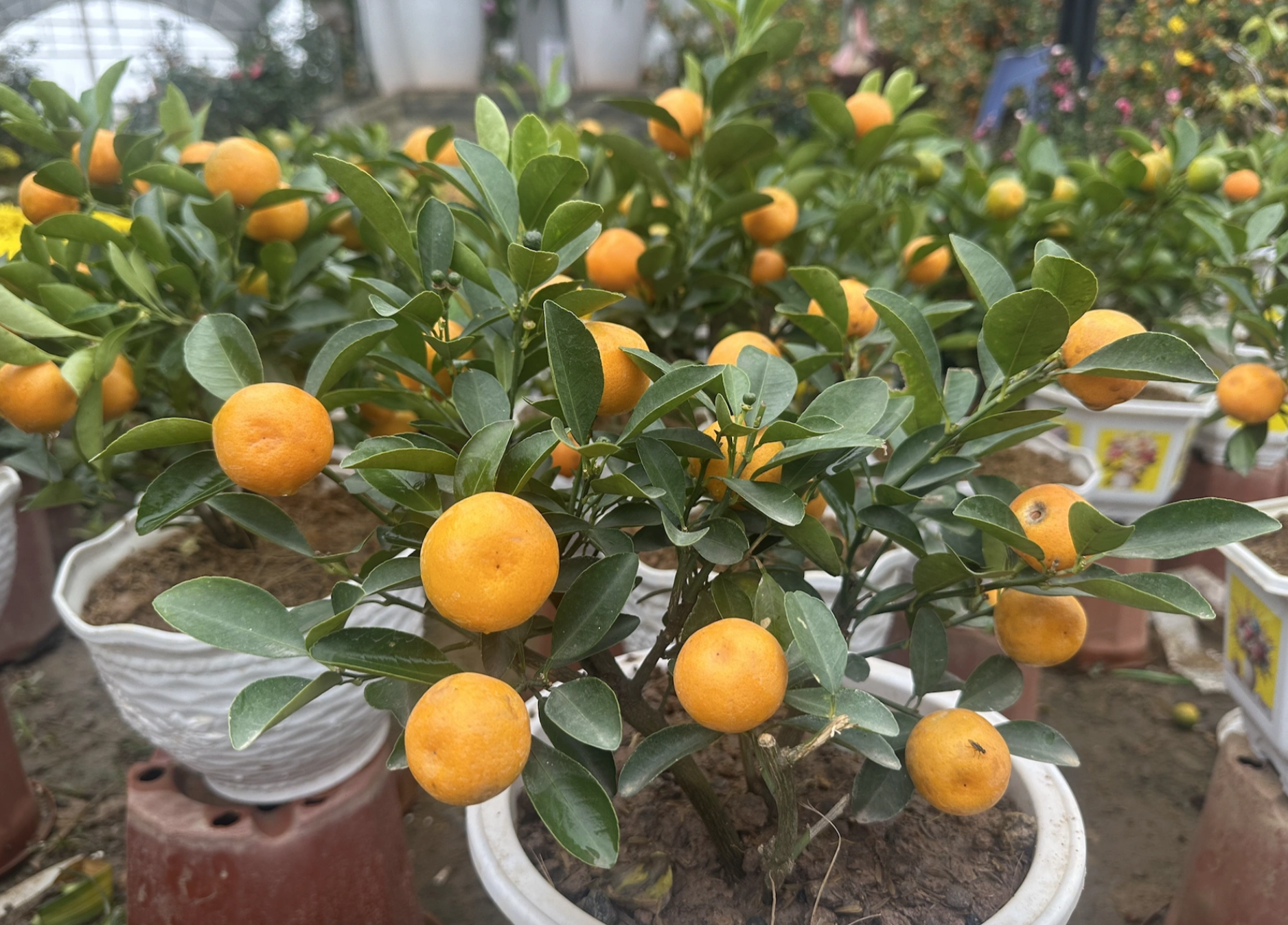 |
The kumquat tree is an indispensable sight in homes during Tet, representing prosperity, luck, and abundance. Photo: Hoang Linh
Money tree
The money tree possesses strong vitality and adapts easily even in low-light environments, making it a popular choice for offices, hotels, and homes. In feng shui, this plant attracts wealth, activates luck, and brings prosperity to the homeowner, especially when displayed at the beginning of the year.
Money trees purify the air by filtering dust and removing harmful volatile organic compounds like benzene, toluene, ethylbenzene, and xylene.
However, caution is advised as money trees contain calcium oxalate crystals. Excessive direct contact or accidental ingestion can cause mucous membrane irritation in the mouth, tongue, and throat.
Chrysanthemum
As part of the renowned "Four Noble Plants" (Pine, Chrysanthemum, Bamboo, Apricot Blossom), chrysanthemums symbolize abundant blessings, prosperity, and longevity. Historically, yellow chrysanthemums were reserved for royalty and nobility, embodying nobility, wealth, and sustainable development.
Chrysanthemums remove toxic chemicals emitted from household sprays, paints, or cleaners.
According to Western medicine, chrysanthemums are rich in essential oils, vitamins A and B, amino acids, and trace elements such as selenium. These components provide antioxidant benefits, prevent aging, and protect the cardiovascular system.
In Traditional Eastern Medicine, chrysanthemums have sweet, pungent, and cooling properties. This herb helps clear heat, nourish yin, reduce inflammation, and benefits the liver. Preparations such as chrysanthemum tea are popular folk remedies for relieving heat and treating various ailments.
Ochna integerrima (yellow apricot blossom)
Ochna integerrima, or yellow apricot blossom, is a classic symbol of luck, wealth, and prosperity in Southern Vietnam. According to folk tradition, if the apricot blossoms bloom fully on the first day of Tet, it signals a year of abundant wealth. The flower's yellow color represents affluence, conveying a message of hope, peace, and happiness for every household.
In Vietnam, the bark of the yellow apricot tree is often steeped in wine to create a tonic that strengthens the body and stimulates digestion. In neighboring countries like Cambodia and Laos, the young leaves of the apricot tree are utilized by people as a nutritious raw vegetable in their daily diet.
My Y