Collagen thread lifting is a minimally invasive skin rejuvenation method where doctors insert dissolvable biological threads (such as PDO, PLLA, PCL) into the subcutaneous tissue. This supports sagging skin and stimulates collagen regeneration. Once implanted, these threads are recognized as "biological foreign bodies," triggering a natural protective response that promotes the proliferation of collagen and elastin around them. The barbs along the threads act as anchors, where collagen formation is most robust, helping to fix tissue and lift loose skin.
The effects of a collagen thread lift typically last three to five years, depending on the thread type, initial skin aging, procedural technique, and post-procedure care. While the biological threads gradually dissolve over six to eight months, the body continues to produce collagen and elastin around the thread pathways, creating a new tissue support system. This helps the skin maintain firmness and elasticity. Consequently, even after the threads fully dissolve, the skin does not deteriorate or sag faster than its original state. Skin quality usually remains better than before the intervention, unless natural aging progresses or the technique used was unsuitable.
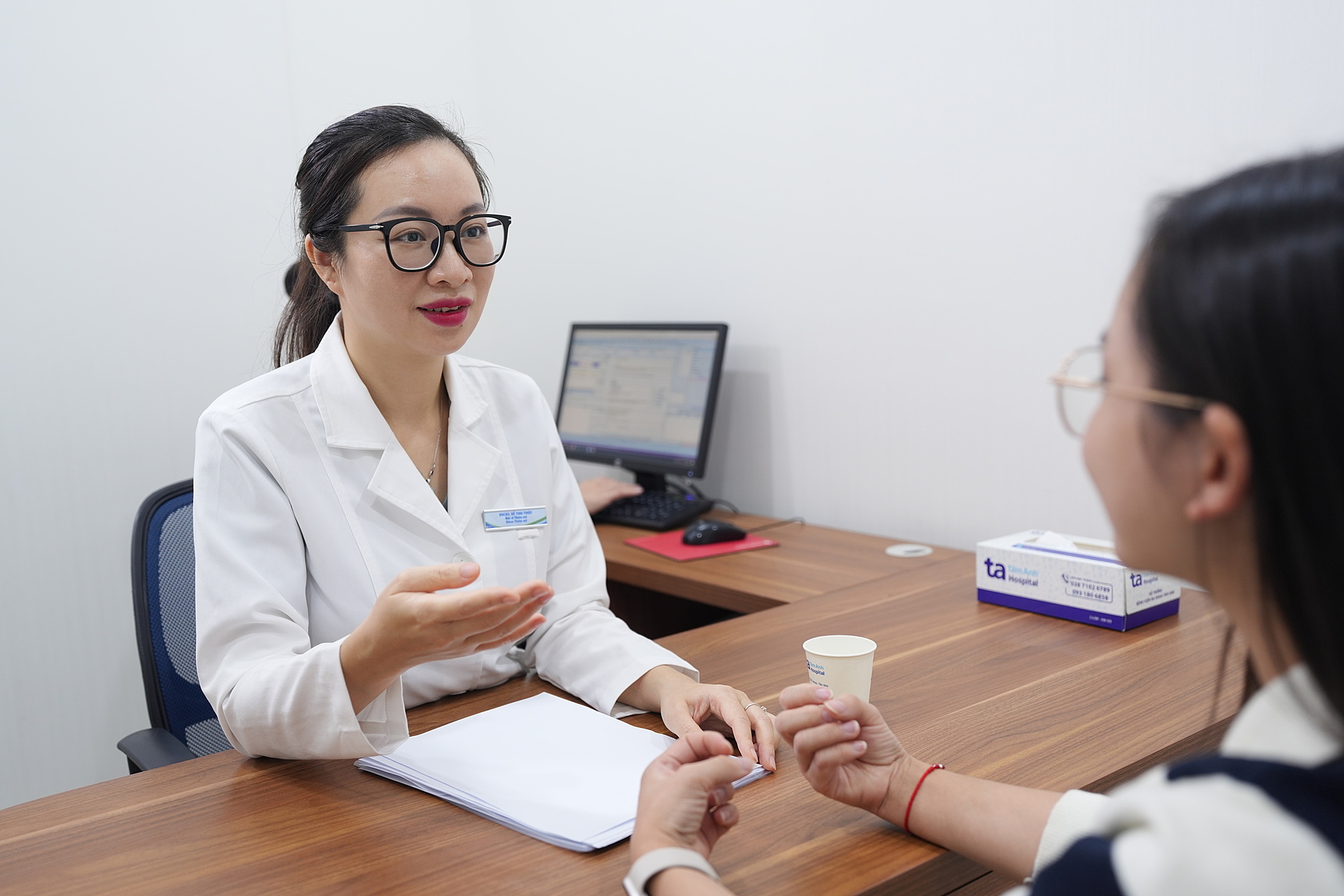 |
Doctor Thuy advises a woman on the collagen thread lift method. *Photo: Tam Anh General Hospital*
Collagen thread lifts are indicated for areas with mild to moderate skin sagging that require soft tissue support. These include nasolabial folds, forehead, brow lifts, jawline contouring, neck slimming, and mild postpartum abdominal or breast sagging. However, this method is not recommended for reconstructive procedures requiring deep structural changes, such as nose or buttock augmentation. Biological threads lack the ability to maintain long-term shape, and improper use carries a risk of complications.
Collagen thread lifts offer several advantages: they are minimally invasive, cause less pain than surgical facelifts, leave no long scars, and require no extended recovery time. After the procedure, patients may experience only small needle marks, mild swelling, bruising, or slight pain, allowing them to resume normal activities. Potential complications, such as thread displacement, thread exposure, or infection, can occur if the technique is incorrect or performed in a non-sterile facility. Therefore, it is advisable to undergo this procedure at a fully licensed hospital with a qualified dermatologist-aesthetician. This ensures proper assessment, risk control, optimized results, and the prevention of complications.
Proper aftercare is essential following a collagen thread lift. For the first few days, limit strong movements in the treated area, avoiding massage, rubbing, or strong pressure on the skin. Keep the area clean and dry, and adhere to the doctor's medication instructions. Avoid early makeup application, and refrain from alcohol, tobacco, and stimulants, as these can affect tissue healing and collagen production. For at least one to two weeks, avoid strenuous exercise, steam baths, hot water, and high heat exposure. Schedule follow-up appointments as advised for the doctor to monitor recovery and promptly address any unusual signs, such as increased pain, prolonged swelling, redness, or infection.
Doctor CKI Be Thu Thuy,
Department of Aesthetics
Tam Anh General Hospital Hanoi
| Readers can submit questions about dermatological and aesthetic skin conditions here for a doctor's response. |