Answer:
A herniated disc occurs when one or more discs between the vertebrae are damaged, causing the disc's nucleus to move from its original position. This then compresses the spinal cord and nerves within the spinal canal. This condition results in localized pain and sensory disturbances, which can radiate down the leg. Prolonged sitting and heavy labor are common causes of herniated discs.
When sitting for extended periods, the spine tires and slumps, increasing pressure on the vertebrae many times over, pushing the disc backward. If this continues, it tears the annulus fibrosus, causing the disc to slip out and compress the spinal cord and nerves, leading to pain. Prolonged sitting also prevents discs from absorbing sufficient nutrients, leading to degeneration and reduced elasticity. It also weakens and stiffens the gluteal and lower back muscles, diminishing their ability to support the spine, ultimately contributing to herniation.
Individuals engaged in heavy labor, like yourself, face a high risk of herniated discs, especially without proper support or when using incorrect posture. When performing heavy tasks, the sudden increase in pressure on the vertebrae can tear the annulus fibrosus, pushing the disc out and causing herniation. Frequent heavy labor can also erode the annulus fibrosus due to friction, weakening it and causing gradual tears over time. This accumulated damage eventually leads to disc herniation.
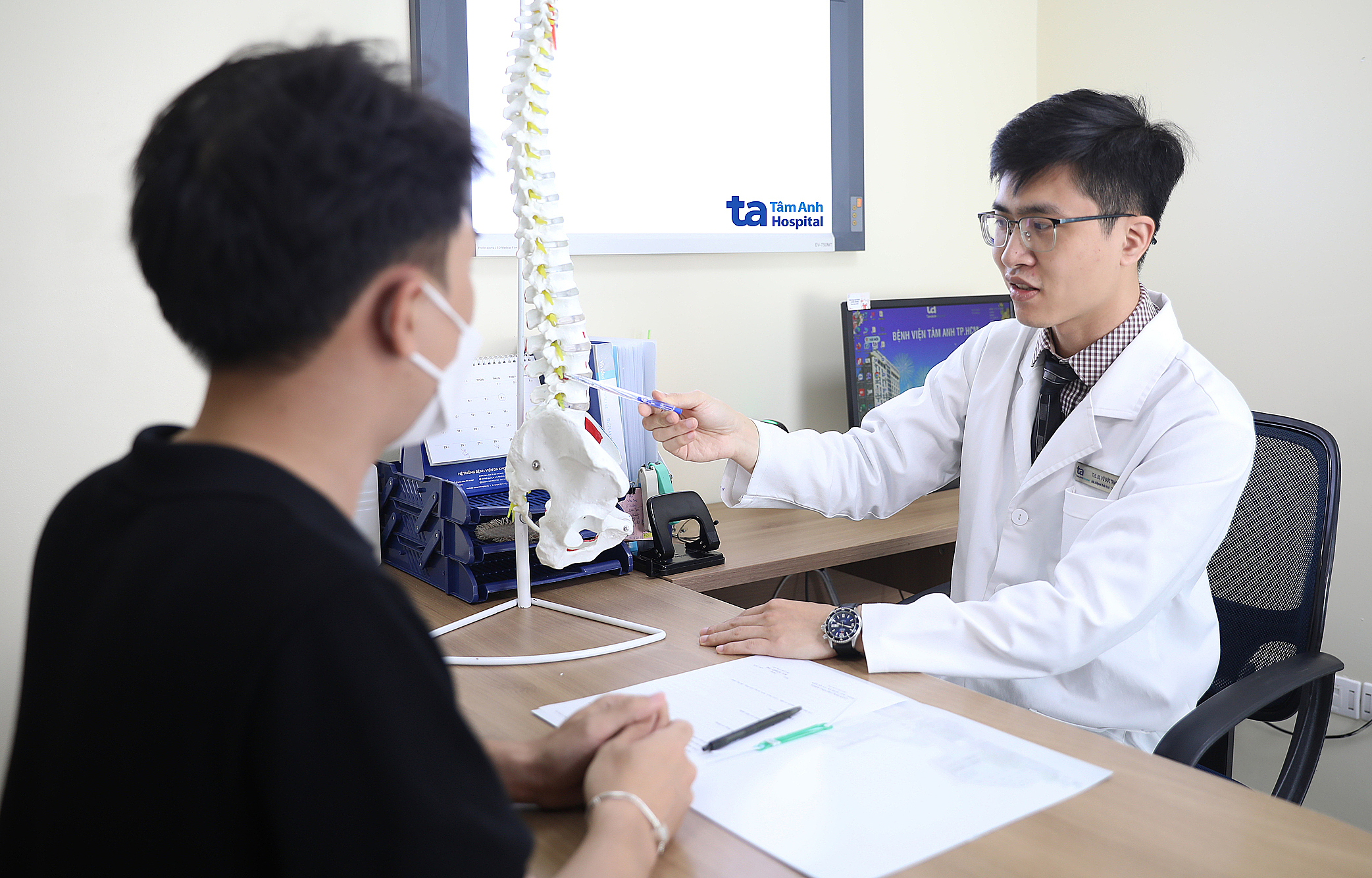 |
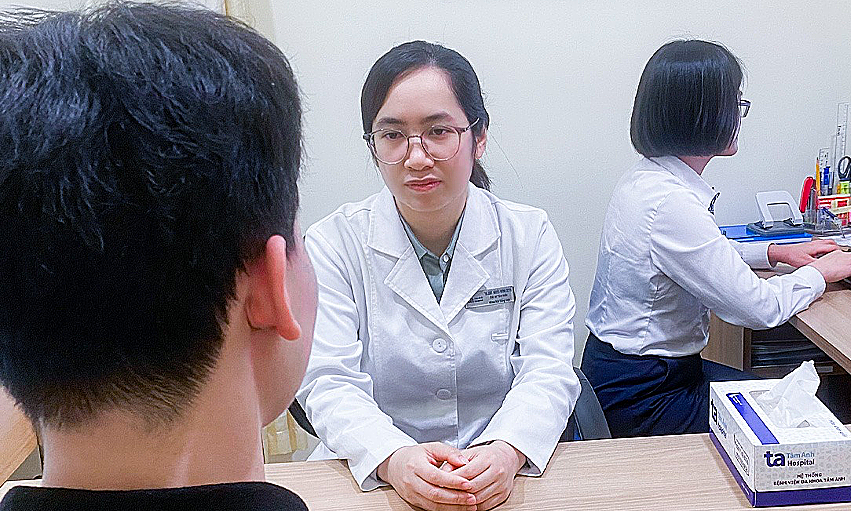
Dr. Thang explains spinal compression to a patient. Photo: Tam Anh General Clinic District 7
You can prevent a herniated disc by adopting a scientific lifestyle:
Maintain correct posture in daily activities. Keep your back straight, avoid sudden bending or twisting, and limit sitting or standing for too long. These practices reduce pressure on the spine, prevent injuries, and effectively alleviate back pain. Correct posture also minimizes wear and tear on joints, muscles, and ligaments, maintaining core muscle strength and body balance, improving spinal function.
Regular exercise at an appropriate intensity strengthens bones and joints and increases the flexibility of the tendon-muscle system. This reduces pressure on the spine, prevents disc compression, alleviates pain, and stops the condition from worsening.
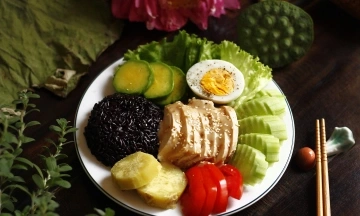
Follow a scientific diet, supplementing with calcium, vitamin D, and other beneficial nutrients to nourish healthy bones and joints. Limit alcohol, fried foods, and processed foods.
Undergo regular health check-ups every 6 months, or visit a medical facility immediately if you experience unusual symptoms such as pain or numbness in the buttocks, thighs, or legs, difficulty urinating, or sudden weakness in your limbs.
Master of Science, Doctor, Specialist Level I Vu Duc Thang
Spine Department
Tam Anh General Clinic District 7