Although doctors in the US had not yet recommended surgery, Victoria, experiencing intense pain, was referred by an acquaintance to Tam Anh General Hospital in Ho Chi Minh City, Vietnam, for treatment. Dr. Dang Khoa Hoc, Head of the General Orthopedic Trauma Department, diagnosed Victoria with stage 4 chronic knee osteoarthritis, the most severe stage of the disease. Her joint cartilage was almost completely gone, with bone ends directly rubbing against each other, and inflammatory fluid from the degeneration caused pain and joint stiffness.
To alleviate pain, she had altered her gait, inadvertently increasing pressure on her lumbar spine, which led to pain and sciatic nerve compression. Consequently, the muscles in both thighs weakened, and prolonged immobility caused her quadriceps to atrophy. She was unable to climb stairs or walk more than a few dozen meters and was highly prone to falls.
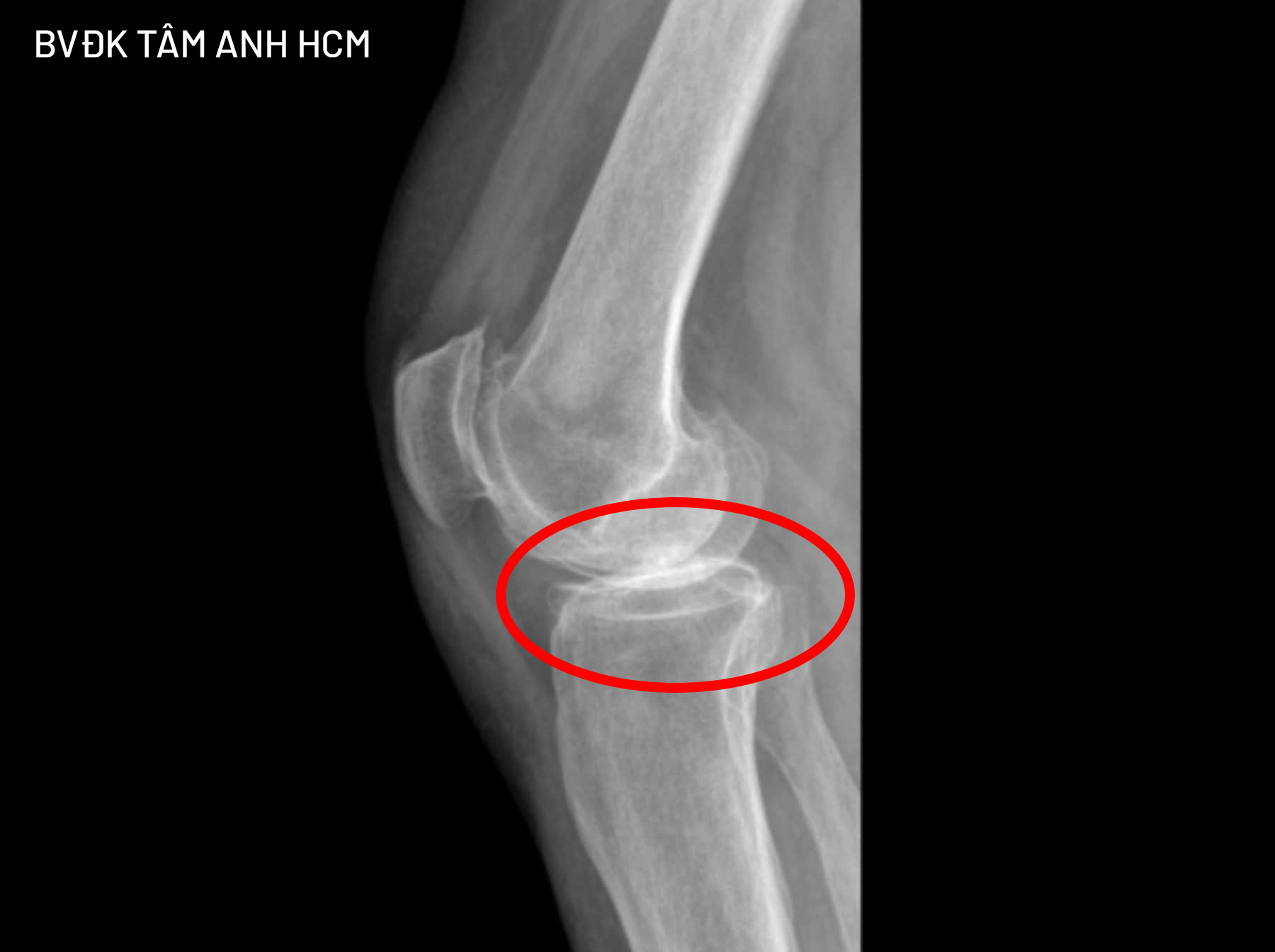 |
X-ray image showing Victoria's knee cartilage almost completely gone, with bone ends rubbing against each other. *Photo: Provided by the hospital* |
Conservative treatments, including medication and physical therapy, were no longer effective, so Victoria was scheduled for early total knee replacement surgery using the subvastus approach. This advanced knee replacement technique involves the surgeon accessing the joint by retracting the muscle and navigating through the space beneath the vastus medialis muscle, then resecting and removing damaged bone and cartilage before implanting an artificial joint. The patient's entire vastus medialis and quadriceps muscles are preserved, which maintains the knee's flexion and extension mechanism, minimizes blood loss, reduces pain, and promotes faster recovery.
On the first day after surgery, Victoria experienced significant pain reduction and began rehabilitation exercises for both her knee and spine. She was discharged two days later and scheduled for regular follow-up appointments to allow doctors to assess her recovery and address any potential complications promptly. She also needed a bone density scan for comprehensive treatment. Ignoring osteoporosis could lead to long-term instability of the artificial knee joint, impacting her mobility.
At her two-week follow-up, Victoria had largely resumed her normal activities.
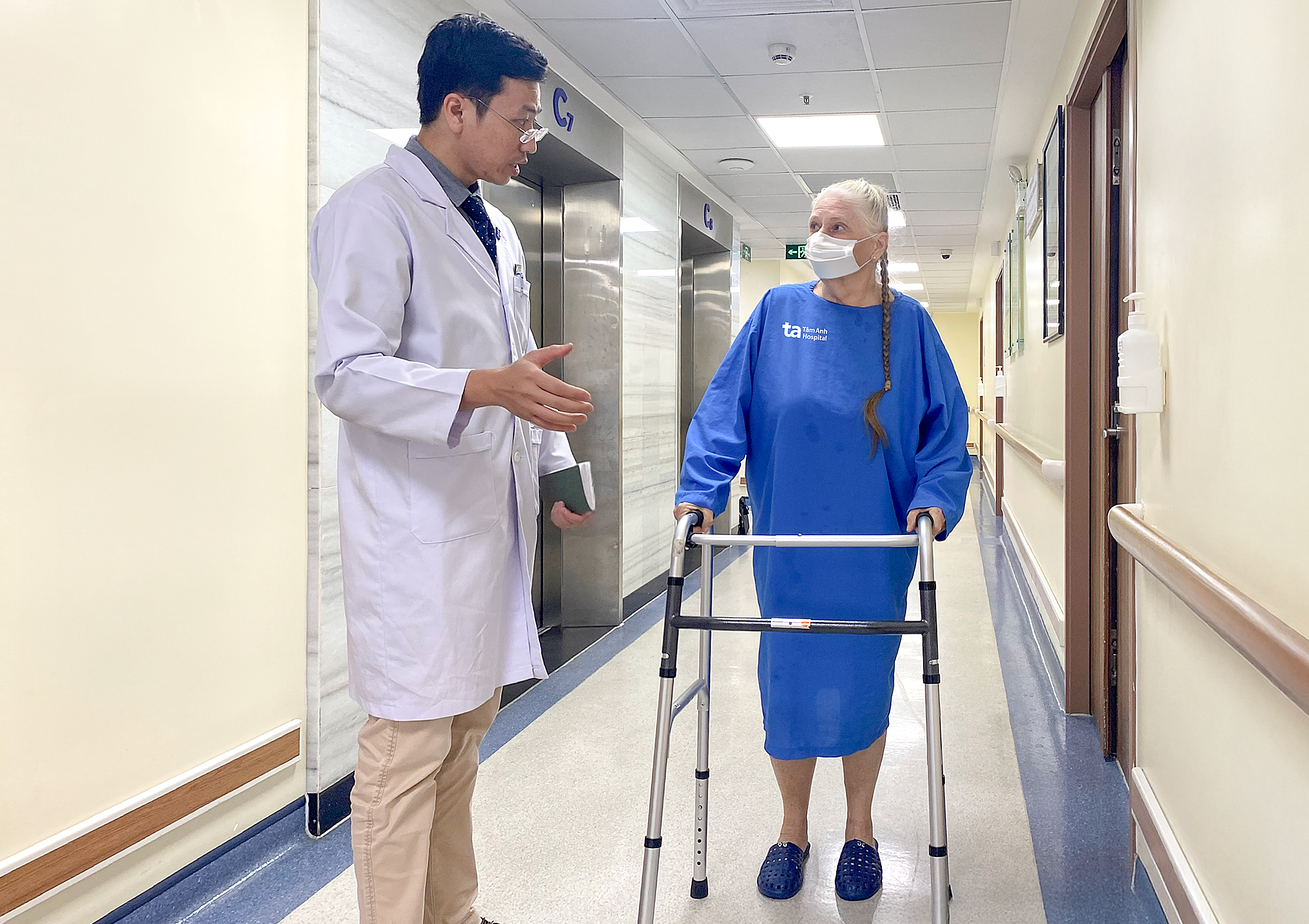 |
Dr. Khoa Hoc guiding Victoria on walking exercises before her discharge. *Photo: Tam Anh General Hospital* |
According to Dr. Hoc, osteoarthritis is a natural part of the aging process and is difficult to cure completely. However, early detection and proper treatment can help manage the condition and prevent complications that diminish quality of life.
Phi Hong