Duy Khang was surprised by a doctor's diagnosis of genital warts on his forehead, as he had no history of sexual intercourse. Previously, Khang had gone to a bar with friends where three women and two men kissed his forehead. A week later, a light pink bump appeared on his forehead, which was slightly painful to the touch. Believing it to be a pimple, Khang applied ice, acne cream, and then squeezed it. The bump ruptured, subsequently spread, grew larger, resembled cauliflower, caused a burning sensation, and bled when touched.
Khang received treatment with electrocautery and antibiotics. However, his doctor warned of a high risk of recurrence due to delayed treatment, the extensive spread of the warts, infection, and potential cosmetic damage.
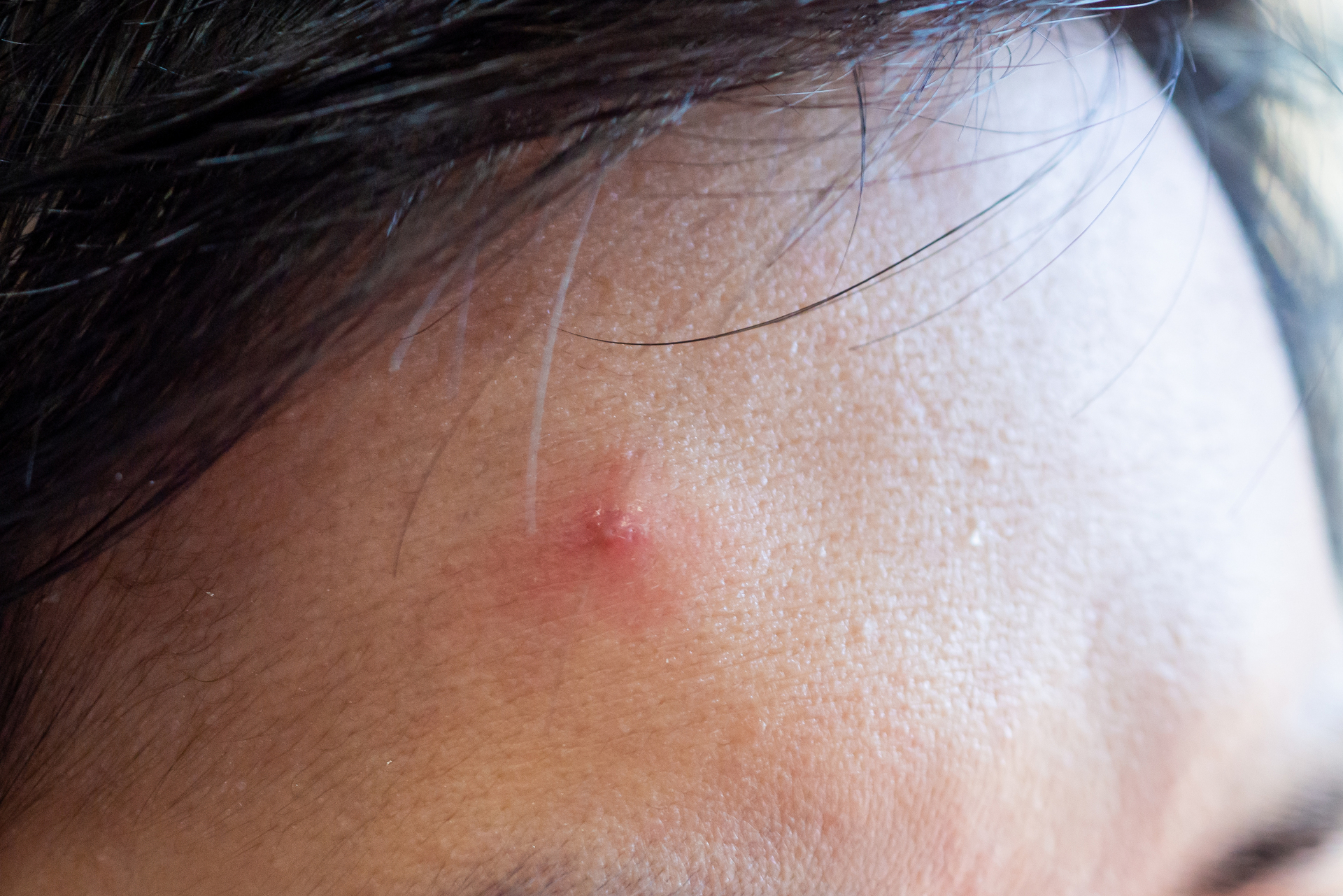 |
Genital warts on the forehead can be easily mistaken for pimples; self-squeezing can lead to infection and spread of the pathogen to other areas via the hands. Photo: Vecteezy
Duong Khoa, 24, from Khanh Hoa, also experienced shock upon discovering several warts on his scalp while getting a haircut. He visited a private clinic and a hospital for examination, both diagnosing him with genital warts and confirming he was positive for human papillomavirus (HPV) type 6.
"Genital warts usually appear in the genital area or mouth, so why are mine on my head?" Khoa asked his doctor. He later contacted his ex-girlfriend, whom he had broken up with more than two months prior, to inquire about the cause. She admitted to currently undergoing treatment for genital warts but was also unsure of the source of her infection.
Khoa is currently treating the warts at a hospital and has received the HPV vaccine at VNVC, hoping to reduce the risk of reinfection or contracting other HPV types.
According to Doctor Nguyen Duc Ba Dat, Medical Manager at the VNVC Vaccination System, genital warts are caused by the HPV, most commonly types 6 and 11. The incidence of the disease has increased over the past 10 years, particularly among young people aged 18-23. The Ho Chi Minh City Center for Disease Control reports that from 2020 to 2025, genital warts were the most prevalent sexually transmitted disease, with over 38,000 cases recorded in 2023.
Genital warts are primarily transmitted through sexual contact and skin-to-skin contact, less commonly from mother to child or through sharing personal items. Lesions typically appear in the genital area, vagina, anus, perineum, and cervix in females; and on the glans, penile shaft, scrotum, and anus in males. If oral sex occurs with an infected person, warts can appear in the mouth, oropharynx, tongue, lips, and gums.
Warts on the forehead, scalp, nose, or other non-genital areas can result from direct skin-to-skin contact, or from touching an affected area and then touching healthy skin. When warts appear in uncommon locations, they are often mistaken for acne, rashes, or dermatitis, leading to delayed treatment.
Attempting to self-treat by squeezing, pricking, or applying incorrect medications can cause warts to spread, leading to ulceration, infection, cosmetic damage, making treatment more difficult and increasing the risk of recurrence.
"Genital warts do not resolve on their own, and complete eradication is challenging," Doctor Dat stated. Patients should seek medical attention when warts are small and adhere to the prescribed treatment regimen. During treatment, it is essential to abstain from sexual activity, maintain a nutritious diet, avoid alcohol and stimulants, and wash hands thoroughly after cleaning the affected area.
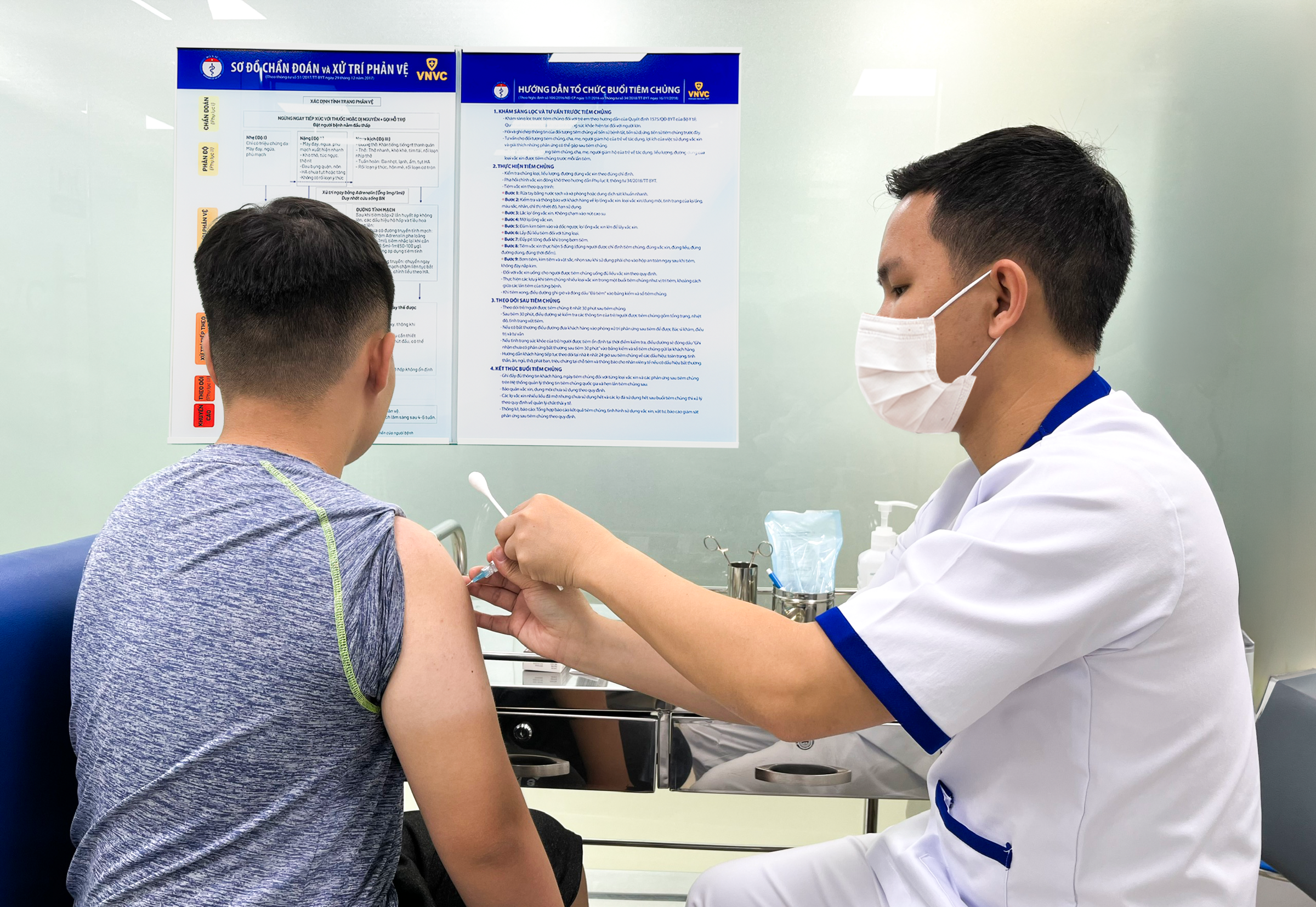 |
A 16-year-old male student was brought by his mother to VNVC Hoang Van Thu to receive the Gardasil 9 vaccine, which protects against HPV-related diseases. Photo: Dieu Thuan
The HPV vaccine is available for preventing genital warts. Vaccination helps reduce the risk of reinfection and protects against HPV types not yet contracted. There are over 200 types of HPV, with about 40 types easily transmitted through sexual contact or skin-to-skin contact.
Currently, Vietnam offers two types of HPV vaccines: Gardasil, which protects against types 6, 11, 16, and 18; and Gardasil 9, which protects against types 6, 11, 16, 18, 31, 33, 45, 52, and 58. In addition to genital warts, the vaccine helps prevent several HPV-related cancers, including cervical, anal, oropharyngeal, penile, vulvar, and vaginal cancers. Individuals who have already contracted the disease or been infected with one HPV type can still receive the vaccine to reduce the risk of infection from other virus types. Gardasil is administered to females aged 9-26. Gardasil 9 is administered to both males and females aged 9-45.
Hoang Long