


Thu's family has no history of extra or fused digits. Dr. Lam Thien Kim, from the Pediatric Surgery Department at Tam Anh General Hospital, Ho Chi Minh City, examined the 21-month-old girl and noted that her left thumb showed a split at the distal phalanx. X-ray images confirmed the presence of an extra thumb, a common congenital anomaly of the upper limb that can affect hand function to varying degrees.
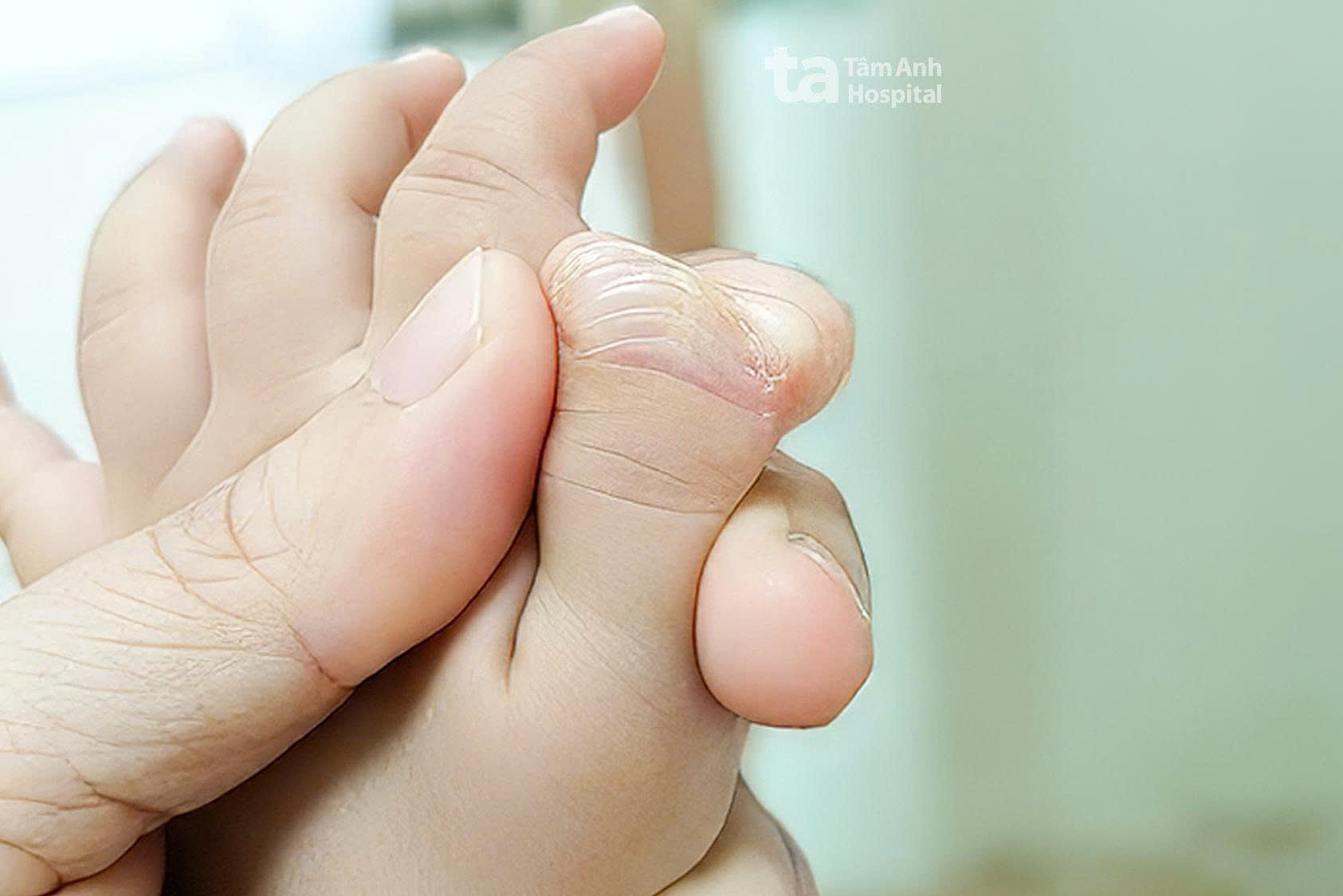 |
Thu's left hand with an extra and fused thumb. Photo: Tam Anh General Hospital
Over approximately 50 minutes, the surgical team performed soft tissue reconstruction, removed the extra digit, and preserved the main thumb's critical structures. Surgeons also performed an osteotomy to realign the thumb to its correct axis, stabilizing it with a pin for optimal stability.
The patient was discharged after one day and returned for pin removal five weeks later. Doctors guided the child through rehabilitation exercises, including gentle passive and active movements such as thumb flexion and extension, opposition exercises with other fingers, and practicing grasping small objects. These exercises were integrated into daily activities. After about two months, the thumb's motor function significantly improved.
 |
Thu's hand after extra digit removal and orthoplastic correction. Photo: Tam Anh General Hospital
According to Dr. Kim, post-operative rehabilitation must be gradual, aligned with the child's pain tolerance, and regularly monitored to assess progress.
Polydactyly can be linked to genetic factors or occur sporadically without a clear cause. Some cases are associated with genetic syndromes or environmental factors during pregnancy, such as virus infections (e.g., rubella), exposure to toxic chemicals, or certain maternal illnesses. However, a specific cause is not identified in all cases.
To reduce the risk of congenital anomalies, pregnant women are advised to receive full vaccinations before pregnancy, supplement with micronutrients as guided by medical professionals (especially folic acid), avoid alcohol and tobacco, and limit exposure to risk factors.
Surgery for polydactyly is often considered in the early years of life, typically before 2-3 years of age. The timing depends on the anomaly's severity and its functional impact, aiming to optimize motor function and aesthetic outcomes.
Minh Tam
*Patient's name has been changed.


