This goal, outlined in the recently issued "Program for Ensuring Replacement-Level Fertility," is a key quantitative target. Vietnam's fertility rate is currently below replacement level, prompting this initiative.
Data reveals a decline in the fertility rate from 2,11 children per woman in 2021 to 1,91 in 2024, slightly rising to 1,93 in 2025. This trend is particularly evident in urban and developed areas. The General Statistics Office's 2025 fertility data shows that 11 out of 34 provinces have fertility rates below 2,0 children per woman. The ideal rate for population maintenance is 2,1.
The Ministry recently proposed an annual budget of 1,800 billion VND to support women who have two children before age 35, ethnic minorities, and residents in low-fertility regions. Many localities have already implemented cash incentive policies. For example, TP HCM allocated 3-5 million VND to nearly 9,000 mothers who had two children before age 35, addressing the record-low birth rate in the mega-city of 14 million people.
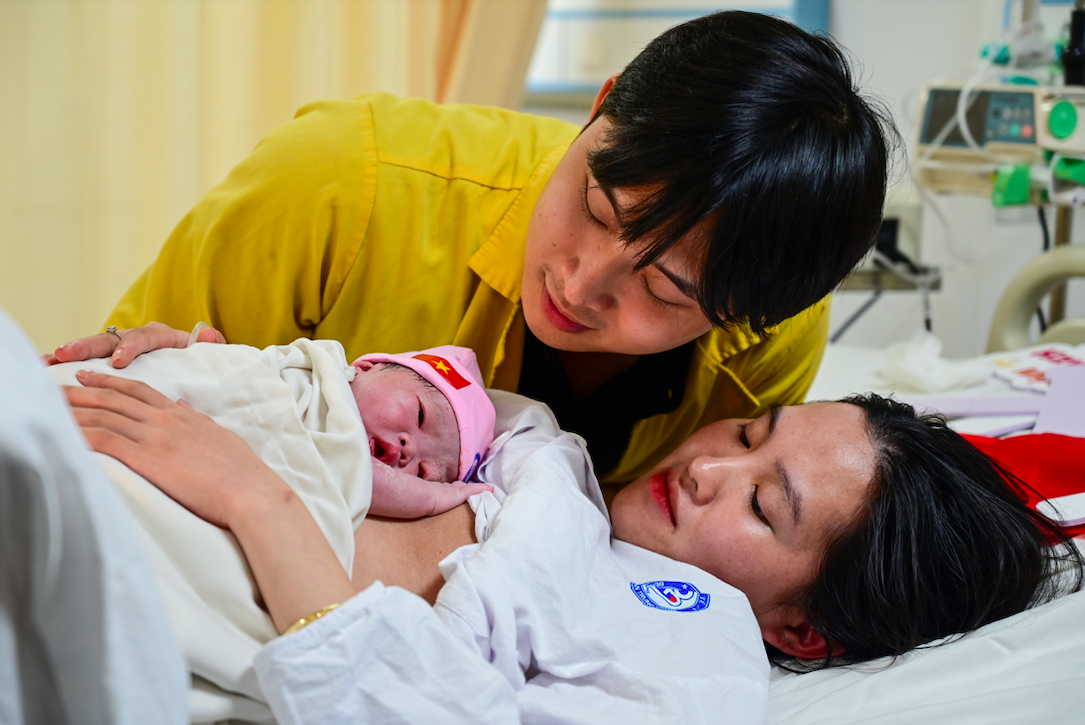 |
A baby born at the National Hospital of Obstetrics and Gynecology. Photo: Giang Huy |
The health sector plans to review and abolish previous regulations restricting third births. Instead, the state encourages families to have two children and requires officials and party members to lead by example. The Ministry of Health targets that by 2030, all provinces and cities will implement birth support policies, and 95% of couples of childbearing age will understand the benefits of maintaining fertility levels.
Localities will pilot and expand economic support measures in the coming period, including: sharing childcare costs, developing childcare services, establishing breast milk banks, and expanding the family doctor model. The Ministry of Health also encourages young people to marry before age 30 and aims to expand access to public education for young children, thereby reducing financial burdens on families.
The Ministry of Health emphasizes that Vietnam needs coordinated and timely action to avoid falling into a low-fertility trap, as seen in South Korea, Japan, or Singapore. In those nations, birth rates have not recovered significantly, despite extensive government investment in financial support and childcare services.
Le Nga