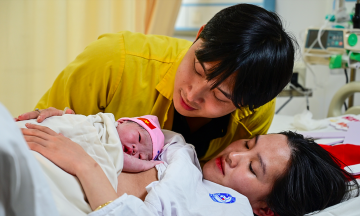
Mai experienced many years of infertility and a miscarriage at 22 weeks. To prevent premature birth in subsequent pregnancies, she underwent laparoscopic abdominal cerclage surgery at a hospital in Ho Chi Minh City. This time, following a successful embryo transfer, she sought prenatal care at Tam Anh General Hospital. Dr. Nguyen Ngoc Thoai, from the Obstetrics and Gynecology Center, noted that Mai's history of second-trimester miscarriages could be due to a weakened cervix.
Given her advanced maternal age, pre-obesity, and hypertension, Mai received aspirin to prevent pre-eclampsia from the first three months of her pregnancy. At 30 weeks, she experienced premature rupture of membranes and the baby was in a breech presentation. Doctors administered lung maturation medication to reduce the risk of respiratory distress after birth and medication to protect the fetal brain. Ten hours later, signs of an abnormal fetal heart rate prompted an emergency C-section.
The baby boy was born weighing 1.6 kg and suffered respiratory distress. The medical team immediately resuscitated him in the delivery room, warmed him with a specialized thermal bag, and provided non-invasive respiratory support before transferring him to the neonatal intensive care unit (NICU) for incubator care.
Dr. Nguyen Thi Anh Thu, from the Neonatal Center, explained that the baby's respiratory distress was due to immature lungs from premature birth. He received surfactant to help his lung alveoli expand, improving oxygen exchange in the blood. The baby underwent antibiotic treatment following protocol, received non-invasive mechanical ventilation for four days, and then transitioned to CPAP (continuous positive airway pressure) support.
Five days after birth, an echocardiogram revealed a large patent ductus arteriosus (PDA). The ductus arteriosus is a blood vessel connecting the pulmonary artery and the aorta, which typically closes spontaneously within the first few days after birth. However, in this baby, the ductus did not close, increasing the risk of respiratory distress, heart failure, and reduced blood supply to other organs. Therefore, doctors performed a medical closure of the ductus arteriosus over three days.
The baby received intravenous feeding combined with early breast milk via a gastric tube. This approach aimed to stimulate gut maturation and boost his immune system. He responded well to this regimen, transitioning to exclusive breast milk feeding after two weeks.
According to Dr. Thu, infants born almost three months prematurely experience impacts on the development rate of most vital organs. While breast milk is rich in antibodies, its nutrient content may not be sufficient compared to the nutrients received in the womb. Consequently, doctors fortified the baby's diet with protein, carbohydrates, fats, minerals (calcium, zinc, iron), and vitamins to meet his energy needs during each developmental stage.
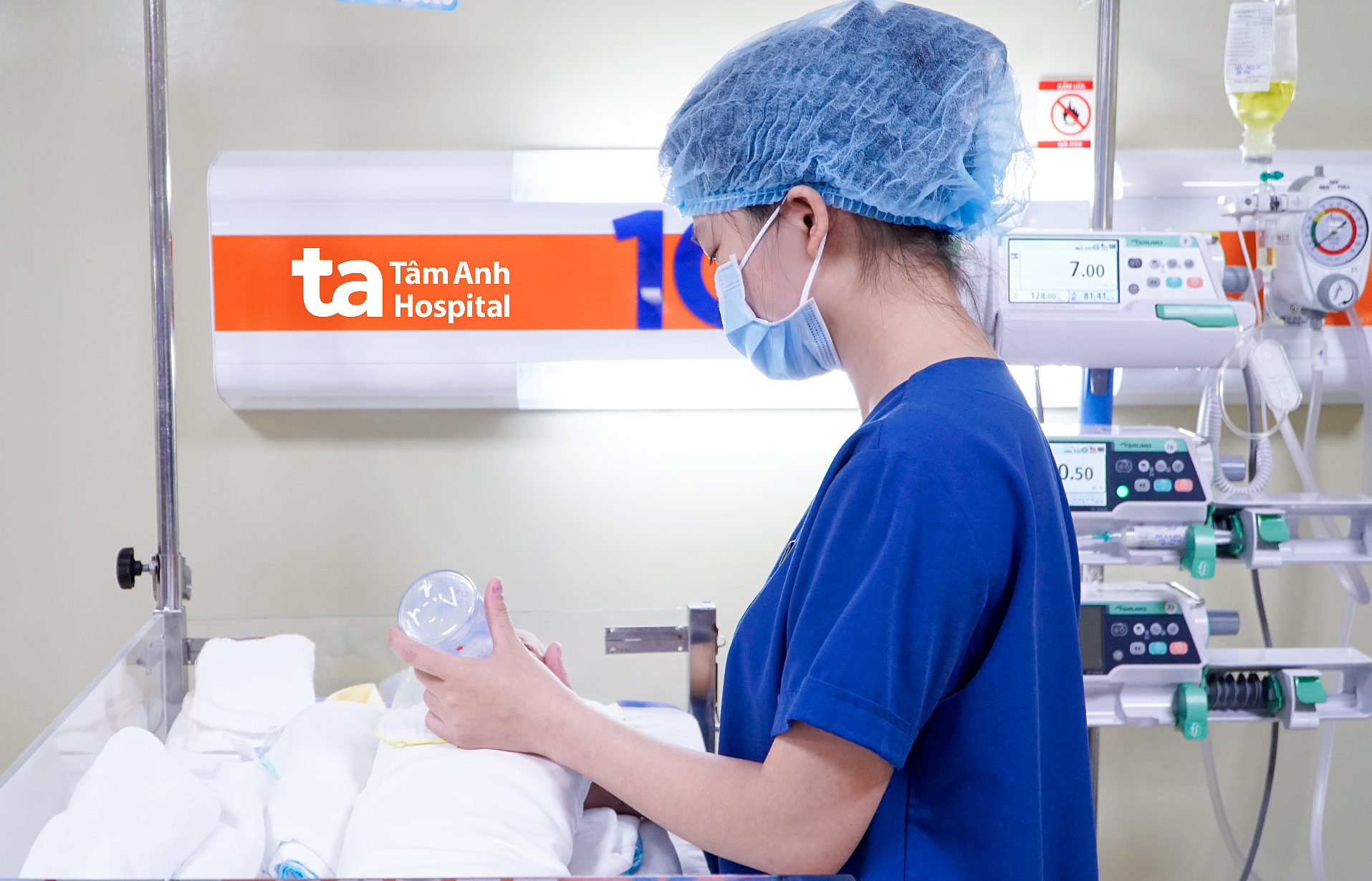 |
A nurse helps the baby feed fortified breast milk at the neonatal intensive care unit (NICU). Photo: Tam Anh General Hospital |
Approximately six weeks after birth, the baby was breathing independently, feeding well, and his weight increased to 2.6 kg. He received all necessary vaccinations and an RSV monoclonal antibody before being discharged, with regular follow-up appointments scheduled.
Dr. Thoai noted that women aged 50 and older have an increased risk of premature birth, influenced by factors such as placental abnormalities, hypertension, gestational diabetes, pre-eclampsia, and premature rupture of membranes. Therefore, pregnant women in this age group require prenatal check-ups at a multidisciplinary hospital for close monitoring and timely intervention for any abnormalities.
Ngoc Chau
*Character's name has been changed
| Readers can submit obstetrics and gynecology questions here for doctors to answer. |