Associate Professor, Doctor Do Doan Loi, President of the Vietnam Heart Failure Association and Vice President of the Vietnam National Heart Association, stated at the national scientific conference on heart failure on 13/12 that heart failure has long been likened to the "final battlefield" of all cardiovascular diseases. This is due to its high morbidity and mortality rates, substantial treatment costs, and severe impact on patients' quality of life.
Heart failure affects approximately 1-2% of the global population. While official data for Vietnam is unavailable, the Ministry of Health estimates that about 1,6 million people suffer from the condition. Cardiovascular diseases currently account for nearly one-third of all deaths nationwide. For heart failure, the average cost of each inpatient treatment episode is around 7,5 million VND, with patients often requiring multiple hospitalizations annually. More than half of patients die within five years of diagnosis. The one-year mortality rate in Vietnam exceeds 25%, which is comparable to the global average. Post-discharge patient monitoring remains limited, with a lack of connection between facilities, hindering effective management, follow-up, and long-term treatment.
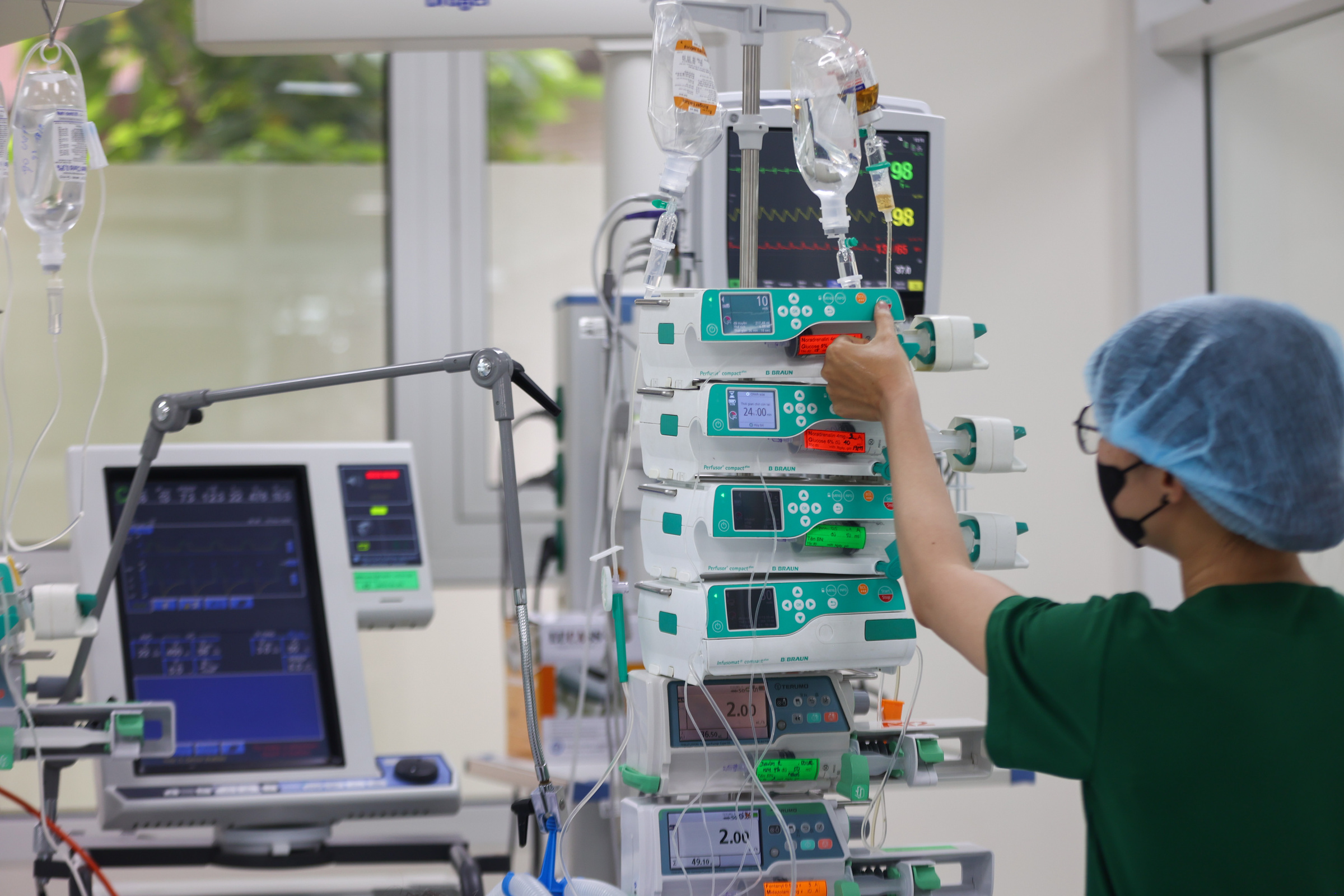 |
Intensive care treatment for patients. Photo: Quynh Tran |
Given this burden, heart failure management and treatment are transitioning from a "one-size-fits-all" approach to precision, personalized medicine. Artificial intelligence, big data, and remote monitoring devices enable continuous patient tracking, early detection of acute exacerbations, and reduced re-hospitalizations. Many Vietnamese hospitals have participated in the European Society of Cardiology's heart failure management programs, achieving recognition as Standard Quality Centers for Heart Failure and gradually approaching international standards.
However, existing heart failure data in Vietnam remains fragmented and lacks a systematic approach. Experts propose the early establishment of a national heart failure database to collect and standardize information from various medical facilities. This database would evaluate treatment quality down to individual hospitals and doctors, serving as a foundation for building a quality certification system for treatment at Gold, Silver, and Bronze levels.
Speaking at the conference, Associate Professor, Doctor Nguyen Tri Thuc, Deputy Minister of Health, announced that the Ministry is developing 12 specialized healthcare databases. Once these systems are complete, the health sector will be able to monitor in detail the number of patients with chronic diseases like heart failure and hypertension, as well as medication usage. This will effectively support policy planning, resource allocation, and human resource training.
The Deputy Minister emphasized two current pillars: individualized treatment and digital transformation. He requested that the Department of Science, Technology and Training collaborate on establishing a cardiovascular database, initially focusing on heart failure. He also highlighted the crucial role of grassroots healthcare, particularly medical station doctors, in managing chronic diseases and providing primary care, to effectively implement a comprehensive heart failure management model.
Le Phuong