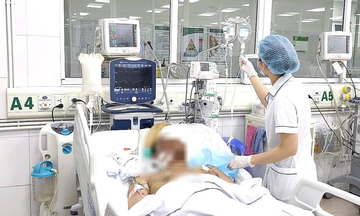
The emergency flight landed safely on the rooftop of the Orthopedic and Traumatology Institute building at Military Hospital 175 in Ho Chi Minh City at noon on 15/1. Immediately, a medical team transferred the patient to the Emergency Department under strict isolation, urgently conducting tests and imaging diagnostics to determine the cause.
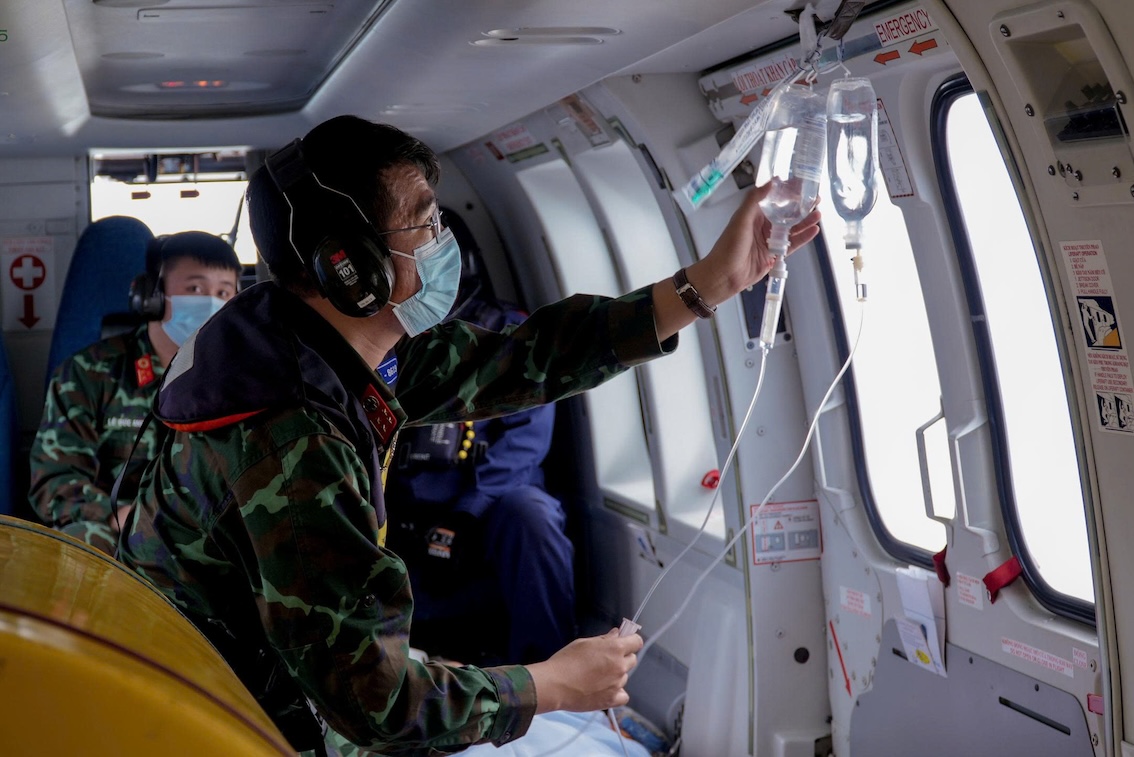 |
Doctors closely monitored the patient during transport on the helicopter. *Photo: Hospital provided.*
Captain, Doctor Nguyen The Nha, head of the air ambulance team, stated that the flight crew reached the patient on Sinh Ton island at 0:30 on the same day. At that time, the young man was in a deep coma with severe respiratory failure. Doctors had to intubate him and place him on a ventilator to sustain life throughout the flight to the mainland.
Due to the patient showing signs of brain injury, the pilot had to adjust the flight altitude lower than usual to minimize pressure differences. This flying technique helped limit adverse effects on the patient's brain but extended the journey longer than anticipated. The flight crew also strictly followed all infection prevention protocols.
Earlier, on the afternoon of 14/1, the Sinh Ton Island infirmary (Truong Sa archipelago, Khanh Hoa) admitted the patient in critical condition. The young man experienced convulsions, high fever, altered consciousness, and quickly fell into a coma. Through the telemedicine system, doctors at Military Hospital 175 diagnosed the patient with acute altered consciousness, suspecting a severe central nervous system infection. This condition directly threatened his life if not treated at a specialized medical facility; therefore, the hospital decided to activate the emergency air ambulance plan.
According to medical experts, central nervous system infections like encephalitis and meningitis are particularly dangerous conditions that progress rapidly. The disease often starts suddenly after respiratory or gastrointestinal infections, as viruses or bacteria attack the immune system. If not treated promptly, patients face a high risk of death or severe neurological sequelae.
Le Phuong