Doctor Duong Dinh Hoan, Head of the Neurointervention Unit at Tam Anh General Hospital TP HCM's Center for Imaging Diagnosis and Interventional Radiology, stated the patient's internal carotid artery aneurysm measured 8,0x7,3 mm with a neck of 6,4 mm. This large aneurysm, characterized by a wide, irregular neck, posed a high risk of rupture, prompting doctors to recommend intervention with a flow-diverting stent.
Using a digital subtraction angiography (DSA) system, doctor Hoan and his team monitored the entire cerebral vascular system on screen. Simultaneously, they injected a contrast agent into the blood vessel, allowing clear visualization of the blood vessel's path, along with the aneurysm's shape, size, and neck. A catheter was advanced from the femoral artery, upstream to the left internal carotid artery.
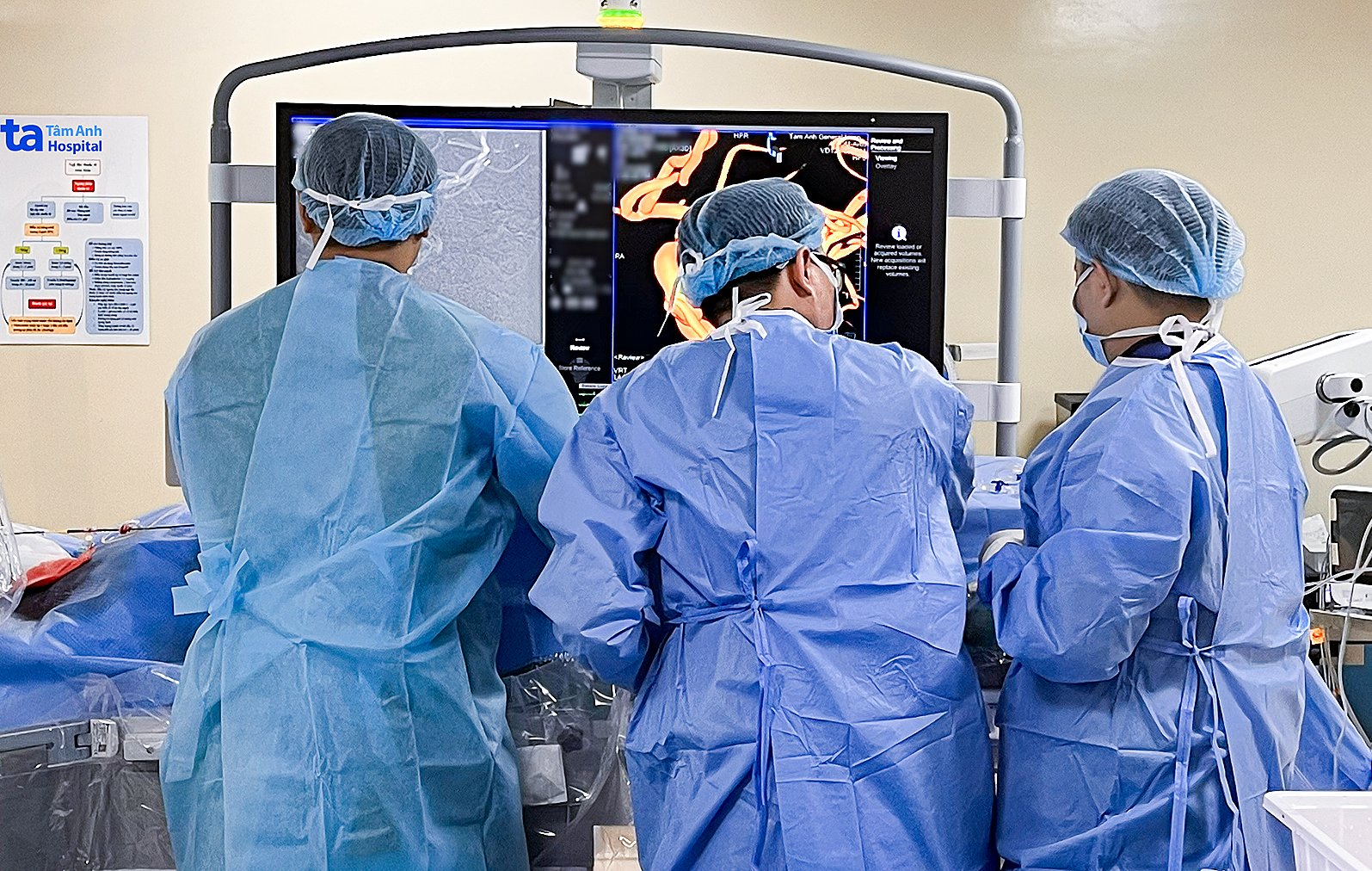 |
Doctor Hoan (left) and his team implant a flow-diverting stent to treat the patient's brain aneurysm. *Photo: Tam Anh General Hospital* |
After precisely locating the aneurysm's position and structure, doctor Hoan implanted the flow-diverting stent across its neck. This specialized metal mesh framework guides blood flow directly along the main vessel, significantly decreasing the swirling blood entering the aneurysm and prompting its gradual shrinkage. Doctor Hoan noted that this method preserves cerebral blood flow, eliminates the need for open-skull surgery, and minimizes the long-term risk of aneurysm rupture.
Following surgery, Ms. Tinh was alert and discharged. She will require dual antiplatelet therapy for at least 6 months. This critical period precedes full endothelial coverage of the stent, maintaining a risk of blood clot formation on its surface. The antiplatelet medication helps prevent thrombosis within the stent, ensuring stable and safe blood flow to the brain.
After 6 months, with the stent integrated into the vessel wall and the risk of thrombosis reduced, doctors will evaluate the aneurysm's morphology and blood flow. Based on treatment response, the patient may transition to single antiplatelet therapy to further protect the stent and mitigate long-term medication side effects.
Brain aneurysms often progress silently with subtle symptoms, making early detection challenging for patients. Many are only discovered after rupture, resulting in dangerous brain hemorrhage. Doctor Hoan emphasized that early detection is possible through routine health check-ups and non-contrast brain MRI angiography screening. Doctors evaluate the aneurysm's size, shape, and location to assess rupture risk and determine appropriate intervention or regular monitoring.
Nhat Thanh
*Patient's name has been changed