In recent days, many adult patients with chickenpox have been treated in hospitals for complications like pneumonia, septic shock, and respiratory failure. For example, the National Hospital for Tropical Diseases is currently treating a 36-year-old father who contracted chickenpox from his daughter, developing pneumonia that led to acute respiratory failure. Tam Anh General Hospital Hanoi also admitted a 32-year-old teacher who caught the illness from a student and developed a secondary infection, resulting in pneumonia.
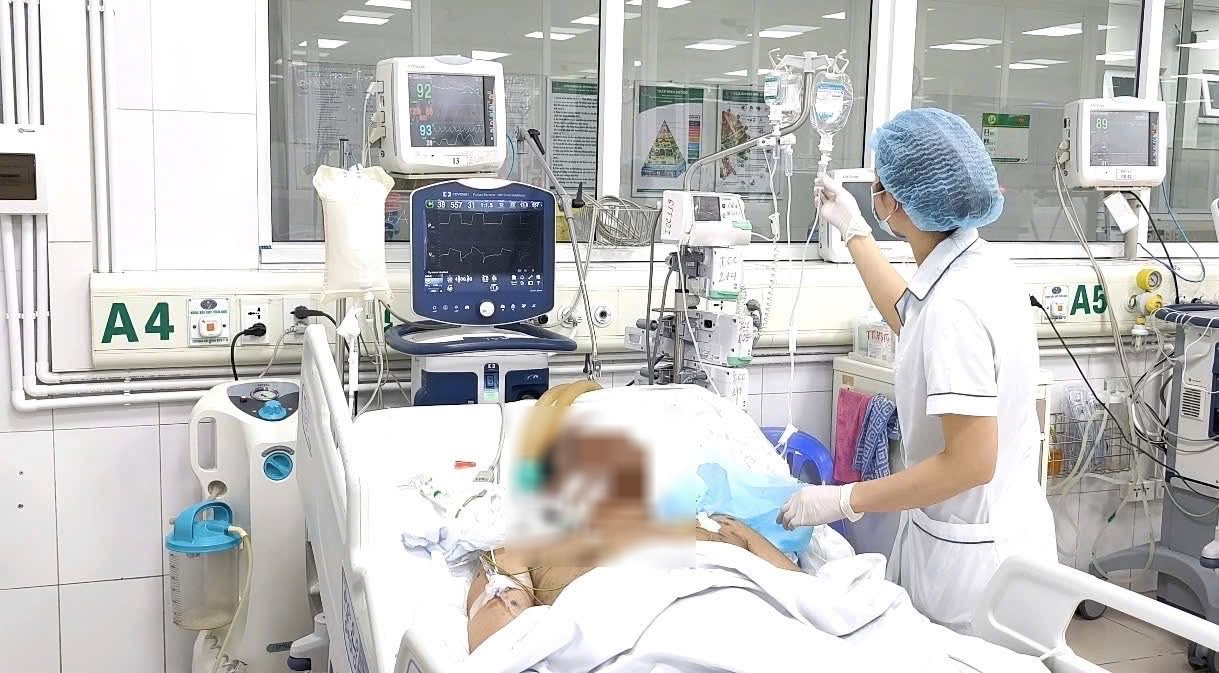 |
A 36-year-old man from Hung Yen developed sepsis and pneumonia after contracting chickenpox from his daughter. Photo: National Hospital for Tropical Diseases |
A 36-year-old man from Hung Yen developed sepsis and pneumonia after contracting chickenpox from his daughter. Photo: National Hospital for Tropical Diseases
According to Doctor Bach Thi Chinh, Medical Director of the VNVC Vaccination System, chickenpox can affect people of all ages. However, adults often face more severe complications due to factors related to immune system reactions, chronic illnesses, weakened immunity, pregnancy, and smoking. Scientific evidence indicates that the hospitalization rate for adults with chickenpox is 13 times higher than for children, and the mortality rate is about 25 times higher. Pneumonia is the most common complication, occurring in 5-15% of adult chickenpox cases, with a mortality rate of up to 30%.
Doctor Chinh explains that the mature immune system of adults tends to mount a strong but uncontrolled antiviral response, leading to a massive release of inflammatory cytokines. This process damages lung parenchyma and blood vessels, causing complications such as pneumonia, acute respiratory failure, hepatitis, and central nervous system disorders like encephalitis.
Adults with chronic illnesses, weakened immune systems, and those using immunosuppressants are more likely to lose control over the virus. For instance, patients using high-dose corticosteroids or anti-inflammatory drugs (20 mg/day of prednisone or equivalent) for two weeks or longer are at risk of severe chickenpox. In smokers, damaged lung epithelium also creates conditions for the chickenpox virus to penetrate deeper, causing severe inflammation.
Pregnant women are prone to pneumonia complications because their immune systems are naturally suppressed to prevent rejection and better nourish the fetus. If a mother contracts the illness close to her estimated due date, the newborn may contract chickenpox with a mortality rate of 25-30%.
Furthermore, many people view chickenpox as merely a skin rash, leading to complacency, self-treatment, or incorrect medication use, such as applying herbal leaves to blisters. When blisters rupture, the skin's protective layer is lost, making it easy for bacteria, most commonly Staphylococcus aureus, Group A Streptococcus, or environmental bacteria, to enter and cause sepsis complications.
Chickenpox spreads easily through respiratory droplets and direct contact with fluid from blisters. According to Doctor Chinh, adults who have never had the disease or have not been vaccinated can easily contract it from children in families, classrooms, or daycare centers due to close contact, caregiving, and sharing living spaces. The virus that causes chickenpox thrives when the weather transitions from winter to spring, also increasing the risk of infection.
The disease typically spreads rapidly from February to June annually. Although it is not yet the peak season for the illness, some hospitals have already recorded many cases, with some developing severe complications. Therefore, Doctor Chinh recommends that adults prioritize prevention, in addition to caring for children.
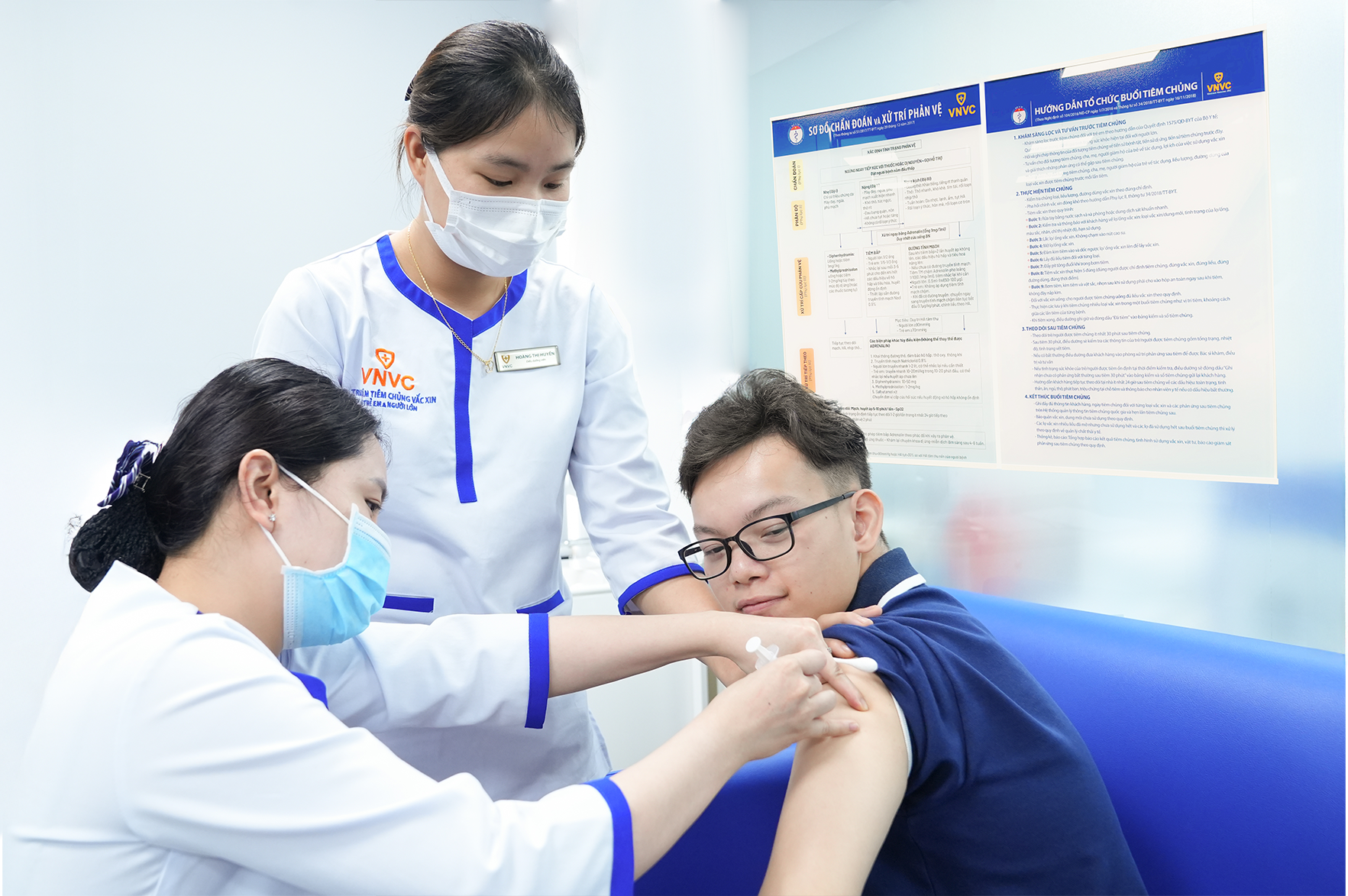 |
A young man receives a chickenpox vaccine at the VNVC Vaccination System. Photo: Moc Thao |
A young man receives a chickenpox vaccine at the VNVC Vaccination System. Photo: Moc Thao
It is essential to maintain personal and environmental hygiene: wash hands frequently with soap or antiseptic solution; avoid sharing personal items such as towels, cups, and clothing; and limit gatherings. The diet should be nutritionally complete, supplemented with vitamin C and zinc, ensuring adequate sleep and light exercise. Adults with chickenpox should take time off work and receive treatment until all blisters are dry and crusted over, avoiding close contact with young children, pregnant women, and immunocompromised individuals.
Receiving two doses of the chickenpox vaccine can prevent the disease by 98% and almost 100% prevent severe chickenpox complications such as pneumonia and encephalitis. Many countries worldwide have integrated the chickenpox vaccine into their expanded immunization programs, including the United States, Canada, Australia, and Italy, significantly reducing case numbers and fatalities. Research in the United States shows that since its introduction in 1995, the chickenpox vaccine has helped reduce cases by over 97%, demonstrating its effectiveness as a public health response. In Australia, the chickenpox vaccine reduced the incidence of congenital varicella syndrome by 91,5% between 2009-2020 compared to 1995-1997.
In Vietnam, the chickenpox vaccine is currently only available through private vaccination services, with three types from the United States, Belgium, and South Korea, and a combined four-in-one vaccine for measles-mumps-rubella-chickenpox from the United States. The vaccine is administered to children from nine or 12 months old and adults. Women should be vaccinated at least one to three months before pregnancy, depending on the vaccine type.
Dieu Thuan