Ms. Lien was diagnosed with chronic hepatitis B and compensated cirrhosis one year ago. Recently, she experienced poor appetite and fatigue. Tests at Tam Anh General Hospital, TP HCM, confirmed she was positive for hepatitis D. An MRI of her liver with contrast agent revealed irregular liver margins and multiple small nodules, 8-19 mm in size, in lobes 3, 4, and 5, causing a slight bulging of the liver capsule.
A computed tomography scan with angiography, an advanced imaging technique, clarified the lesions and detected abnormalities suggestive of liver cancer. Subsequent biopsy results confirmed early-stage hepatocellular carcinoma (HCC), with cancer cells localized and not yet invading blood vessels.
Dr. Nguyen Thi Ngoc Bich, a master's degree holder in the Department of Gastroenterology, Endoscopy and Gastrointestinal Endoscopic Surgery Center, stated that co-infection with hepatitis B and D accelerates the progression of dysplastic nodules in the liver to cancer.
 |
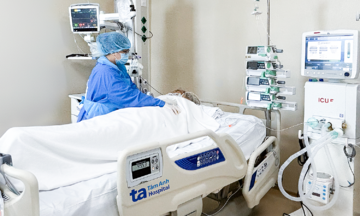
Dr. Ngoc Bich consults with Ms. Lien during her treatment. Photo: Tam Anh General Hospital |
Following a consultation, doctors recommended minimally invasive transarterial chemoembolization (TACE), suitable for early-stage liver tumors. Doctors inserted a microcatheter through a blood vessel to the hepatic artery, identified the branch directly supplying the tumor, and then injected a chemotherapy mixture into the tumor through the catheter to block blood flow, preventing tumor growth.
After the intervention, Ms. Lien's health stabilized. She requires regular follow-ups every two months, continuous antiviral medication for hepatitis B, combined with a healthy diet and consistent exercise to limit the risk of recurrence. Dr. Bich predicted that the disease, detected early, could be curatively treated.
Dr. Le Thanh Quynh Ngan, Head of the Department of Gastroenterology, a master's degree holder and Specialist II, explained that viral hepatitis B is often called a "silent killer" because its progression from chronic hepatitis to cirrhosis and liver cancer is insidious, with no obvious symptoms. Co-infection with hepatitis B and D viruses increases the risk of cirrhosis and liver cancer two to three times compared to those infected with only hepatitis B virus.
An estimated 7,6 million Vietnamese people are infected with hepatitis B virus, but only over 1,6 million have been diagnosed, and about 45,000 are undergoing treatment. Liver cancer is a dangerous disease, but it can be well-controlled if detected early.
Dr. Bich advises people not yet infected with hepatitis B to get vaccinated. Those already infected should use antiviral medication as prescribed to bring the viral load to an undetectable level. Maintaining a healthy lifestyle, practicing safe sex, and undergoing regular health check-ups with ultrasound and blood tests can help detect liver damage early, improving treatment effectiveness.
Quyen Phan
*The patient's name has been changed
| At 8 p.m. on 26/12, the Tam Anh General Hospital system will host an online consultation titled "First Time in Vietnam – Free Hepatitis D Testing, Preventing Cirrhosis, Liver Cancer – A Project from Tam Anh Hospital and Stanford", broadcast on the VnExpress fanpage. The program will feature: Dr. Le Thanh Quynh Ngan, Dr. Nguyen Thi Ngoc Bich, and Dr. Nguyen Thanh Huyen Van. Readers can submit questions here. |