For the past two months, Mai felt fatigued and exhausted upon waking, her mind often blank. When she visited Tam Anh General Hospital TP HCM for an examination, her physical condition was poor, accompanied by headaches, a rapid heart rate, chest tightness, poor appetite, and weight loss.
Dr. Nguyen Phuong Trang, from the Department of Neurology, Neuroscience Center, ordered Hamilton depression and anxiety assessments. These tests screened for mood disorders, sleep disturbances, concentration issues, and the risk of prolonged negative thoughts. The results showed Mai had high scores for core depression symptoms, particularly loss of interest, low energy, sleep disorders, and prolonged low self-esteem, exceeding normal stress thresholds. The doctor diagnosed Mai with severe depression.
"Mai had depression for a long time, but the symptoms were unclear and mistaken for normal stress," Dr. Trang explained.
Mai received treatment with appropriate antidepressants combined with psychotherapy and non-invasive transcranial magnetic stimulation. This technique uses magnetic pulses to act on emotion-regulating brain regions, especially the prefrontal cortex, helping to adjust neurotransmission and improve mood, sleep, and concentration. Doctors often prescribe this technique for patients with moderate to severe depression, particularly when sleep disorders, chronic headaches, or slow responses to sole medical treatment are present.
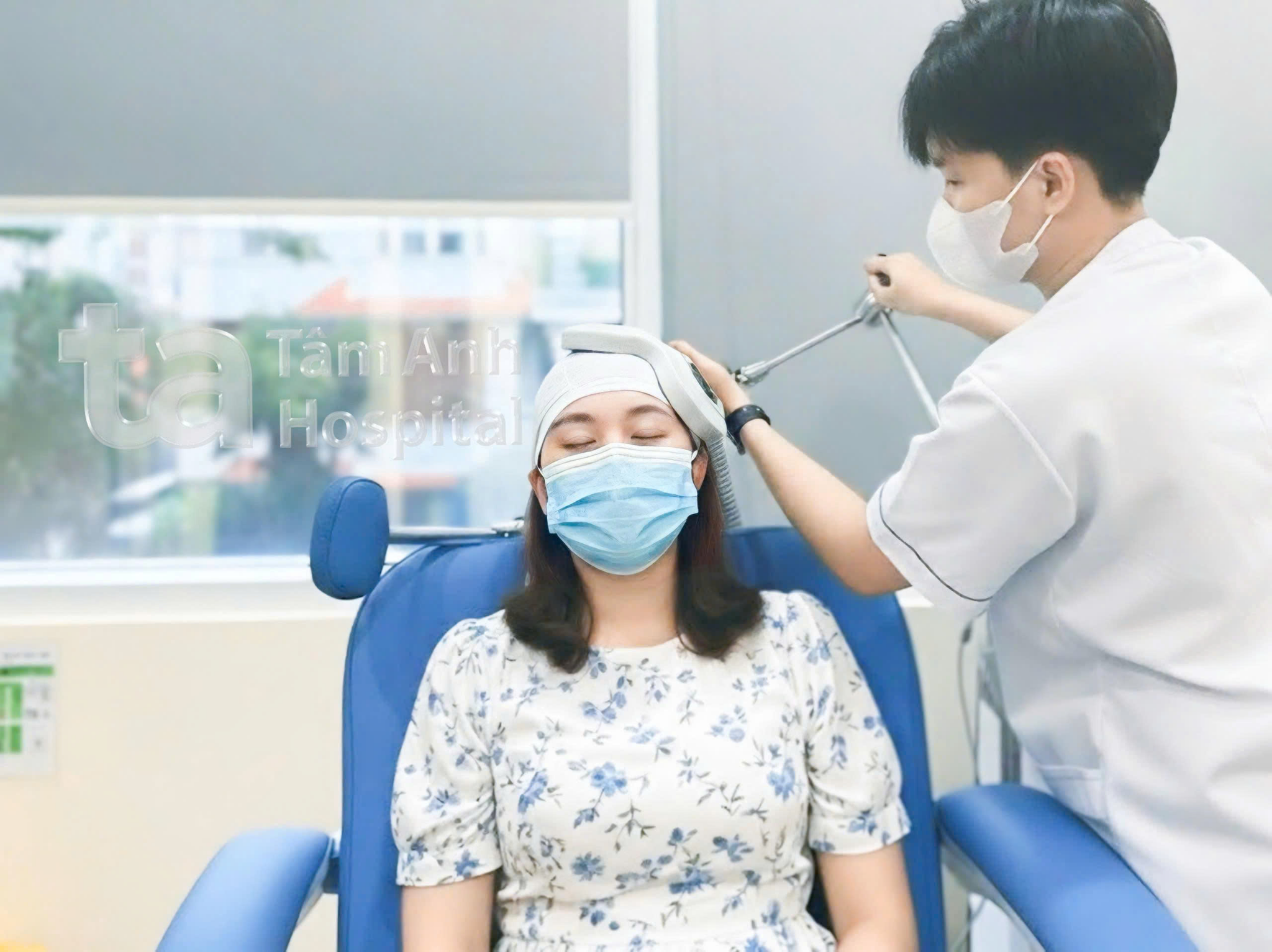 |
Mai received non-invasive transcranial magnetic stimulation to alleviate depression symptoms. Photo: Tam Anh General Hospital |
MSc. Vo Huynh Yen Nhi, from the Department of Neurology, Neuroscience Center, provided psychotherapy to Mai. This therapy helped Mai identify the cycle of pressure she was trapped in, such as setting excessively high standards and achievement pressure. During treatment, she received guidance on rearranging her work, avoiding self-imposed pressure, learning to rest, and sharing difficulties with family. Consequently, her mental state gradually stabilized, and she slept better.
At her follow-up visit, Mai's condition had significantly improved. She reported proactively adjusting her work, dedicating time to self-care, and mentally preparing for motherhood.
 |
Mai receiving psychological counseling from MSc. Nhi. Photo: Tam Anh General Hospital |
According to MSc. Nhi, depression can be treated effectively with early detection and proper intervention. If feelings of sadness, fatigue, and emptiness persist, accompanied by physical abnormalities affecting health, work, and life, patients should seek medical evaluation for prompt intervention instead of trying to endure it alone.
Trong Nghia
| Readers can send questions about neurological diseases here for a doctor's response. |