On 12 October, Zhongnan Hospital of Wuhan University admitted 10-year-old patient Phi Phi from Hong'an district. He was transported by rescue helicopter to shorten travel time and minimize vibrations during the emergency transfer, arriving with acute brain hemorrhage and partial paralysis.
Doctor Wan Feng, head of the Department of Neurosurgery, stated that a computed tomography (CT) scan revealed an intracranial hemorrhage of up to 40 ml. This bleeding compressed the brain tissue, causing the patient partial paralysis and aphasia, a loss of language ability. Subsequent cerebral angiography also detected 7 scattered aneurysms.
 |
Scans revealed the patient had 7 cerebral aneurysms. *Photo: Hubei TV* |
An echocardiogram confirmed infectious vegetations attached to the heart valves, a typical sign of infective endocarditis. Doctor Zhang Dingbao, deputy head of the department, explained that fragments of these vegetations, containing bacteria and fibrin, detached from the heart valves. They then traveled through the bloodstream to the brain, causing blockages and inflammation of blood vessel walls, which led to the formation of thin, fragile, and easily ruptured infectious aneurysms.
Upon reviewing the patient's medical history, doctors noted that several months prior, he had extracted a decayed tooth at home using his hands. The open wound in the oral cavity, lacking sterile control, provided an entry point for bacteria into the bloodstream, a condition known as bacteremia. These bacteria subsequently traveled to the heart, localized on the heart valves, before disseminating to the cerebral vascular system.
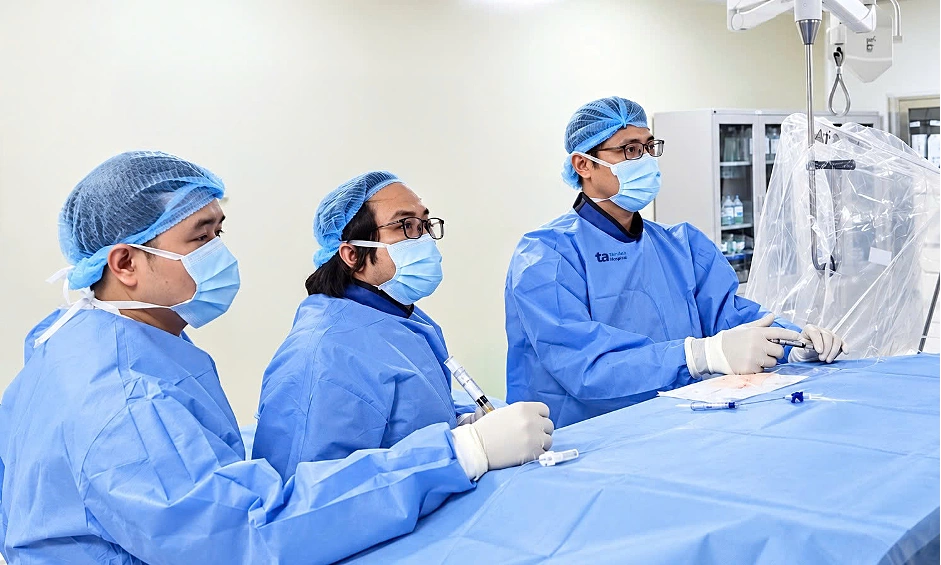
Surgeons performed an emergency craniotomy to remove the hematoma and clip the ruptured aneurysm, temporarily stabilizing the patient. However, he requires prolonged antibiotic treatment to control the infection in his heart and close monitoring of the remaining 6 aneurysms.
Doctors advise parents against allowing children to extract their own teeth at home, especially if the tooth is decayed or if there is gingivitis. Bacteria from the oral cavity can easily enter the bloodstream, leading to sepsis and damage to vital organs such as the heart and brain. If a child experiences a persistent low-grade fever, fatigue, and lethargy after any dental procedures, families should seek specialized medical examination to avoid confusing it with a common cold or flu.
Binh Minh (According to Hunan Economic Television, Ifeng, Sina)