The young man was brought to the clinic by his former boyfriend after experiencing fatigue, a persistent low-grade fever, and swollen lymph nodes in his groin. Initially, they both suspected a common infection. However, when the doctor ordered tests for sexually transmitted infections, the results revealed the patient was infected with HIV and also had hepatitis B.
According to doctor Tra Anh Duy, Center for Men's Health, the concern extended beyond the patient's young age to his psychological state. The young man, who lived a private life and concealed his sexual orientation, was devastated upon receiving the results and experienced prolonged distress. "This is not just a story of a virus, but also a story of loneliness and a lack of psychological support", the doctor stated.
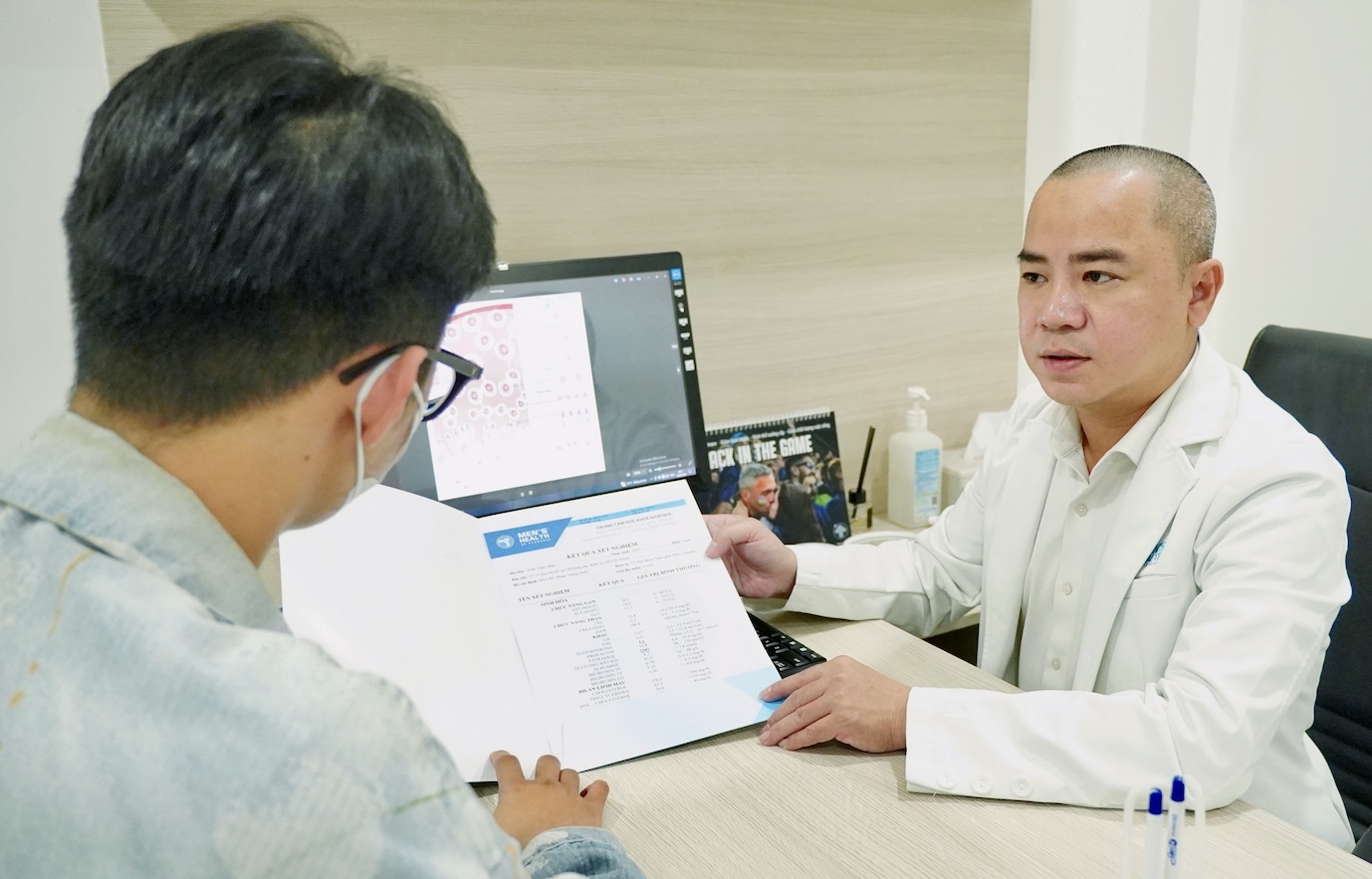 |
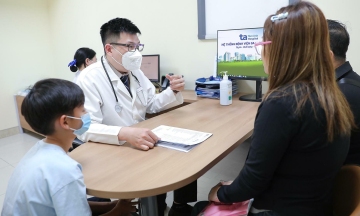
Doctor Duy advises a patient on test results. Photo: Lam Anh |
This case is not isolated; the clinic frequently records "accidental" HIV diagnoses. Recently, two male office workers sought testing after a night of karaoke and massage, concerned about contracting a sexually transmitted disease. One presented with symptoms of urethritis, while the other had almost no significant symptoms. However, full testing revealed one person was HIV positive, likely infected several months prior. Both were shocked, confused, and struggled to believe what had happened.
According to doctor Duy, HIV is no longer an unfamiliar topic. A common thread among many patients is their disbelief that they are at risk. They come in for symptoms like painful urination, warts, a sore throat, anal inflammation, or simply because they "feel a bit strange", only to receive an unexpected HIV diagnosis.
"Many young people believe that a lack of symptoms means they are safe, while in reality, HIV can exist in the body for a long time without obvious manifestations", the doctor explained. Some continue living normally, dating, and believing they are fine, until a check-up for another illness reveals their status.
In TP HCM, HIV is currently concentrated primarily among young people, with thousands of new infections reported each year. Statistics from 2025 indicate that the 15-29 age group accounts for 42% of new infections, a higher proportion than other age groups. Notably, 81% of new cases are transmitted through unsafe sexual contact, superseding intravenous drug use as the primary transmission route. Among high-risk groups, which constitute about 90% of total new cases, men who have sex with men (MSM) represent the largest proportion, at 54%.
The doctor believes young people face high risks due to several factors: early sexual activity coupled with a lack of protective skills, and the rapid, discreet nature of finding partners through apps, which results in encounters with limited information and less risk control. While connecting via dating applications becomes easier, knowledge of self-protection has not kept pace.
Furthermore, many individuals remain hesitant to use condoms, get tested, or learn about preventive measures like PrEP, often placing too much trust in the perception that "this person must be safe". Stigma also presents a significant barrier. Many young people feel compelled to conceal their identity and fear judgment, leading them to postpone medical examinations and testing, which often results in late diagnosis.
According to doctor Duy, HIV is no longer a "death sentence" if detected early and treated correctly, though it remains a chronic illness requiring long-term monitoring. Preventing HIV is not overly complex: it involves consistent and correct condom use, regular testing, and considering PrEP if there is recurrent risk. In cases of recent high-risk behavior, such as: unprotected sex or condom breakage, post-exposure prophylaxis (PEP) should be considered and administered as soon as possible, ideally within 72 hours.
Furthermore, HIV testing should not be limited to when symptoms appear. Individuals at risk should undergo regular screening, and also be tested for other sexually transmitted infections such as: syphilis, gonorrhea, chlamydia, hepatitis B, and hepatitis C, as HIV often co-occurs with these conditions.
Le Phuong