


Known as the 4-7-8 breathing method, this relaxation exercise was developed by Dr. Andrew Weil, a professor of medicine and public health and founder of the Andrew Weil Center for Integrative Medicine at the University of Arizona (US).
This technique originates from Pranayama yoga, an ancient tradition that focuses on conscious breath control. Practiced in Eastern cultures for thousands of years, deliberate breathing techniques – such as slow, deep abdominal breathing – are used to calm the overactive sympathetic nervous system (the stress-inducing system), thereby managing anxiety and guiding the body into a state of deep relaxation.
Detailed instructions
You can practice the 4-7-8 method anywhere, anytime: when lying in bed, before an important meeting, or after a tense argument. The steps are as follows:
Inhale through your nose for 4 seconds.
Hold your breath for 7 seconds.
Exhale through slightly parted lips (as if whistling) for 8 seconds.
Suzanne Bergmann, a psychotherapist in New York, advises starting by repeating this cycle four times.
"The pause between breaths helps us focus more on slowing our breathing, while ensuring complete inhalation and exhalation", Bergmann explained. She added that extending the exhale helps the lungs expel more residual air than usual, allowing the body to take in more oxygen with the next inhale.
If you skip the breath-holding step, you might inadvertently breathe too quickly or shallowly, which can initially cause discomfort. Practice gently, avoiding overexertion. If you feel dizzy, you can count the beats a little faster (it doesn't have to be precise to the second).
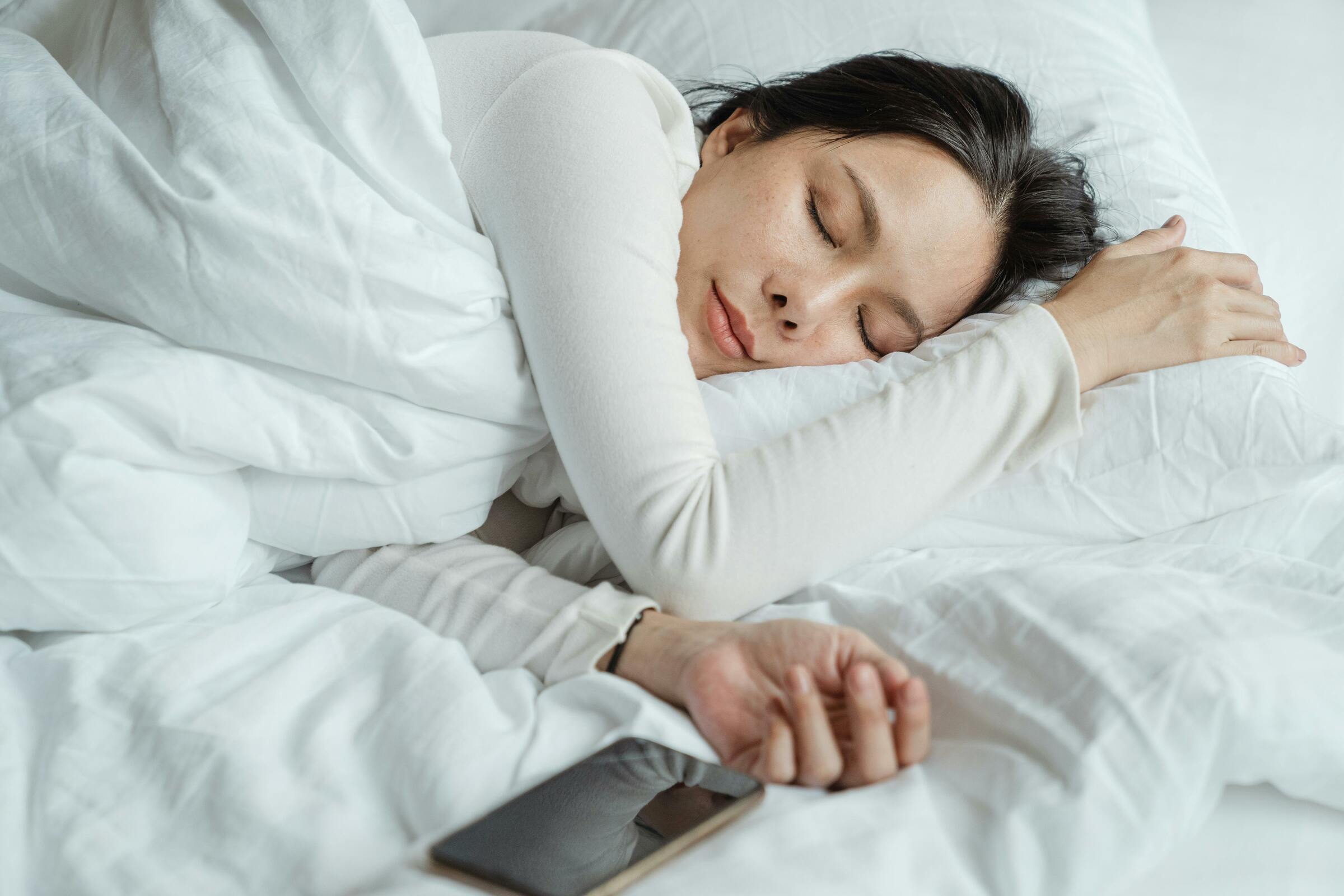 |
Instead of tossing and turning, try inhaling for four counts, holding your breath for seven counts, and exhaling for eight counts, repeating the cycle four times to encourage sleep in just a few minutes. Illustration: Pexels |
Why the 4-7-8 method works
Eliminates negative thoughts
When anxious, your mind cannot focus on two things at once. Counting the inhales, breath holds, and exhales acts as a distraction from unwanted, racing thoughts.
Activates the diaphragm
When you breathe deeply and intentionally, you fully activate your diaphragm – the primary respiratory muscle located just below the lungs. This improves breathing efficiency and helps regulate your posture.
Induces deep relaxation
"Breathing exercises aid sleep by activating the parasympathetic nervous system", said Dr. Cheri D. Mah, a sleep expert. The parasympathetic system is responsible for returning the body to a state of rest, contrasting with the sympathetic system which triggers the "fight or flight" response (increasing heart rate, anxiety, adrenaline). Many people often remain stuck in a stressed state without realizing it, leading to chronic insomnia.
Research shows that slow breathing, combined with healthy sleep habits, can be more effective than hypnosis or medication in combating insomnia.
Reduces chronic stress
This method is not an instant miracle but requires consistency. Over time, the ability to self-regulate the nervous system brings significant health benefits. "Reducing stress lowers blood pressure, improves mood, and reduces muscle tension", psychotherapist Bergmann emphasized.
By My Y (Source: Real Simple)


