The policy to support medical staff rotating for a fixed term to commune-level health stations and special zones was approved by the Ho Chi Minh City People's Council at its meeting on 22/9. This policy will be implemented from 1/10/2026 until the end of 2030.
| Position | Support Level (million VND/month) |
| Doctors with professor, associate professor titles; doctoral degrees or specialist doctor level II. | 20 |
| Resident doctors, specialist doctor level I or specialist doctors. | 17 |
| Other doctors | 12 |
| Nurses, midwives, medical technicians, pharmacists with university degrees or higher. | 10 |
| The above groups with college degrees | 8 |
The support amount is calculated based on the actual time spent performing rotation duties. Grouping is determined by training level, training duration, professional competence, and job requirements.
For challenging areas, the policy applies a higher coefficient. Medical staff rotating to Thanh An island commune will receive 1,2 times the base amount, reaching a maximum of 24 million VND per month. Support for the Con Dao special zone is 1,5 times, corresponding to a maximum of 30 million VND per month.
This financial support is an additional policy from the city. It does not replace salaries, allowances, travel expenses, or other benefits that medical staff are entitled to under current regulations.
According to calculations by the city People's Committee, the support budget, based on position and professional qualifications, will cover approximately 1.300 individuals, with each person receiving support for 6 months, totaling over 98 billion VND annually. This includes: 250 resident doctors, specialist doctor level I or specialist doctors; 700 doctors; 180 nurses, midwives, medical technicians, and pharmacists with university degrees or higher; and 120 individuals with college degrees.
To account for a scenario where 20% of rotating staff work in Thanh An or Con Dao and receive the highest coefficient of 1,5, the city has allocated an additional maximum of nearly 10 billion VND. Therefore, the total estimated maximum annual budget is over 108 billion VND.
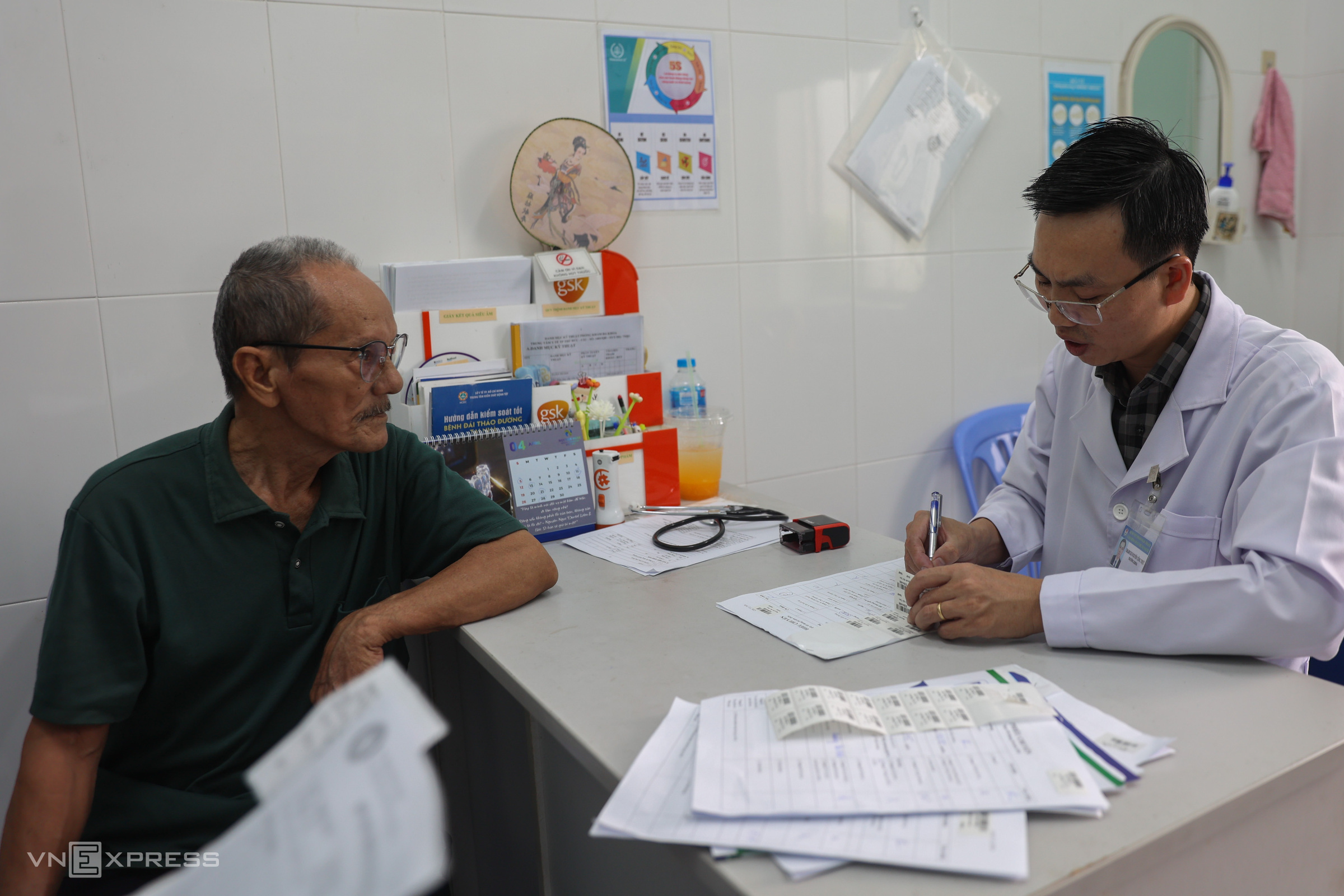 |
People receiving medical examination at Tang Nhon Phu ward health station, 4/2026. *Photo: Quynh Tran*
This policy aims to motivate medical staff, especially highly qualified doctors, to participate in rotations to local facilities. This initiative comes as workloads at health stations have increased following administrative unit restructuring. The city expects this will enhance local treatment capabilities, facilitate technical transfers, reduce patient referrals to higher-level hospitals, and help residents access quality healthcare services directly in their communities.
According to the proposal, the city currently has 168 health stations with 296 service points, managing about 14,5 million residents. These stations currently employ 1.415 doctors, with 1.073 holding practicing licenses. However, a comprehensive assessment of needs indicates that health stations require 1.046 rotating doctors across various specialties, including: internal medicine, surgery, obstetrics, pediatrics, traditional medicine, ophthalmology, otolaryngology, and dentistry.
After administrative unit reorganization, the scope of management and workload for health stations have increased significantly. Beyond initial medical examinations and treatments, these facilities must now manage non-communicable diseases, vaccinations, maternal and child care, public health screenings, and establish electronic health records.
The city government believes that rotating doctors from higher-level facilities to local ones not only supplements human resources but also facilitates technical transfers, on-site training, consultations, and enhances the professional capacity of the staff at the stations.
The policy also aligns with the goal set by Resolution 72 of the Politburo for the 2025-2030 period: each year, localities should rotate, transfer, or assign at least 1.000 doctors to work for a fixed term at commune-level health stations.
Le Tuyet