Doctor of First-Degree Specialization Tran Thi My Linh, specializing in Dermatology and Aesthetic Dermatology at Tam Anh General Hospital, Ho Chi Minh City, diagnosed Thang with Ota nevus, a form of hyperpigmentation caused by melanocytes located deep within the dermis. This birthmark can appear at birth, become more apparent in early childhood, or darken during puberty.
The lesion on Thang's right cheek presented as flat, grayish-brown patches, unevenly distributed with interspersed darker areas. It caused no pain or itching, measured about 6 cm, and affected his appearance.
According to Doctor Linh, the timing and method for a child's treatment depend on the lesion's characteristics, the child's age, the location of the lesion, and their cooperation. Thang was treated with picosecond laser (pico laser), with an estimated 8 to 10 sessions, each spaced 4 to 6 weeks apart. The actual number of sessions may be adjusted based on the lesion's response and the child's skin condition during treatment.
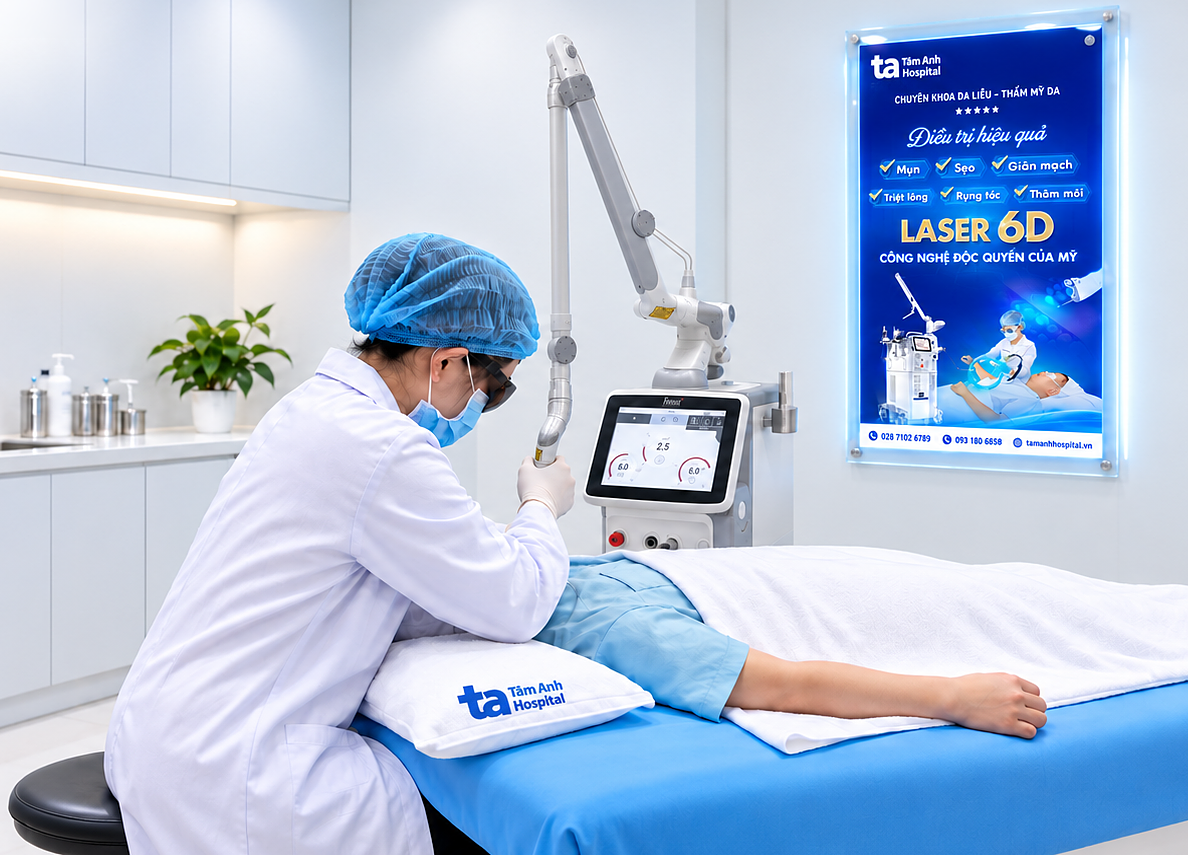 |
A doctor uses a pico laser to treat Thang's birthmark. *Photo: Tam Anh General Hospital* |
The picosecond laser uses ultrashort laser pulses, selectively targeting pigment and fragmenting pigment particles for the body to gradually eliminate. It also limits thermal damage to surrounding skin tissue. For young children, doctors adjust the wavelength, energy, and laser parameters to suit their age, skin characteristics, and pigment level, thereby reducing the risk of skin damage and pigment disorders. Thang's response was monitored after treatment to adjust the protocol accordingly.
After 8 sessions, the birthmark area on Thang's right cheek significantly faded, with more uniform pigmentation that was closer to the surrounding skin tone. The doctor instructed the family on proper sun protection and skincare for the child to minimize irritation and the risk of post-treatment hyperpigmentation or hypopigmentation.
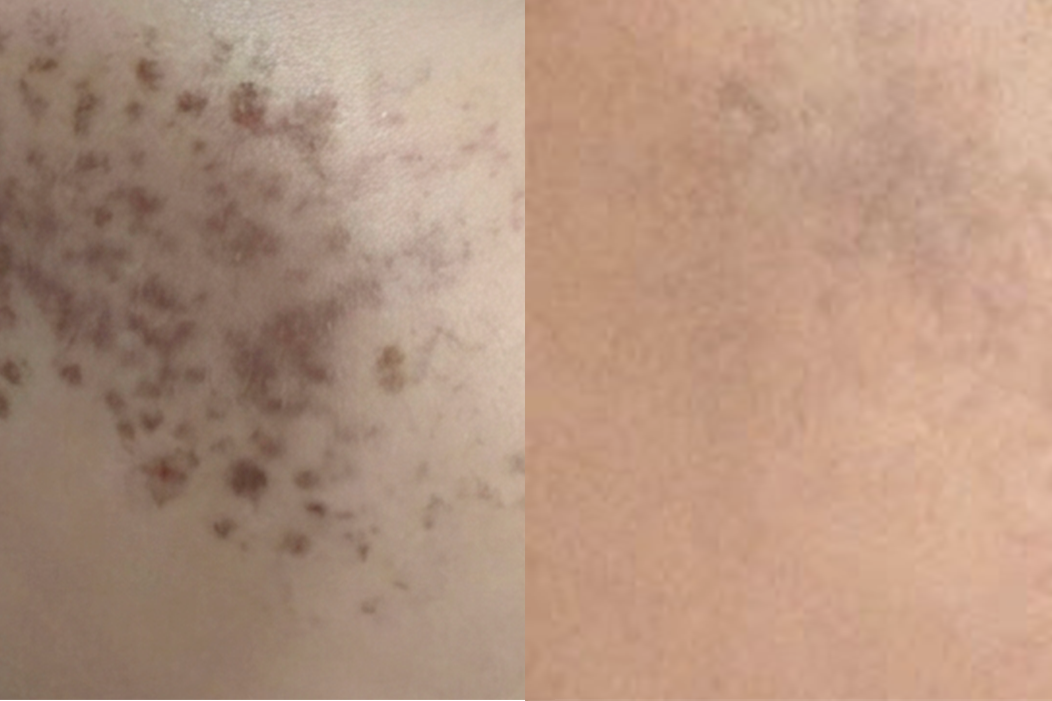 |
Thang's birthmark faded after 8 laser treatments (right). *Photo: Tam Anh General Hospital* |
Doctors advise parents against self-administering bleaching products, pigment-fading creams, or methods like burning or skin peeling without a clear diagnosis of the lesion type. Different types of pigmented birthmarks may have similar appearances but vary in nature and treatment approach, requiring examination and assessment by a Dermatology and Aesthetic Dermatology specialist before any treatment.
For birthmarks that appear in early childhood, parents should monitor any changes. If a birthmark darkens, widens, or if new areas of abnormal pigmentation emerge, parents should seek a medical examination to determine the cause. Timely treatment helps control lesions while they are localized, preventing the pigmentation from becoming more prominent as the child grows.
Minh Huong
*Character's name has been changed
| Readers can submit questions about dermatology and aesthetic dermatology here for doctors to answer. |