Over four years ago, the man was diagnosed with azoospermia, meaning no sperm in his semen. A testicular biopsy revealed he suffered from maturation arrest, a condition where sperm production stops prematurely before mature sperm form.
Despite the low chance of finding sperm, the couple hoped to have a child using his own sperm. In early 7/2025, he underwent microsurgical testicular sperm extraction (micro-TESE) at the Fertility Support Center, City International Hospital. After examining all tissue samples, doctors found a few immotile sperm. Embryologists evaluated and selected viable sperm for intracytoplasmic sperm injection (ICSI), successfully creating six embryos.
The first two embryo transfers were unsuccessful. The couple felt disheartened but decided to continue as long as embryos remained. "It was a long journey, and there were times when my wife and I were exhausted, especially after two failed embryo transfers, but we decided to try one more time," he said.
Dr. Nguyen Thi Ngoc Suong, Head of the Fertility Support Center, stated that the team re-evaluated the treatment process and advised on the next steps. When embryo transfers fail, many factors must be considered, rather than focusing on a single cause.
Fortunately, the third embryo transfer was successful, and his wife became pregnant and was monitored until the baby's birth. The day their child cried for the first time, the couple concluded their 10-year wait.
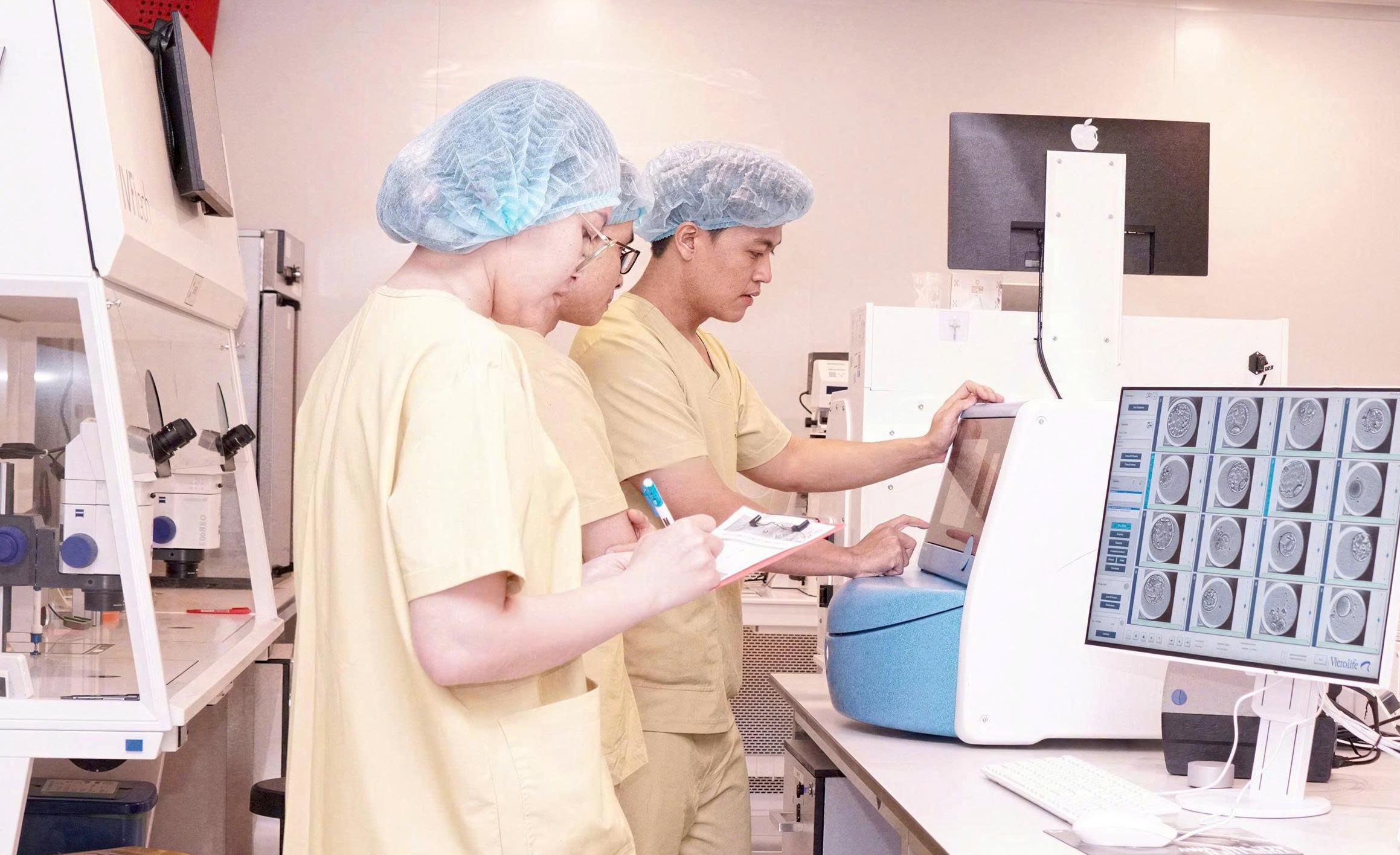 |
In vitro fertilization at the Fertility Support Center, City International Hospital. Photo: Hospital provided |
For men without sperm in their semen, sperm can sometimes still be retrieved directly from the testicles. If viable sperm are found, doctors can use them for assisted fertilization and embryo creation. However, the likelihood of finding sperm and treatment success depends on the cause, testicular condition, and other factors. These cases often require coordination among andrology, fertility support, and obstetrics, covering everything from sperm retrieval, embryo creation, and embryo transfer to pregnancy monitoring.
Le Phuong