Children's thinking abilities develop through daily learning, play, communication, and experiences. Beyond school lessons, certain daily habits provide opportunities for children to think and independently find solutions to problems.
Encourage children to ask questions
According to Times of India, young children are often curious about the world around them and frequently ask "why" and "how" questions. Instead of telling children to stop asking or immediately giving them answers, parents can explore with their children. For example, if a child asks why a toy floats on water, parents can ask back, "Which items do you think will float, and which will sink?", then experiment with the child and observe the results. This approach encourages children to observe, connect information, and form their own arguments.
Let children solve appropriate problems independently
When children encounter difficulties, many parents tend to do the task for them to finish quickly. However, independently finding solutions to age-appropriate problems is an opportunity for children to develop critical thinking and decision-making skills.
For example, if a child struggles to assemble a toy, parents can suggest they review the instructions, try a different approach, or check the parts already assembled instead of immediately helping. If the first method is not effective, children learn to try again and adjust their approach.
Maintain a reading habit
Regular reading helps children encounter words, images, stories, and various situations. When reading with their children, parents can ask about characters, plot developments, or suggest they predict what will happen next. For young children, simple questions like "What do you think the character will do?" encourage them to think and express their ideas.
Dedicate time to thinking games
Not all thinking development activities need to be tied to books. Games such as: puzzles, matching pictures, spot the difference, riddles, or rule-based games all provide opportunities for children to observe and remember. Parents should choose games appropriate for their child's age and ability, according to Parents.
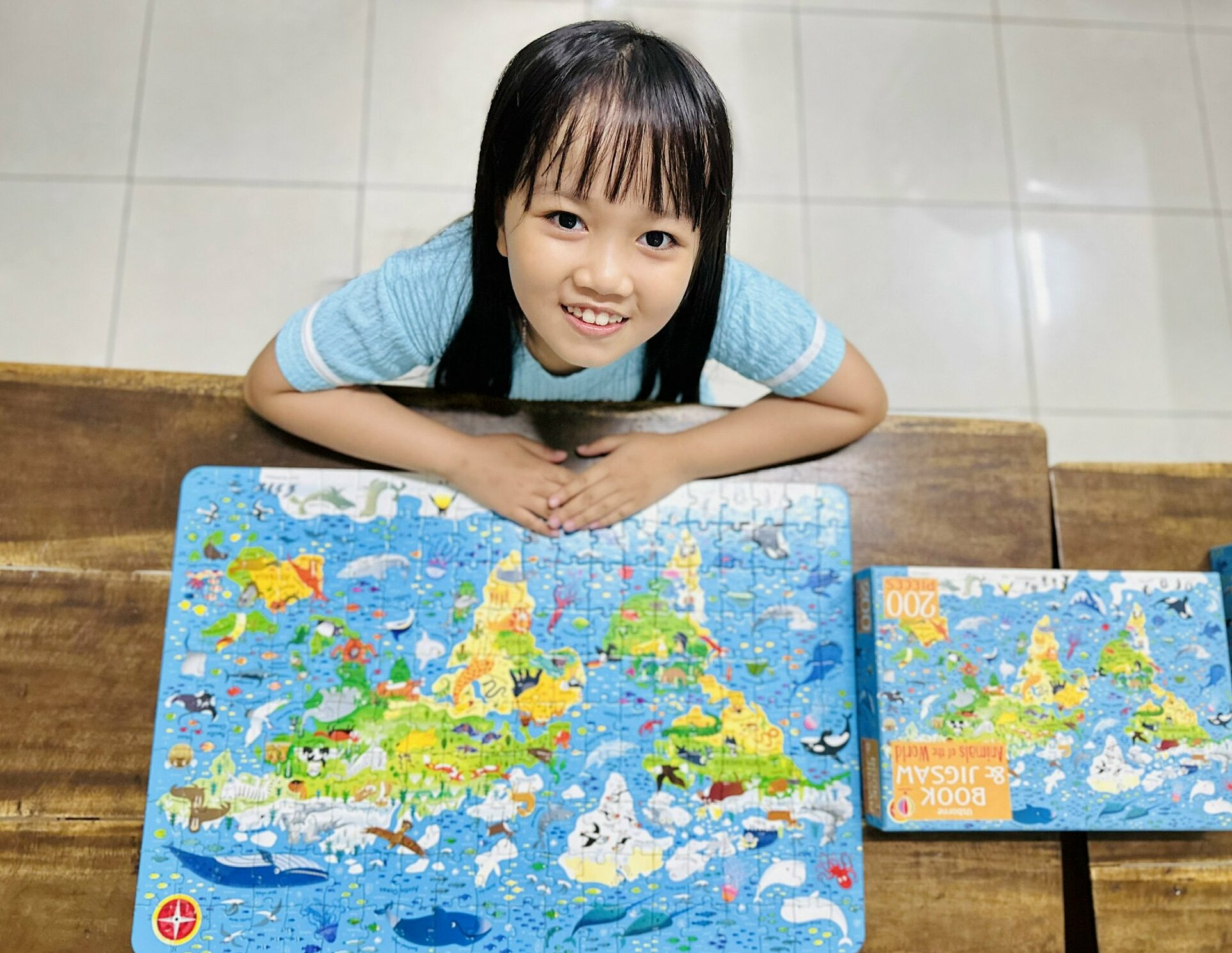 |
Children practice thinking games to help develop their brains. Photo: Kim Uyen. |
Encourage children to experience and explore
Real-life experiences help children learn from what happens around them, rather than just passively receiving information. Parents can join their children in caring for plants, cooking, organizing objects, or conducting simple, age-appropriate experiments.
During this process, parents encourage their children to observe changes, predict outcomes, and explain what they see. For example, when planting seeds, a mother can ask her child, "What does a plant need to grow?" or "What happens if a plant doesn't get enough water?".
Le Nguyen (Compiled)
| Readers can send questions about children's illnesses here to receive answers from doctors. |