On the morning of 17/4, Pham Chanh Trung, Head of the Ho Chi Minh City Population Sub-Department, announced that the city has transferred a 5 million dong reward to 1,310 mothers who have had two children since 1/9/2025. This regulation applies across the newly expanded Ho Chi Minh City, including areas recently merged from Binh Duong and Ba Ria - Vung Tau.
Meanwhile, 7,650 other women received 3 million dong for having a second child between late 2024 and the end of August 2025. However, this 3 million dong payment is exclusively for residents in the former Ho Chi Minh City area, not including the newly merged localities.
The city government is providing financial incentives for families to have more children because the birth rate, which is the average number of children a woman has during her reproductive years, currently stands at just 1.51. Although this figure shows a slight increase from 1.43 in 2024, Huynh Minh Chin, Deputy Director of the Ho Chi Minh City Department of Health, considers it an alarming level.
"The critically low birth rate directly threatens the future workforce, accelerates population aging, and poses a massive challenge to sustainable development," Chin stated. The city currently has over 1.57 million elderly residents, accounting for 11.4% of its total population, with an average life expectancy of 76.7 years, higher than the national average.
Many Asian and European countries are also investing billions of USD in cash incentive programs to address birth rate declines. South Korea and Singapore lead this trend, directly transferring thousands of USD to couples' accounts shortly after they welcome a new family member. In Europe, the Hungarian government even offers lifelong personal income tax exemption for mothers who have 4 or more children.
However, global demographic studies demonstrate that one-time cash bonuses only generate short-term increases in birth rates and cannot reverse the decline. These financial support packages are insufficient to alleviate young people's concerns about expensive education costs, escalating housing prices, and inflexible work environments.
 |
Children play in Ho Chi Minh City. Photo: Khuong Nguyen |
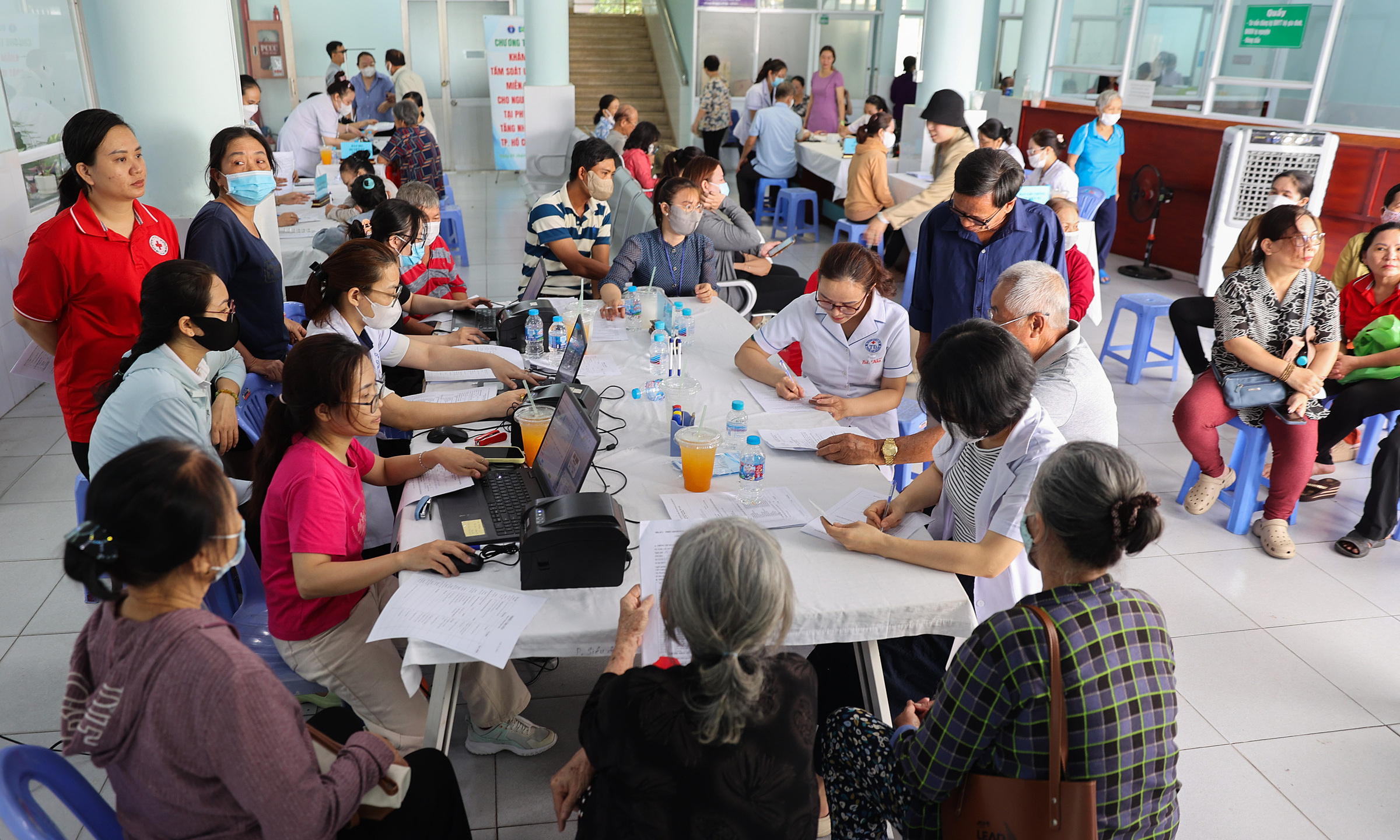
In addition to financial rewards, from 15/4 to 30/5, the health sector is directly providing pre-marital health check-up services, prenatal screening, and establishing health records for the elderly in 168 communes and wards. Pregnant women and the elderly, particularly those from disadvantaged households, can easily access these services in their residential areas instead of traveling to higher-level hospitals.
This program helps couples prepare a strong foundation in health and finances before deciding to have children, anticipating the new Population Law which will officially take effect from 1/7.
Le Phuong