Hung, a 23-year-old man, is among the rare male patients diagnosed with systemic lupus erythematosus, a chronic autoimmune disease. The Ministry of Health reports that approximately 50 out of every 100,000 people have lupus erythematosus, with only 10% being male. This low incidence often leads to late diagnoses in men, causing the disease to progress more aggressively and result in severe internal organ damage, making treatment more complex than in women.
Hung's case exemplifies this severe progression. Three years prior, he experienced unexplained weight loss, prolonged fever, fatigue, hair loss, and joint pain. However, he only received a diagnosis of systemic lupus erythematosus one year ago. The disease's frequent relapses led to Hung needing three stents to address blood vessel blockages caused by antiphospholipid syndrome. He also suffered repeated acute heart and kidney failure, hair loss, red rashes, and stiff, painful joints.
Associate Professor, Doctor Hoang Thi Lam, Head of the Clinical Immunology Department at Tam Anh General Hospital, TP HCM, explained that lupus causes the immune system to malfunction, mistakenly attacking healthy tissues. This leads to inflammation and damage in various organs, including the skin, joints, kidneys, heart, lungs, or nervous system. The disease is often hard to identify initially because its symptoms mimic many other conditions, causing confusion, and each patient presents with unique symptoms.
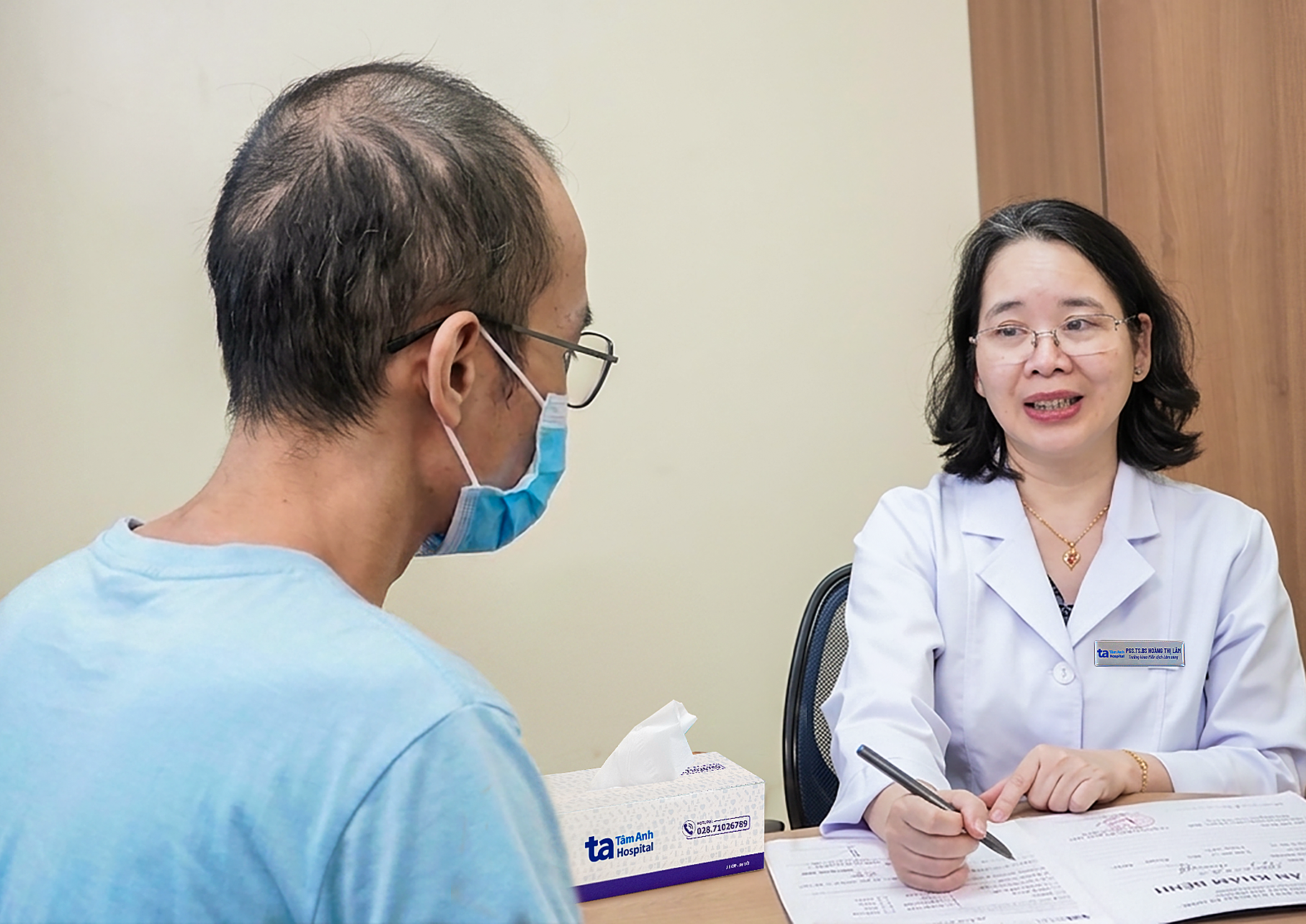 |
Doctor Lam advises Hung on his treatment regimen. *Photo: Tam Anh General Hospital* |
According to Doctor Lam, the challenge with Hung's case was not merely controlling the disease, but also selecting an appropriate treatment approach given the extensive organ damage. Excessive immune suppression risked infection or worsening organ damage, whereas insufficient control would allow the disease to progress. The medical team developed a treatment regimen focused on carefully controlling immune activity while simultaneously protecting Hung's heart, kidney, and vascular functions.
Hung received foundational medications such as hydroxychloroquine combined with immunosuppressants, alongside low-dose aspirin and anticoagulants to minimize the risk of blood clot formation. He underwent monthly specialized tests, including coagulation indices, heart and kidney function, and autoimmune antibodies, to assess his response and allow for timely adjustments to his treatment regimen. At one point, his coagulation indices showed an abnormal increase, leading the team to conduct an interdisciplinary consultation for prompt intervention and to mitigate the risk of vascular blockage.
After two months of intensive treatment, Hung's condition improved significantly. His heart function gradually stabilized, and abnormal kidney indices decreased by over 60% compared to his initial state. Flare-ups were also brought under better control. As his daily life gradually returned to normal, Hung continues monthly follow-up appointments to monitor and adjust his treatment regimen. Systemic lupus erythematosus is a chronic disease that currently has no complete cure but can be managed effectively with early detection and appropriate treatment.
Doctors advise individuals experiencing symptoms such as prolonged fever, joint pain, hair loss, or red rashes on the skin—especially when these symptoms occur simultaneously and persist—to seek prompt medical attention. Early diagnosis and timely treatment are crucial to prevent severe organ damage.
Minh Huong
*Character's name has been changed.