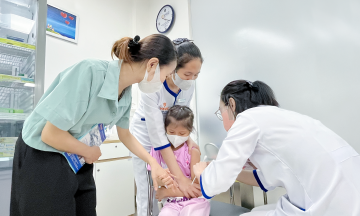
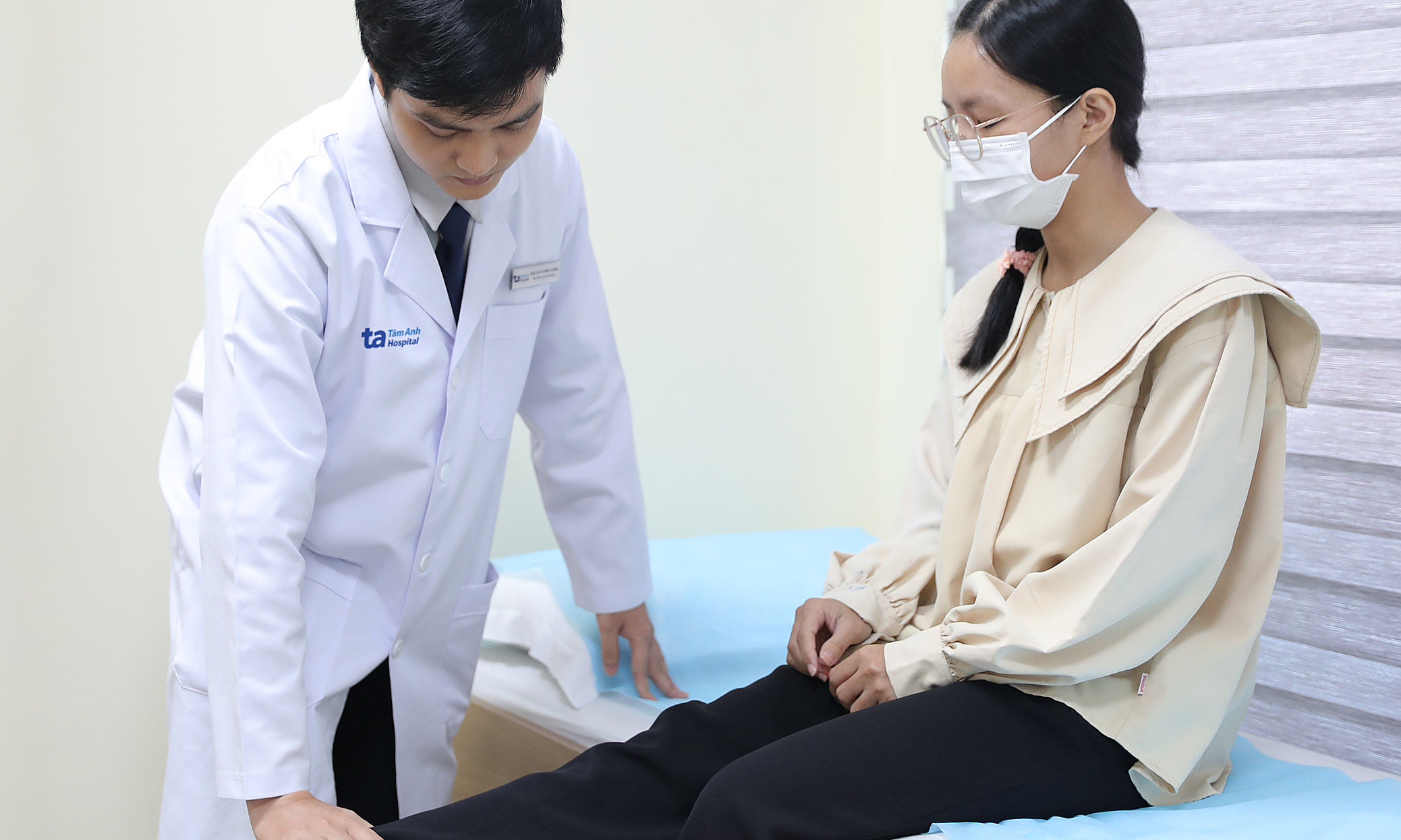
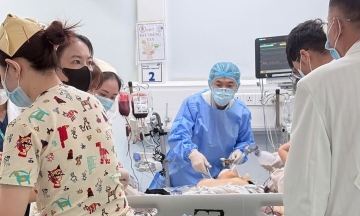
Dr. Tran Thuy Linh, from the Department of Pediatrics at Tam Anh General Hospital Hanoi, diagnosed the child with hand, foot, and mouth disease (HFMD) stage 2a, which is the initial stage of neurological damage. Laboratory tests confirmed the child was infected with the EV71 strain, a highly virulent virus that can attack the central nervous system, causing dangerous complications if not closely monitored.
On the third day, blood tests showed a clear increase in inflammatory markers, suggesting a bacterial superinfection or a systemic inflammatory response as the hand, foot, and mouth disease progressed severely. A chest X-ray revealed bilateral bronchitis in baby My. Dr. Linh explained that when children contract the EV71 strain of hand, foot, and mouth disease, their weakened immune system creates an opportunity for viruses to attack the respiratory tract or nervous system. Symptoms such as coughing, high fever, or rapid breathing from bronchitis can easily mask signs of severe hand, foot, and mouth disease progression.
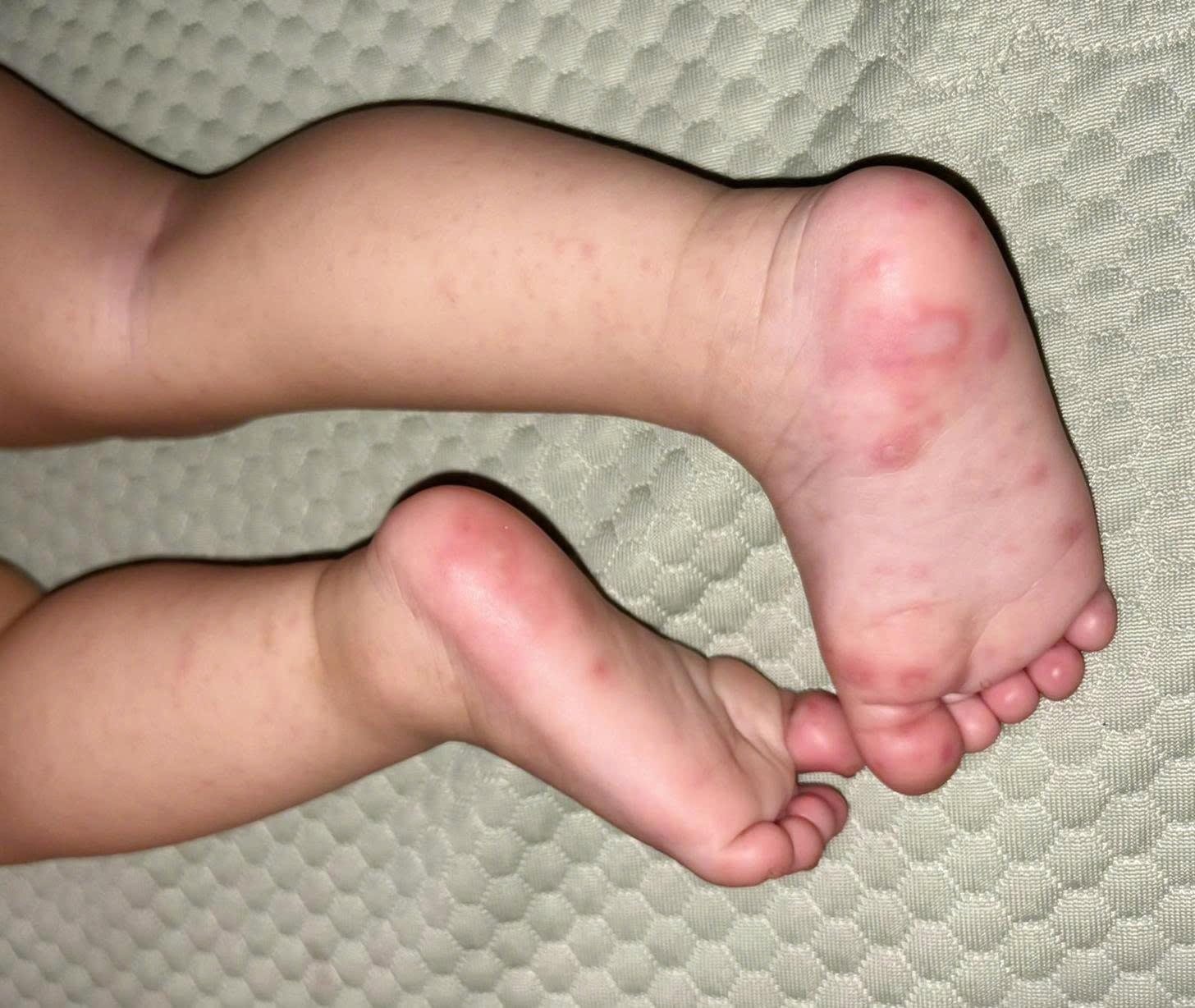 |
Red blisters and rashes appeared on baby My's feet. Photo: Family provided. |
The patient was closely monitored every three hours to detect signs of worsening condition. The treatment protocol focused on supportive care, including fever reduction, sedation when the child startled, oral and skin mucosal care, and antibiotics for signs of superinfection.
After six days of intensive treatment, the child was fever-free, no longer startling, mucosal lesions improved, the skin rash dried and peeled slightly, respiration stabilized, and was discharged.
Dr. Thuy Linh noted that signs such as startling with a sensation of falling, persistent high fever difficult to reduce, limb tremors, an unsteady gait, rapid breathing, or chest indrawing are dangerous warning signs, and the child needs immediate medical examination. Maintaining personal hygiene and a clean living environment plays an important role in disease prevention. Caregivers should wash hands frequently, sanitize utensils, and disinfect contact surfaces to limit community spread.
Thu Huong
*Patient's name has been changed
| Readers can submit questions about neonatal pediatrics here for doctors to answer. |