Dr. Nguyen Duc Huy, an ophthalmology specialist at Tam Anh General Clinic, District 7, examined Minh Anh. After administering cycloplegic eye drops for an accurate vision test, he found her left eye was 1.5 diopters and her right eye was 2 diopters. This was 1.5 to 2 diopters lower than the prescription she was using, causing her discomfort.
The doctor prescribed new glasses matching her actual prescription. A week later, Minh Anh's vision stabilized at 10/10 with the new glasses, and she no longer experienced eye strain or dizziness.
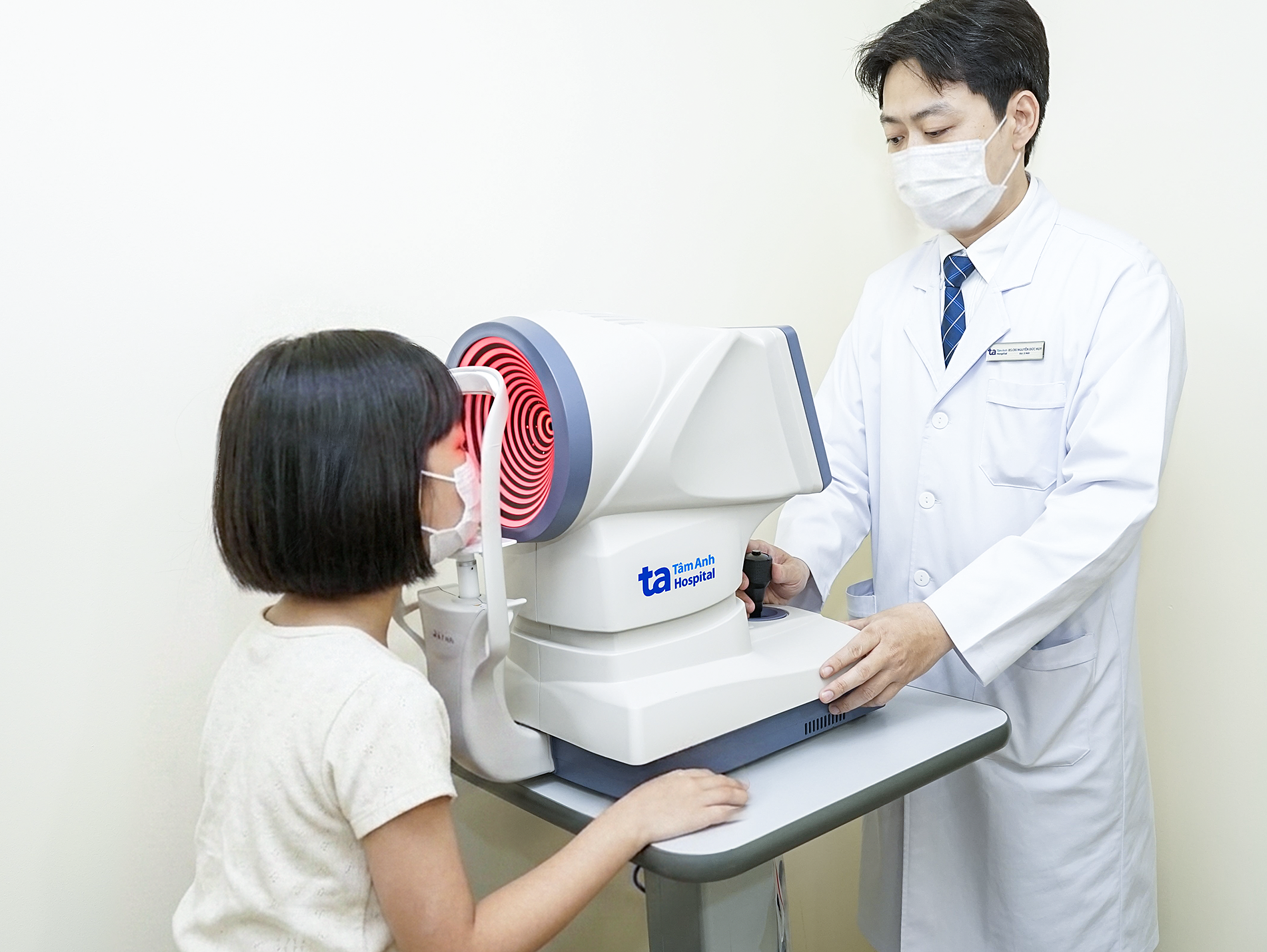 |
Dr. Huy examines Minh Anh's eyes. Photo: Tam Anh General Hospital |
Wearing incorrectly prescribed glasses for refractive errors is common in both children and adults. Many individuals self-estimate their prescription, purchase glasses simply because they offer clearer vision, or obtain them from optical shops without a specialist's examination.
According to Dr. Huy, improper refraction measurement procedures for young children in medical facilities often lead to inaccurate results. Vision testing in children is complex due to their eyes' strong accommodative ability. This often necessitates cycloplegic eye drops to temporarily paralyze the ciliary body muscles and dilate the pupils, thereby eliminating the eye's natural accommodation. The medication takes 45 to 60 minutes to take effect and is typically used for refraction measurements in children or in cases of suspected pseudomyopia. However, this crucial step is sometimes overlooked, meaning the glasses' prescription may not accurately reflect the child's true eye condition. Furthermore, without regular follow-up examinations, existing glasses may become unsuitable over time.
Wearing incorrect glasses can lead to eye strain, reduced concentration, and negatively impact daily activities and academic performance. Prolonged use forces the eyes to constantly accommodate, increasing the risk of rapid myopia progression and potentially leading to amblyopia (lazy eye). Parents should ensure their children have regular eye examinations every 6 to 12 months to monitor vision and confirm they are wearing the correct prescription.
Ngoc Kim Tham
*Character's name has been changed
| Readers can submit ophthalmology questions here for doctors to answer |