The lungs are central to the respiratory system, directly facilitating gas exchange with the external environment. Office workers often sit for prolonged periods with limited movement and poor posture. This restricts chest expansion, leading to shallow breathing and reduced gas exchange efficiency. Consequently, many individuals, even without underlying medical conditions, experience rapid fatigue, shortness of breath, and decreased concentration.
When performed correctly and regularly, breathing exercises can significantly improve respiratory function. Adjusting to deep, slow breathing increases oxygen supply to the body and efficiently removes waste gases. This, in turn, boosts endurance and reduces stress.
 |
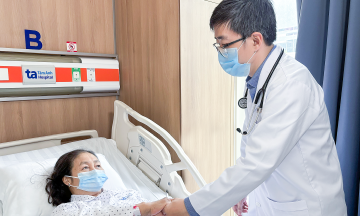
Doctor Ngan advises Minh Anh on appropriate breathing exercise duration. Photo: Tam Anh General Hospital |
Diaphragmatic breathing, also known as abdominal breathing, is a foundational technique. To perform this, sit with a straight back or lie supine, placing one hand on your chest and the other on your abdomen. Inhale slowly through your nose, allowing your abdomen to expand while keeping your chest mostly still. As you exhale, gently contract your abdomen to push the air out. This method enhances diaphragm function, increasing lung expansion, particularly in the lower lung regions where gas exchange is most active.
Pursed-lip breathing is another technique that aids in controlling breath. Inhale through your nose for about two counts, then purse your lips as if blowing out a candle, exhaling slowly for twice the duration of your inhalation. This extended exhalation keeps airways open longer, enhancing gas exchange efficiency and alleviating shortness of breath.
These two exercises can be performed two to three times daily, for five to ten minutes each session, making them ideal for sedentary office workers. Consistently practicing these breathing techniques, combined with adjusting sitting posture and incorporating light physical activity during work breaks, will significantly improve respiratory health and reduce feelings of fatigue.
Individuals experiencing frequent or persistent shortness of breath or other prolonged symptoms should seek a specialized medical examination for proper assessment and tailored advice.
Master, Doctor Nguyen Van Ngan
Department of Respiratory Medicine
Tam Anh General Hospital Hanoi
| Readers can submit respiratory health questions here for doctors to answer |