A new trend called "neck hanging exercise," which aims to simulate cervical spinal traction therapy used in hospitals, is gaining popularity among young people in China, according to SCMP on 7/4. This method requires participants to suspend their neck from a tree branch to stretch their body, intending to treat cervical spondylosis.
Data from the 2024 China Cervical Spine Health White Paper indicates that more than 200 million people in the country are experiencing cervical spine problems, with patients under 30 years old accounting for over 40% of this demographic.
This new exercise trend, long popular among the elderly, is now rapidly spreading online as more young people imitate it. In parks, it is common to see older individuals suspending themselves from trees using neck straps, with their feet off the ground, swinging like pendulums. They believe the exercise has an effect similar to medical spinal traction therapy, helping to alleviate neck pain and effectively treat conditions.
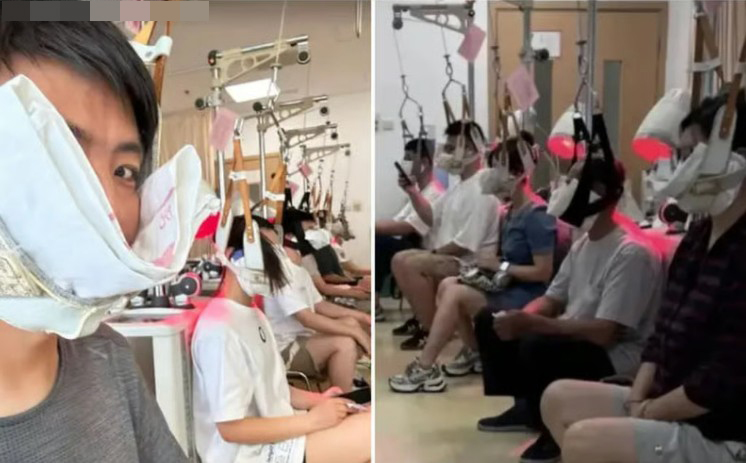 |
A group of young people participating in a "neck hanging" exercise session. *Photo: Weibo* |
A 57-year-old man named Sun from Shenyang city, Liaoning province, recounted suffering from numerous cervical spine conditions, but found relief and reduced neck and shoulder pain through a self-made traction device. However, a tragic incident occurred in 5/2024 when a man in Chongqing died from suffocation while performing this exercise.
In a 2024 interview with China National Radio (CNR), Professor Xu Wuji, a leading spinal expert at Hunan Provincial Hospital of Traditional Chinese Medicine, stated that cervical spinal traction therapy is a healing method in traditional Chinese medicine.
This is a structured physical therapy exercise aimed at treating cervical vertebral conditions. The professor further explained that "neck hanging" is actually a simulation of clinical traction therapy to treat radicular cervical spondylosis. Its main mechanism involves using external force to widen the space between vertebrae, thereby reducing intradiscal pressure and relieving compressed nerves or the spinal cord. Concurrently, the method also helps relax neck muscles, improve blood circulation, and reduce inflammation, leading to noticeable pain relief.
However, he advised people not to imitate online neck hanging exercises on their own, to avoid the risk of severe injury. According to Lichi News, proper cervical spinal traction therapy must be performed under the supervision of medical personnel, with precisely controlled parameters for angle, weight, and duration.
Typically, the traction force is maintained at only 10% to 15% of the patient's body weight. Patients must maintain a fixed posture throughout the traction process, and technical parameters are individually adjusted by a doctor to suit each person's specific condition.
In contrast, the so-called "neck hanging" exercise forces the neck to bear the entire body weight, combined with swinging or twisting movements, which can easily cause sudden neck dislocation or even fractures. Experts warn that the cervical spine is one of the most vulnerable parts of the human body because it is a hub for critical nerves and blood vessels.
"Suspending oneself with significant weight in an uncontrolled state can easily put pressure on blood vessels and nerves. Mild effects may include dizziness and nausea for practitioners, while severe cases can lead to spinal cord damage, or even quadriplegia," stated Shen Ya, a senior therapist from the Department of Rehabilitation, Eastern Theater Command Air Force Hospital.
Healthcare experts advise that instead of gambling with their health through the risky "neck hanging" practice, people should start with daily habits such as adjusting their sitting posture and minimizing prolonged head bowing. Additionally, they can apply hot compresses and massage to alleviate pain. Choosing an appropriate pillow and ensuring good sleep are equally important in protecting the cervical spine.
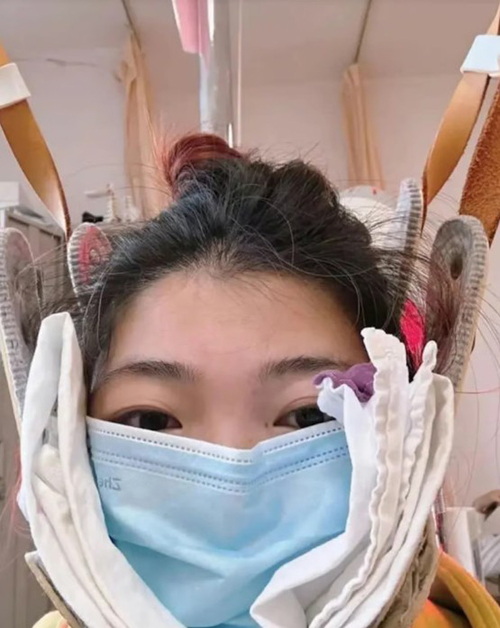 |
A woman wearing a mask while performing the controversial exercise. *Photo: Weibo* |
Binh Minh (According to SCMP, CNR, Sina)