Doctor Nguyen Huy Hoang, from the Vietnam Association of Underwater and Hyperbaric Medicine, stated that understanding how high temperatures affect the body and actively preventing these effects is crucial for everyone during extreme weather conditions.
Normally, the human body strives to maintain a stable core temperature to ensure the proper function of the brain, heart, and other vital organs. In hot weather, the hypothalamus, the brain's thermoregulation center, activates cooling mechanisms, primarily through vasodilation beneath the skin and sweating. More blood flows to the periphery to dissipate heat, causing the skin to become hot and red, and continuous sweating helps to cool the body.
"If this process continues for an extended period without adequate hydration and electrolyte replenishment, circulating blood volume decreases, and the blood becomes thicker," the doctor explained.
When blood thickens, its flow within blood vessels slows, forcing the heart to work harder to pump sufficient blood to organs, especially the brain. In individuals with pre-existing cerebral atherosclerosis, weakened vessel walls, or narrowed lumens, a sudden increase in pressure can cause vessel rupture, leading to hemorrhagic stroke. Conversely, slow, viscous blood also promotes the formation of blood clots; if a clot travels to the brain and blocks a cerebral artery, the patient will suffer an ischemic stroke.
Under extreme heat conditions, when the body's core temperature rises above about 40 degrees Celsius, heatstroke can occur. At this point, the thermoregulation center becomes disrupted, self-protective mechanisms are overwhelmed, sweating may decrease or stop, the skin feels burning hot, and individuals may become disoriented, experience altered consciousness, seizures, or even fall into a coma.
"Heatstroke directly damages brain cells and many other organs such as the heart, liver, and kidneys; if not treated promptly, patients can die within a short period," the doctor warned.
Urban environments like Hanoi and Ho Chi Minh City exacerbate these effects. Roads, concrete, corrugated iron roofs, and glass absorb and store significant amounts of heat during the day, radiating it back into the environment in the evening, prolonging hot conditions. The "urban heat island" effect makes the perceived temperature significantly higher for residents compared to rural areas or green spaces. Additionally, stagnant air, dust, and pollution increase the burden on the respiratory and cardiovascular systems.
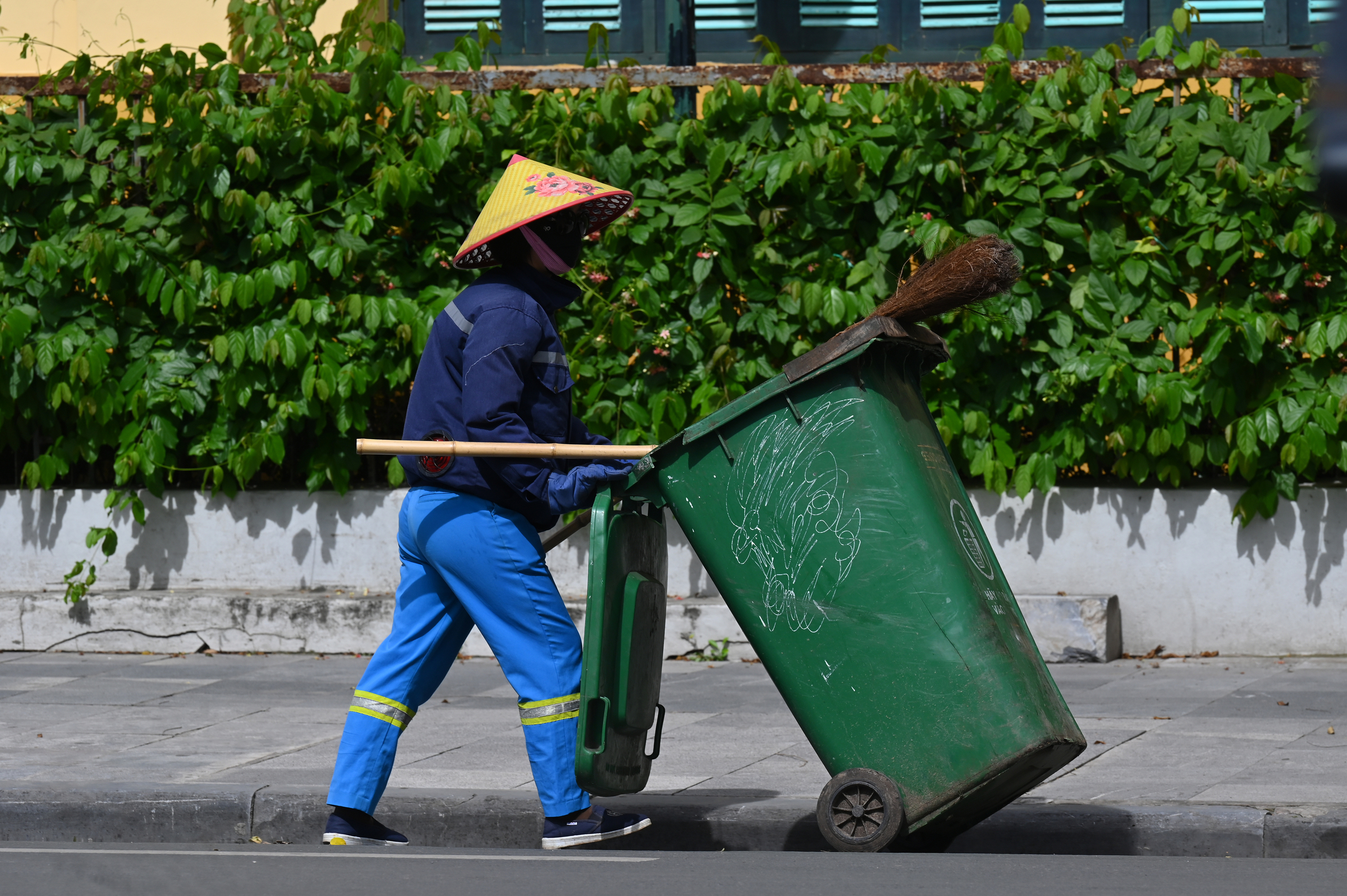 |
During hot weather, everyone should maintain their health, especially those who work outdoors. *Photo: Giang Huy* |
To mitigate the risk of heatstroke, everyone should maintain a habit of drinking enough water, from one-point-five to two liters daily, increasing intake when working outdoors or engaging in strenuous activity. Limit sugary sodas, energy drinks, and coffee, and absolutely avoid alcohol for refreshment during hot days.
Increase consumption of green vegetables, fresh fruits, various fish, and nuts, while reducing fried foods, fast food, and fatty red meat. Limit outdoor exposure during peak sun hours, from approximately 10h to 16h, unless absolutely unavoidable. When outdoors, wear a wide-brimmed hat, sunglasses, cover the nape of the neck, wear light-colored, thin, sweat-absorbent clothing, and use appropriate sunscreen to minimize radiation damage.
Outdoor workers should schedule short breaks during their shifts, park in shaded areas, slightly open windows, or use air conditioning at a moderate level to keep the cabin well-ventilated. They should drink water regularly throughout the day, not waiting until thirsty, prioritizing filtered water or water with added mineral salts, limiting coffee and sugary sodas, and absolutely avoiding alcohol during work hours.
Clothing should ideally be loose, breathable, and sweat-absorbent, avoiding too many thick, dark layers that retain heat. If symptoms such as headache, dizziness, nausea, rapid heartbeat, lightheadedness, blurred vision, difficulty speaking, or weakness in limbs occur, individuals should immediately stop their vehicle in a safe location, call for assistance, and seek medical attention as soon as possible.
Thuy An