The UK's National Health Service (NHS) faces significant supply chain challenges and rising costs for essential medical supplies due to the ongoing conflict in Iran. The hostilities have disrupted transportation in the Gulf region, impacting the global supply of petrochemical products crucial for modern healthcare. These products are vital for everything from pharmaceutical ingredients to millions of sterile, single-use items like protective equipment, medical catheters, and diagnostic device casings.
As one of the world's largest purchasers of medical supplies, the NHS spends approximately GBP 8 billion annually on equipment and consumables, ranging from rubber gloves and tissues to stents and artificial hip joints. Medication costs alone are projected to reach GBP 21.6 billion for the 2024-2025 period. While temporary shortages of certain drugs and equipment are not new, having intensified since Brexit and during the Covid-19 pandemic, the conflict in Iran threatens more widespread and severe medical supply deficits across the UK and globally. This situation is expected to drive up prices and trigger a scramble among nations for available supplies.
Jim Mackey, Chief Executive of NHS England, expressed "great concern" regarding these supply chain challenges. He told the Health Service Journal that the NHS would require additional government funding if the conflict causes a "major shock" to medical supply prices. In response, NHS England has increased its procurement of medicines and medical equipment to build up reserve stocks. While no immediate shortages have occurred, thanks to the NHS's leverage as a major customer, this situation could change if the conflict persists. Damage to energy infrastructure and mining operations in the Strait of Hormuz could further exacerbate disruptions.
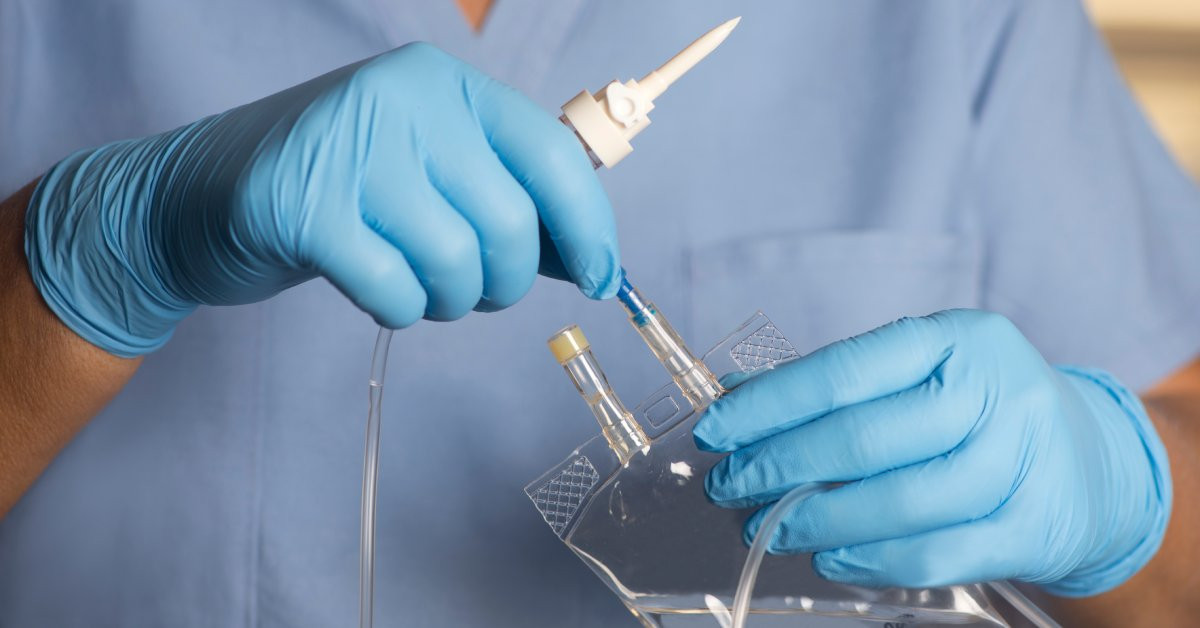 |
Illustration: *Cascadehealthcare*. |
NHS Supply Chain, the central procurement agency managing sourcing, delivery, and supply of over 620,000 products for NHS facilities, has also taken action. Tom Brailsford, Head of Response, confirmed that the agency has stockpiled additional essential goods and is collaborating with suppliers to ensure transport routes remain open.
The Middle East conflict has led to airport disruptions and flight reductions by many airlines due to fuel supply concerns. Under normal circumstances, Dubai and Doha serve as critical hubs for air freighting medicines from India, often called the "pharmacy of the world" due to its vast generic drug production, to Europe. Richard Sullivan, Professor of Global Health and Cancer at King’s College London and Director of the Institute of Cancer Policy, noted, "We are facing a dual challenge: both airspace congestion and cascading effects throughout the entire logistics supply chain."
According to experts, the supply chains for most cancer drugs are fragile, often relying on a single supplier. The process of transporting medicines, active ingredients, and medical devices involves a complex and overlapping network. Sullivan explained, "Such lengthy and complex supply chains are typically accepted solely for the purpose of optimizing costs."
Hospitals within the Gloucestershire system, for instance, use 67,653 boxes of synthetic rubber gloves annually, equivalent to over 6 million individual gloves, at a cost of nearly GBP 330,000. To combat this waste, a conservation campaign launched in 2024. However, the conflict necessitates stricter enforcement of "proper use" guidelines, prioritizing hand hygiene over excessive glove use.
Liz Breen, Professor of Healthcare Operations at the University of Bradford, emphasized that these auxiliary supplies are fundamental to maintaining healthcare services. "Ensuring sufficient catheters for post-operative patients, or having gloves and protective equipment readily available for surgeries, may seem minor, but if shortages occur, they will amplify and cause very serious problems," she stated.
Professor Sullivan indicated that the general message across the NHS system is to carefully consider the level of material usage. "If you previously used many medical gauzes, try to reduce the amount by one-half for each procedure. Absolutely do not open single-use instruments unless you are certain they will be used, because once the packaging is opened, you are forced to discard them," he advised. Experts believe significant waste still exists within the NHS, and material scarcity may compel the healthcare sector to adopt more rational approaches, such as preparing medicines only when needed instead of too early.
Prices for many common medical items have surged since the conflict began. Oong Chun Sung, an analyst at CIMB Securities (Kuala Lumpur, Malaysia), reported that the average price of a box of 1,000 synthetic rubber gloves is now 40% higher, at USD 29. He and other experts warn that if supply chains continue to be disrupted, glove shortages could emerge as early as late May. This is primarily due to the rapid increase in Naphtha prices. Naphtha, a critical crude oil derivative used to produce medical goods, saw its price per ton in Europe jump from USD 560 to over USD 900 within two months, placing immense pressure on the entire supply chain.
Polyco Healthline, a major NHS contractor in London supplying gloves and protective equipment, increased its prices by 10.3% to 26.3% starting 1/4 and warned of further increases. Similarly, Karex, a Malaysian condom manufacturer and supplier of gloves and catheters to the NHS, is adjusting prices for these items by 20% to 30%.
Manufacturers of single-use gloves in Malaysia account for nearly one-half of global production. Top Glove, the world's largest manufacturer and an NHS supplier via Polyco, announced it would pass on a 50% increase in costs to customers, mainly due to rising Nitrile rubber latex prices. According to Polyco, approximately 60% of Naphtha consumed in Asia originates from or is transported through the Middle East. Supply shortages have forced many Asian chemical manufacturers to close plants and declare force majeure across their petrochemical supply chains, exempting them from contract compensation due to unavoidable delivery failures caused by the conflict.
Olivia Steele, a principal analyst at Wood Mackenzie, noted that prices for Polyethylene and Polypropylene in Europe, materials derived from Naphtha, nearly doubled between February and April. Similarly, Polyester fiber, a key component for surgical masks, protective equipment, and bandages, increased by 28% from late February to late March. Fiber shortages are anticipated to begin in late May. Furthermore, data from Wood Mackenzie and Argus Media indicates that the price of PET plastic, used for medicine bottles and test tubes, surged by 55% in just one month. Some experts also warn of potential profiteering and price gouging amidst the scarcity.
Regarding shortages, pharmaceutical companies currently maintain an eight-week supply of drugs, while medical device manufacturers also hold buffer stock. However, a significant risk lies in many healthcare sectors relying on only a few suppliers. For example, the infusion bag market is dominated by three major corporations: Baxter (US), Fresenius Kabi, and B Braun Medical (Germany).
Scott Lehmann, a supply chain expert at consulting and software company Sphera, noted that entities typically lack incentives to stockpile items like syringes because they have traditionally been readily available. Current volatility has become an inherent characteristic of the system rather than a rare occurrence. However, he emphasized that healthcare is a unique sector, entirely different from other industries. "Medical examinations and treatments cannot halt simply due to supply shortages. We cannot delay patient needs under any circumstances. This is not a type of discretionary or postponable purchase," he asserted.
The "just-in-time" supply model adopted by the UK and many other nations could prove to be their Achilles' heel. Professor Sullivan suggests that the UK and Europe need to invest in bringing manufacturing operations closer to home. A spokesperson for the UK Department of Health and Social Care stated that the agency has prepared response scenarios, including stockpiling reserves and seeking alternative sources, to ensure patient safety. Most of the 14,000 types of drugs circulated in the UK remain sufficient for treatment needs. The government is also working closely with manufacturers to maintain the flow of medical goods in the coming period.
Binh Minh (According to The Guardian)