Many people misunderstand hepatitis types, according to the Ho Chi Minh City Center for Disease Control. Some view hepatitis A as a mild form of hepatitis B, or believe a hepatitis B vaccine protects against all hepatitis types. Additionally, some avoid contact with infected individuals, fearing transmission through handshakes, shared meals, or utensils.
The Ministry of Health clarifies that hepatitis A, B, C, D, and E are five distinct diseases, each caused by a unique virus. While all five viruses target and damage the liver, they differ in transmission, progression, severity, and prevention.
The liver performs vital functions: metabolizing nutrients, storing energy, producing clotting factors, and eliminating toxins. Viral invasion damages liver cells, impairing numerous bodily processes. Some hepatitis types resolve quickly and completely, while others silently persist for many years, escalating the risk of cirrhosis, liver failure, and liver cancer.
A primary distinction among hepatitis types lies in their transmission routes.
Hepatitis A and E primarily spread through the digestive tract via virus-contaminated food or water. These infections often result from poor hygiene or unsafe food preparation. Effective prevention includes cooking food thoroughly, boiling water, using clean water, and washing hands with soap before eating and after using the restroom.
Hepatitis A typically manifests acutely, with most patients achieving full recovery. Hepatitis E is also largely an acute illness, but it can become severe in pregnant women, individuals with pre-existing liver conditions, or those with weakened immune systems.
In contrast, hepatitis B and C mainly transmit through blood and other bodily fluids. Hepatitis B can spread from mother to child, through unprotected sexual contact, or by exposure to infected blood. Hepatitis C primarily transmits via blood, often occurring through shared needles or during medical procedures, tattooing, piercing, or beauty treatments using unsterilized equipment.
This distinction addresses a common misconception: that casual contact or sharing meals with someone who has hepatitis B or C leads to infection. In reality, these two viruses do not transmit through handshakes, hugs, coughing, sneezing, or sharing food or utensils. Therefore, infected individuals should not face stigma or isolation. Understanding the correct transmission routes is crucial for prevention and appropriate social interaction.
Hepatitis types also vary in their disease progression. While hepatitis A and E largely cause acute illness, hepatitis B and C can become chronic. A concerning aspect is that many infected individuals remain asymptomatic for years. When symptoms like jaundice, yellow eyes, persistent fatigue, or liver pain appear, the liver may have already sustained significant damage. Early detection limits the risk of cirrhosis, liver failure, and liver cancer.
Hepatitis D is another type, uniquely occurring only in those already infected with hepatitis B. The Ministry of Health states that the hepatitis D virus cannot cause illness independently without the hepatitis B virus. In cases of co-infection or superinfection, liver damage is typically more severe, and the risk of complications is higher. Thus, preventing hepatitis B also helps prevent hepatitis D.
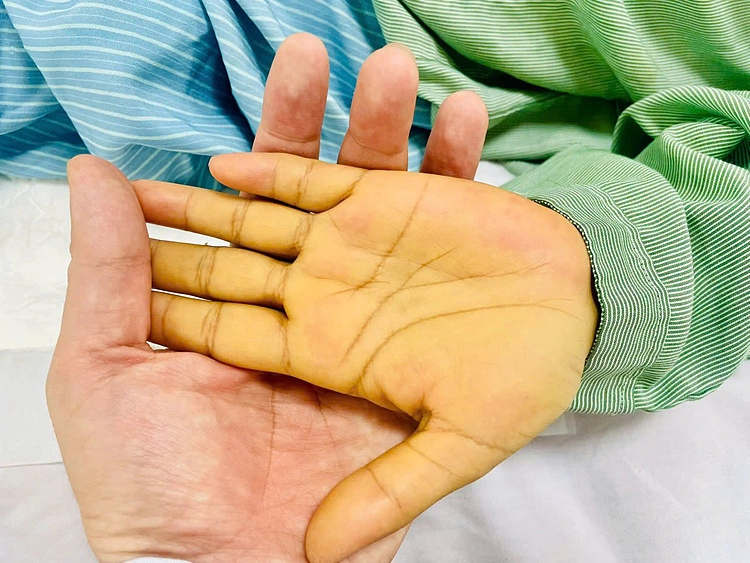 |
A patient's skin is jaundiced due to a very high hepatitis B viral load in their blood. *Photo: Hospital provided*
Not all hepatitis types have a preventive vaccine. Vaccines are currently available for hepatitis A and B. The Ministry of Health recommends that newborns receive the hepatitis B vaccine within the first 24 hours after birth to reduce mother-to-child transmission. Conversely, no vaccine currently exists for hepatitis C. For hepatitis E, maintaining personal hygiene, using clean water, and ensuring food safety remain important preventive measures.
To actively prevent viral hepatitis, the Ministry of Health advises the public to get vaccinated as recommended, cook food thoroughly, boil water, use clean water, and wash hands with soap. Individuals should avoid sharing needles or items that may contact blood, such as razors and toothbrushes. Practicing safe sex and choosing medical and beauty establishments that adhere to sterilization regulations are also vital. People with risk factors or suspected exposure should seek medical advice and testing when necessary.
Le Phuong