For individuals recovering from L4-L5 disc herniation surgery, such as Bui Tung Chi, being able to walk normally one month post-operation is a positive indicator of good recovery. However, this does not signify that the spine has fully recuperated to safely withstand the demands of sports. The exact timeline for resuming physical activity varies significantly, influenced by factors including the specific surgical method (microsurgery, endoscopic surgery, or conventional herniation removal), the extent of pre-operative disc damage, the presence of nerve compression, age, and overall physical condition.
To ensure safety and support continued healing, it is crucial to maintain physical therapy exercises as guided by your doctor or a physical therapist. Additionally, patients should avoid lifting heavy objects, limit frequent bending, strong twisting of the lower back, and prolonged sitting.
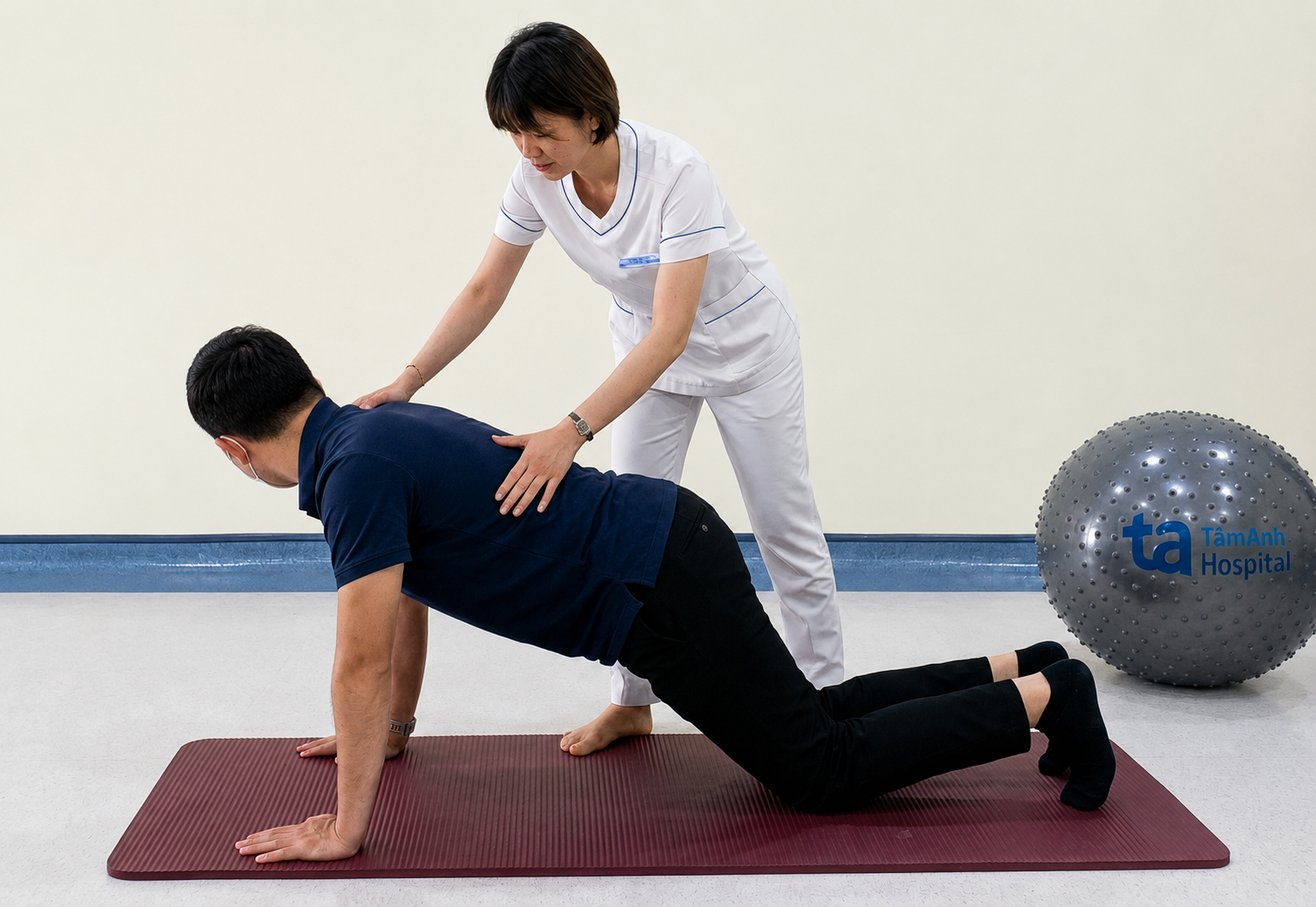 |
Medical staff guiding a patient through rehabilitation exercises to improve mobility. *Illustration: Tam Anh General Hospital* |
During the initial 4-6 weeks post-surgery, a gradual increase in walking activity, coupled with consistent physical therapy, is recommended. This regimen is designed to strengthen abdominal and back muscles, thereby enhancing spinal stability.
If recovery progresses favorably—marked by the absence of back pain, radiating leg pain, numbness, or muscle weakness—patients may begin light sports approximately 3 months after surgery. Recommended activities during this phase include: brisk walking, moderate cycling, swimming, yoga, or pilates. These activities help improve endurance, build muscle strength, maintain spinal flexibility, and avoid excessive pressure on the disc.
High-impact sports or those placing significant stress on the spine, such as long-distance running, football, tennis, golf, and heavy weightlifting, should be resumed only after at least 6-12 months, and always under medical guidance.
Discontinue exercise and consult your doctor immediately if you experience: increased back pain, radiating leg pain, numbness, leg weakness, or sensory disturbances after physical activity. Always discuss appropriate sports with your doctor, increase intensity gradually, and avoid rushing to ensure spinal safety.
Doctor Nguyen Duc Anh
Head of Neurosurgery - Spine Department
Tam Anh General Hospital Hanoi
| Readers can submit questions about neurological conditions here for a doctor's response. |