Ms. My sought treatment at Tam Anh General Hospital in Ho Chi Minh City due to shortness of breath, as well as painful and swollen knee joints. At the time, she weighed 97 kg, with a BMI of 45. She also suffered from high blood pressure, diabetes, dyslipidemia, and severe knee osteoarthritis. Although she had been advised to undergo knee replacement surgery for both knees, her advanced age made surgery unfeasible, so she relied on pain medication.
Doctor Lam Van Hoang, Head of the Department of Endocrinology and Diabetes at Tam Anh General Hospital in Ho Chi Minh City, stated that Ms. My was severely obese. The severe osteoarthritis in both her knees restricted her physical activity, making her weight gain even harder to control.
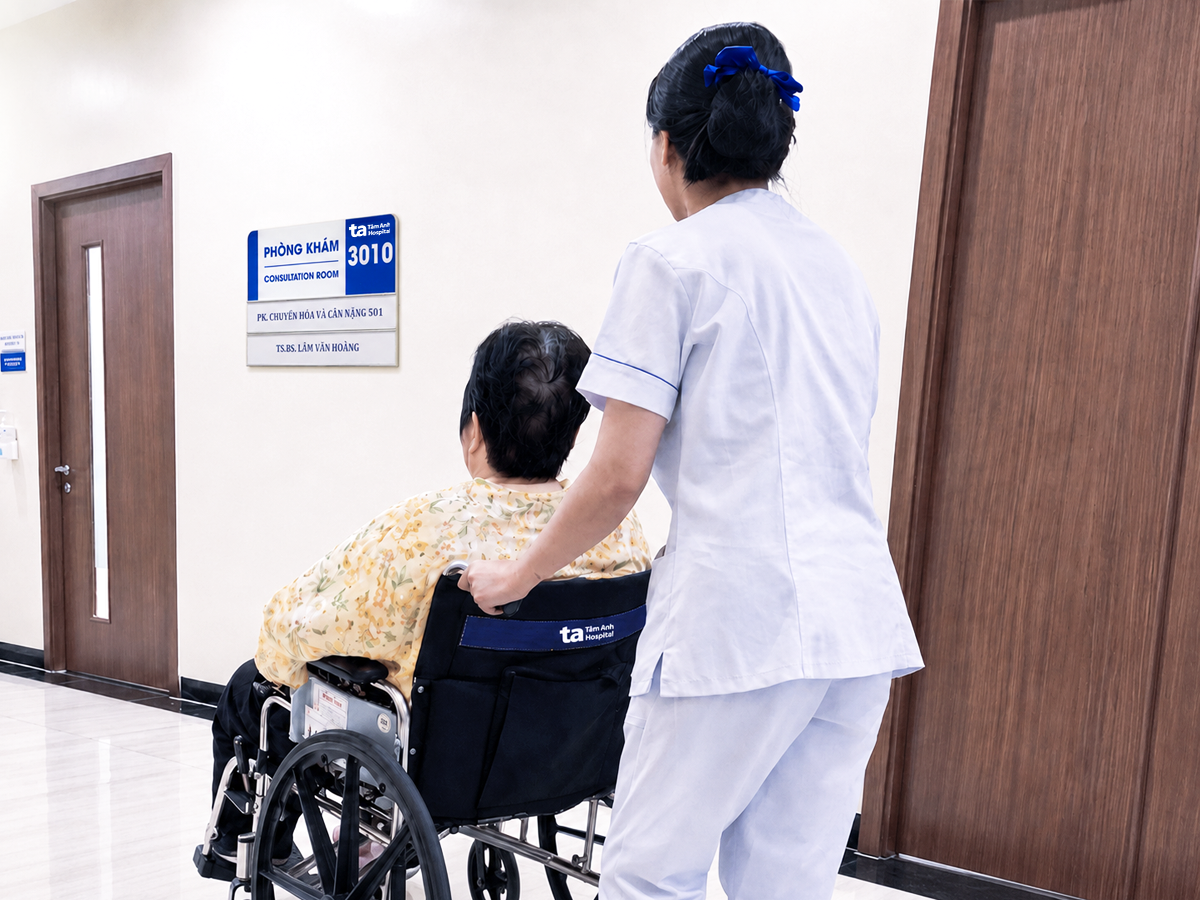 |
Ms. My in a wheelchair during her first visit. Photo: Tam Anh General Hospital
Obesity puts significant pressure on joints, causing the smooth cartilage at the ends of bones to wear down and get damaged. This leads to osteoarthritis, characterized by joint pain, stiffness, and reduced bone density. Excessive fat cells also secrete inflammatory substances, known as cytokines, which accelerate arthritis and cartilage degeneration while reducing the effectiveness of treatments.
Furthermore, excess fat accumulating around the neck, chin, and pharyngeal wall directly compresses and narrows the airway. This compression can lead to sleep apnea episodes, reducing the oxygen supply to the body.
Ms. My received multidisciplinary treatment involving endocrinology, nutrition, physical activity, and medication for weight loss. Given her age and difficulty standing and walking, a physical activity specialist designed simple, on-the-spot exercises with gentle stretching movements. As her body adapted, she began walking with the support of handrails, gradually increasing her exercise duration.
Her diet prioritized foods rich in omega-3, vitamin C, and beta-carotene to help control weight, reduce inflammation, and support cartilage health.
After three months of treatment, she lost 11 kg. Her knee swelling and pain decreased, and she no longer needed pain medication. Her osteoarthritis was controlled, and joint function gradually recovered, allowing her to walk independently without assistive devices. The next goal is to reach a weight of 70 kg.
 |
Ms. My on a follow-up visit with Doctor Hoang after losing 11 kg. Photo: Tam Anh General Hospital
Doctor Hoang emphasized that weight loss is a core measure to protect knee joints. For every one kg gained, the knee joint bears an additional 3 kg to 6 kg of force when walking. Losing at least 10% of body weight can significantly improve joint pain for osteoarthritis patients.
Individuals with musculoskeletal issues and obesity should pursue weight loss and osteoarthritis treatment concurrently, as advised by a doctor. Sudden weight loss should be avoided as it can affect calcium absorption in bones, accelerate aging, and cause the connection between fat and muscle to become loose.
Duc Hanh
*Patient's name has been changed
| Readers can submit questions about endocrine diseases here for a doctor's response |