Deep-seated melasma, also known as Hori's nevus, is a pigmentary disorder where melanin clusters reside deep within the dermis, sometimes even reaching the subdermis. This condition can affect both men and women after puberty, or women post-childbirth. Its deep location in the skin makes it less responsive to topical treatments and prone to recurrence, prolonging the treatment process and necessitating a specialized regimen combining both topical medications and laser therapy.
 |
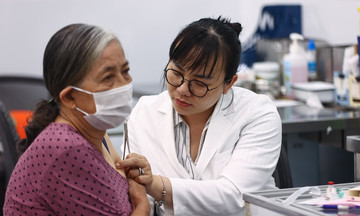
A doctor treating a woman for melasma. Illustration: Tam Anh General Hospital
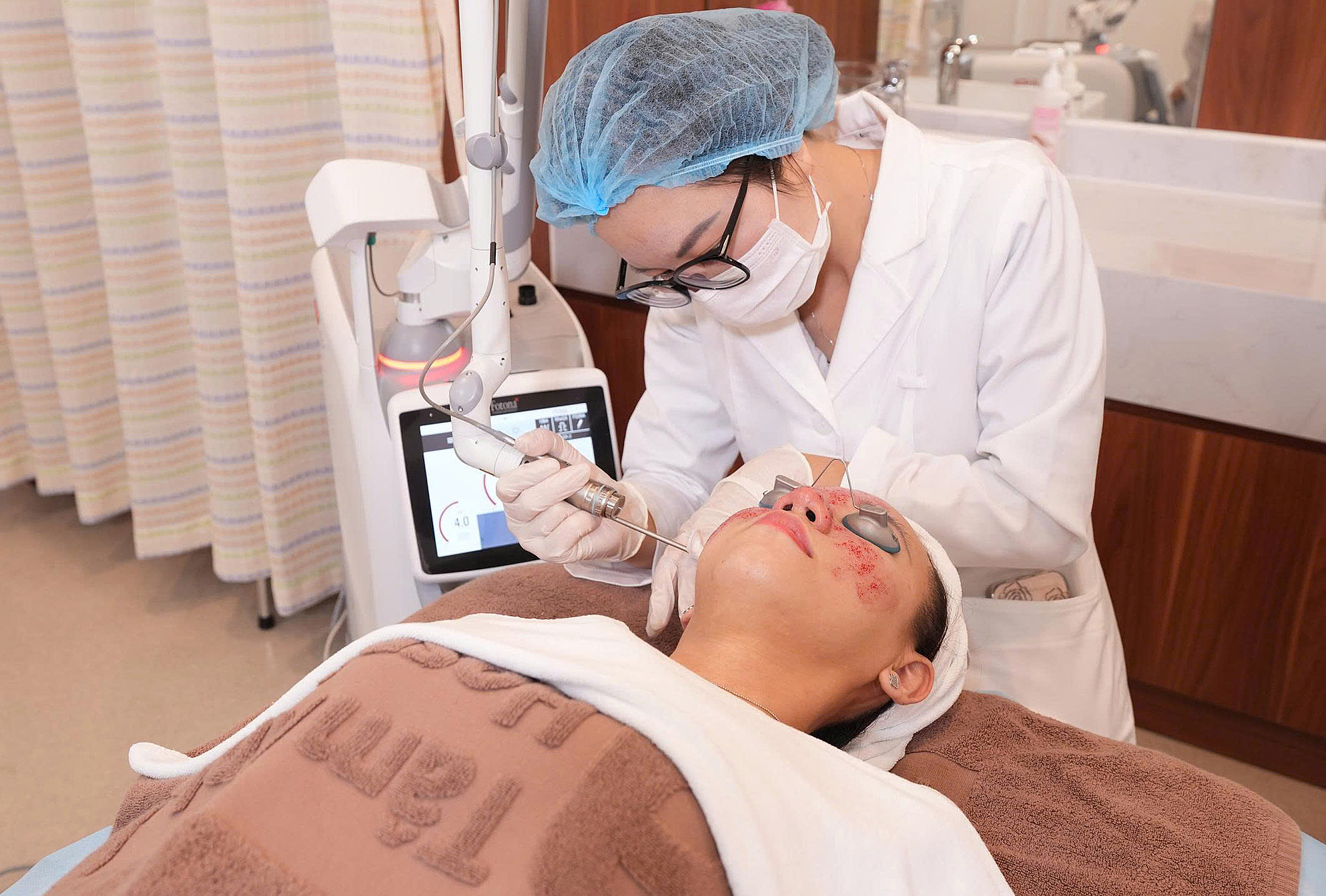
Laser therapy is an ideal option for treating deep-seated melasma due to its ability to control pigmentation at deeper skin layers. This method uses high-energy light to break down melanin particles beneath the skin, which the body then naturally eliminates through metabolic processes. Beyond treating pigmentation, this technology also stimulates skin rejuvenation, promoting a brighter, smoother complexion.
The effectiveness and duration of laser treatment largely depend on the depth of the pigmentation. Melasma may fade after approximately 3-5 treatment sessions, each spaced 3-4 weeks apart. For widespread patchy melasma, common in postpartum women, technologies like Fotona hybrid laser can lighten 70-80% of the pigmented area after about 3-5 sessions over 2-3 months, depending on the severity of the melasma and post-treatment care.
Hori's nevus, like the condition described by Thuy Dung from Hanoi, is one of the most challenging forms to treat, typically requiring 6-8 sessions or more over 4-6 months for significant reduction. This demands patience and a suitable treatment plan. Overall, the speed of improvement also depends on individual physiology, the type of melasma, the laser device used, and the post-treatment skin care and protection regimen.
Laser melasma treatment offers faster and more precise fading compared to many traditional techniques. Laser technology also aids skin regeneration, improving brightness and surface texture, with recovery periods often short when performed correctly. However, laser melasma treatment has limitations. Post-treatment skin reactions such as mild redness, stinging, or temporary hyperpigmentation can occur, particularly in individuals with darker skin tones or those who do not follow proper aftercare and sun protection. Some cases of deep-seated or mixed melasma also carry a risk of recurrence, even after multiple sessions. Therefore, long-term effectiveness relies on an appropriate treatment plan, the doctor's skill, and consistent sun protection and proper post-treatment skin care.
After laser melasma treatment, maximum skin protection is essential to reduce the risk of hyperpigmentation and optimize results. In the initial days, keep the treated area clean, dry, and avoid friction. Use soothing products as directed to reduce redness and stinging. Apply a broad-spectrum sunscreen with SPF ≥ 50, reapplying every 2-3 hours when outdoors, and combine this with physical barriers like hats and masks.
You should temporarily stop using irritating products such as retinoids, AHAs/BHAs, or exfoliants until your skin fully recovers. Ensure adequate moisturization, and avoid picking scabs or touching peeling skin. Attending follow-up appointments and adhering to your doctor's prescribed regimen will help control pigmentation more effectively and limit the risk of recurrence.
Dr. Be Thu Thuy, First Degree Specialist in Aesthetic Medicine
Department of Aesthetics
Tam Anh General Hospital Hanoi
Readers can submit questions about dermatological conditions here for a doctor's consultation.