This danger was recently highlighted after a gas asphyxiation accident at a pig farm in Thanh Hoa on the evening of 18/7, resulting in five deaths. Medical and chemical experts identified hydrogen sulfide (H2S), a gas characteristic of organic waste decomposition, as the primary culprit.
The moniker "rotten egg" originates from the distinct odor of H2S gas, arising from the decomposition of sulfur-containing proteins.
Naturally, egg yolks contain a large amount of sulfur-containing amino acids. When eggs spoil, bacteria break down these organic compounds, releasing H2S gas. Because the human nose is highly sensitive to this gas, even at extremely low concentrations (around 0,01 ppm), we immediately recognize that pungent, unpleasant smell.
A similar mechanism occurs in biogas cellars, sewers, and septic tanks. Here, organic waste and animal manure are broken down by bacteria in an oxygen-deficient (anaerobic) environment, producing large amounts of H2S. Therefore, this "deadly" odor serves as the most intuitive warning sign of the toxin's presence, despite the gas itself being colorless.
Doctor Khuat Quang Son, a lecturer at the University of Fire Prevention and Fighting, evaluates H2S as a colorless, flammable, and explosive toxin with toxicity far exceeding carbon monoxide (CO). Upon entering the body, this gas causes local conjunctivitis, then directly attacks the central nervous system, paralyzing the respiratory center. A characteristic sign at the scene is that metal objects like copper and silver on victims' bodies often tarnish or turn black due to chemical reactions.
The most dangerous characteristic of H2S is its tendency to accumulate in low-lying, deep, and enclosed areas due to its heavier-than-air weight. Doctor Nguyen Huy Hoang, from the Vietnam Underwater Sports and Hyperbaric Oxygen Association, explains that while someone standing at the entrance of a cellar might breathe normally, a person descending deeper will immediately encounter a concentrated layer of toxic gas.
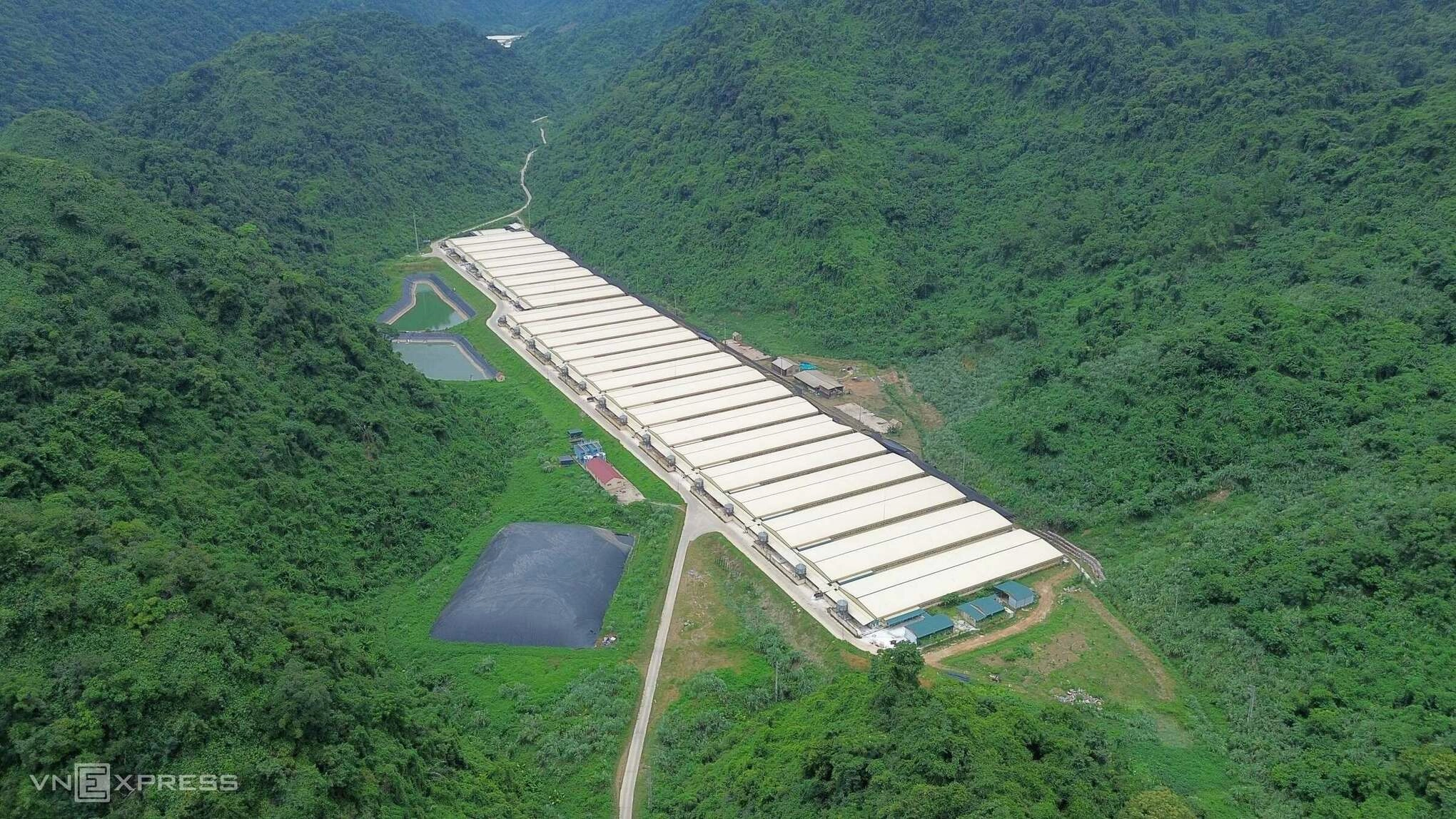 |
The Dabaco Company's pig farm, located in a mountain valley in Thach Quang commune, where the accident occurred. Photo: Le Hoang |
The Dabaco Company's pig farm, located in a mountain valley in Thach Quang commune, where the accident occurred. Photo: Le Hoang
H2S also creates an extremely dangerous "illusion of safety". At low concentrations of 0,01 ppm, people easily detect the pungent rotten egg smell. However, when concentrations reach 100 ppm, the gas paralyzes the olfactory nerves. Victims suddenly stop smelling the unpleasant odor, mistakenly believing the danger has passed, and continue deeper into the toxic area.
According to international safety standards, H2S concentrations from 400 to 700 ppm can be fatal within 30 minutes. If concentrations exceed 800 ppm, victims lose consciousness and die after only a few breaths. This sensation is likened to being struck hard on the head with a sledgehammer, causing victims to collapse on the spot without any time to react or escape. Furthermore, the presence of other toxic gases like ammonia and phosphine, along with oxygen deficiency in confined spaces, further accelerates the death process.
To prevent such tragedies, experts advise against instinctively attempting rescues without specialized protective equipment. Upon discovering an incident, the first step is to ventilate the area, using high-power fans to expel the toxic gas and introduce fresh air.
Anyone entering a cellar must be equipped with a gas mask combined with an oxygen tank and securely tethered to a support team above.
Livestock farms need to proactively conduct occupational safety training, provide complete protective gear, and establish strict inspection procedures for all activities in confined spaces to protect workers' lives.
Thuy An