Eng English
China 中国人

Eng English
China 中国人
  • News
  • World
  • Business
  • Entertainment
  • Sports
  • Law
  • Education
  • Health
  • Lifestyle
  • Travel
  • Science
  • Digital
  • Automobiles
  • Trở lại Thể thao
  • Health
Sunday, 11/10/2026 | 11:13 GMT+7

How to collect postnatal stem cells to prevent infection?

When collecting stem cells from cord blood and tissue after birth, samples are exposed to the environment and medical staff. Is there a risk of infection? (Hai Anh, Dong Nai)

Answer:

Collecting biological samples or manipulating them inherently carries a risk of microbial contamination. Microorganisms are ubiquitous: in the air, on equipment surfaces, instruments, technicians, and patients.

To reduce the risk of infection, strict environmental control and thorough training of medical staff in aseptic techniques are essential. For liquid samples like cord blood, if microbial contamination occurs, the sample must be discarded. For solid samples such as tissues, they undergo a cell culture and isolation process. Cells harvested from these tissues are tested for sterility before cryopreservation; contaminated samples are also discarded.

Immediately after birth, cord blood or umbilical cord tissue samples are collected using sterile, single-use instruments, following strict infection control protocols. The samples are then placed in a specialized, sealed identification system and transported to the laboratory under controlled conditions.

At the lab, samples are received and inspected for packaging integrity, identification information, and transport conditions before processing.

After collection, stem cell samples are transported quickly to the lab and processed within a maximum of 24 h. This is a crucial factor, as a shorter time from collection to processing results in a higher cell viability rate. While some stem cell banks globally allow this period to extend to 48 h, the priority is to process samples as early as possible to optimize their quality.

For hematopoietic stem cells from cord blood, samples are processed using an automated system, supplemented with cryoprotectant solution, then transferred to a standardized programmed cooling system. The cooling protocol is specifically researched for each cell type to ensure optimal viability after thawing.

Mesenchymal stem cells from umbilical cord tissue, after collection, are cultured using a tissue fragment culture method, then harvested and stored similarly. Crucially, cells are stored at an early passage (typically P1) to ensure optimal quality.

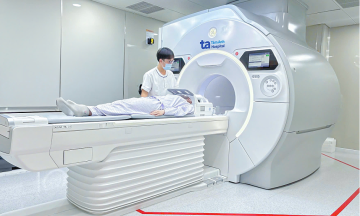
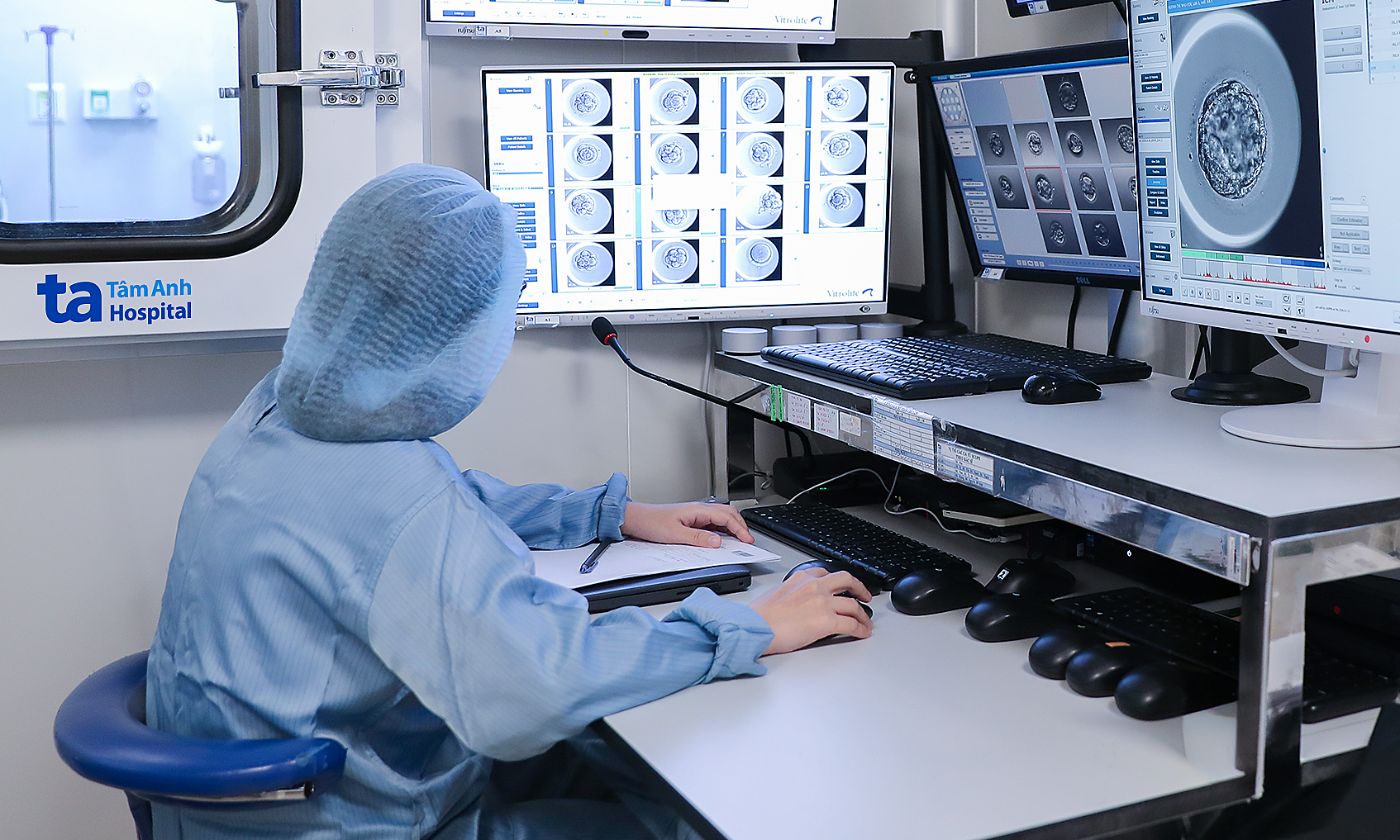
Medical staff check the quality of the stem cell population at the Stem Cell Center. Illustration: Tam Anh General Hospital

At Tam Anh Hospital, all supplies and reagents used during processing comply with U.S. Food and Drug Administration (FDA) guidelines to ensure cells are suitable for clinical use. Before storage, samples undergo quality control checks based on criteria such as cell count, cell identification, viability, and sterility.

For cultured cells, the quality assurance process also includes mycoplasma testing and karyotype analysis. Sterility testing is performed according to European Pharmacopoeia standards, with a culture period of up to 14 days (longer than the usual three to 5 days) to detect even slow-growing or very low-density microorganisms.

Doctor Tham Thi Thu Nga

Head of Lab - Stem Cell Center

Tam Anh General Hospital System

Readers can submit questions about obstetrics and gynecology here for doctors to answer
By VnExpress: https://vnexpress.net/thu-thap-te-bao-goc-sau-sinh-the-nao-de-tranh-nhiem-khuan-5130743.html
Tags: infection stem cells

News in the same category

Is dementia curable?

Is dementia curable?

My 58-year-old father is showing signs of Alzheimer's, experiencing frequent forgetfulness. Is dementia curable? (Hoang Long, Ca Mau)

Benefits of Japanese soybeans for cancer

Benefits of Japanese soybeans for cancer

Japanese soybeans provide protein, fiber, and isoflavones, which can support metabolic health, boost immunity, and contribute to reducing cancer risk.

Factors increasing the risk of preterm birth

Factors increasing the risk of preterm birth

Multiple pregnancies, a short cervix, infections, and pregnancy complications can increase the risk of preterm birth.

4 foods that can cause poisoning if left out too long

4 foods that can cause poisoning if left out too long

Cooked rice, baked potatoes, and pre-cut fruits and vegetables can become contaminated with bacteria that cause food poisoning if stored at room temperature for more than two hours.

Chinese pharmacist suggests five tips to stabilize blood sugar without fasting

Chinese pharmacist suggests five tips to stabilize blood sugar without fasting

Pharmacist Ho Dinh Nhac shares five scientific eating habits that help diabetic patients effectively control blood sugar without the hardship of fasting.

Hand-foot-and-mouth case in class: is immediate vaccination enough to protect my child?

Hand-foot-and-mouth case in class: is immediate vaccination enough to protect my child?

My child's preschool class recently had a child diagnosed with hand-foot-and-mouth disease. I want to get my child vaccinated immediately, but I wonder if it will be effective in preventing the illness. (Ha An, 35, Ho Chi Minh City)

Is repeated knee joint aspiration harmful?

Is repeated knee joint aspiration harmful?

I have knee effusion and have undergone aspiration several times, but my knee swells again, requiring further aspiration. Is repeated aspiration harmful to the joint? (Tuan Phan, Hanoi)

How ai-integrated embryo culture differs from traditional methods

How ai-integrated embryo culture differs from traditional methods

I am preparing for in vitro fertilization. What are the benefits of ai-integrated embryo culture compared to traditional embryo culture? (Ha, TP HCM)

5 benefits of eating sweet potatoes three times a week

5 benefits of eating sweet potatoes three times a week

Sweet potatoes are rich in fiber and antioxidant compounds, contributing to cell protection, digestive support, and blood sugar regulation.

Is pneumonia contagious in children?

Is pneumonia contagious in children?

My 3-year-old son recently had classmates return to school after recovering from pneumonia. Is this illness contagious, and how long should children avoid contact to reduce transmission risk? (Hong Nhung, Hanoi)

Eng English
China 中国人
  • News
  • World
  • Business
  • Entertainment
  • Sports
  • Law
  • Education
  • Health
  • Lifestyle
  • Travel
  • Science
  • Digital
  • Automobiles
FPT Tower, 10 Pham Van Bach Street, Dich Vong Ward,
Cau Giay District, Hanoi, Vietnam
Email: contacts@vnportal.net
Tel: 028 7300 9999 - Ext 8556
Advertise with us: 090 293 9644
Register
© Copyright 2026 vnnow.net. All rights reserved.
Terms of use Privacy policy Cookies