Answer:
Melasma and dark spots are common dermatological issues, especially in women after 30 or those frequently exposed to sunlight. Combining modern methods like intense pulsed light (IPL) technology and hyaluronic acid (HA) injections in a single treatment course is a common and effective approach for treating skin hyperpigmentation today. These two methods, despite having different mechanisms of action, effectively complement each other.
IPL targets melanin pigment particles in the skin, a location difficult for topical products to reach. The light energy breaks down pigment particles into smaller fragments, which the body gradually eliminates through natural processes. This fades melasma and dark spots, leading to a more even skin tone. IPL's advantages include being non-invasive, causing minimal surface skin damage, and typically not resulting in peeling like chemical peels. Patients can resume normal activities after treatment. However, post-treatment skin requires recovery and reinforcement of its protective barrier for optimal results.
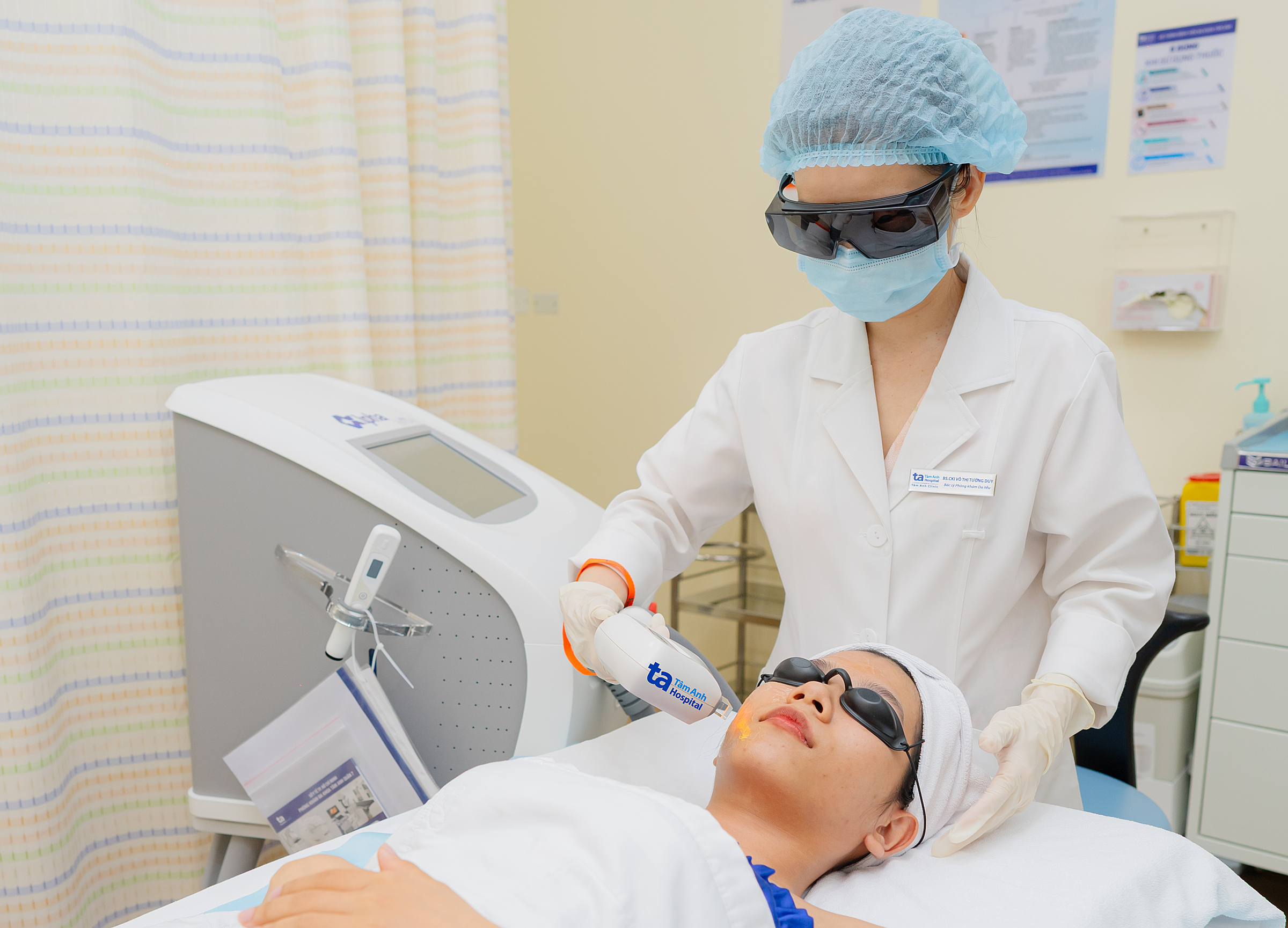 |
A doctor uses IPL to treat melasma and dark spots for a young woman. Illustration: Tam Anh General Clinic District 7.
HA injections do not directly fade pigmentation but play a crucial supportive role in skin recovery. HA maintains the skin's natural moisture and elasticity. When adequately hydrated, the skin is better able to regenerate collagen, repair damage, and enhance the absorption of skin-brightening active ingredients or other nutrients. Additionally, HA soothes the skin after intensive treatments, reducing dryness, peeling, or irritation, and promoting a plumper appearance. Maintaining good hydration also helps limit the risk of post-inflammatory hyperpigmentation (PIH).
In many cases, doctors may prescribe combining IPL and HA in the same treatment course to enhance pigment improvement and minimize unwanted side effects. HA can be used as a nourishing serum after IPL treatment. Treatment effectiveness also depends on various factors: melasma type, pigmentation level, individual skin characteristics, and post-treatment care regimen. Therefore, you should visit a hospital with a Dermatology - Aesthetic Dermatology department for examination and to develop a suitable treatment plan.
You should protect your skin with sunscreen, cover up carefully when outdoors, and maintain a proper skincare routine to prevent melasma recurrence and ensure long-lasting healthy, radiant skin.
Doctor Vo Thi Tuong Duy
Dermatology - Aesthetic Dermatology Unit
Tam Anh General Clinic District 7
| Readers can submit questions about dermatological and aesthetic skin conditions here for doctors to answer. |