A herniated disc occurs when an intervertebral disc shifts or slips, causing the inner gel-like nucleus to protrude from its normal position between the vertebrae. This often leads to pain and limited movement.
Push-ups develop the chest, shoulder, arm, and abdominal muscles, reducing spinal load. This exercise also activates core muscles—the body's central muscle group surrounding the pelvis, hips, and abdomen—helping stabilize the spine and limit adverse effects on the discs. For safety, begin push-ups with modified variations under the guidance of a physical therapist.
Knee push-ups are suitable for beginners or individuals with a herniated disc. Instead of lifting the entire body on the toes as in standard push-ups, the practitioner keeps both knees on the floor, reducing load on the spine and lower back. This movement still activates the core, chest, and arm muscles while gradually building spinal stability.
For wall push-ups, stand an arm's length from a wall, place both hands shoulder-width apart, and perform the bending and straightening arm motion, moving your body closer to and away from the wall. This exercise reduces pressure on the wrists, shoulders, and lower back, making it ideal for those with back pain who need to limit movement.
To do incline push-ups, place both hands on a chair or exercise box, creating an incline for your body. This reduces pressure on the spine and shoulders while strengthening the chest and abdominal muscles.
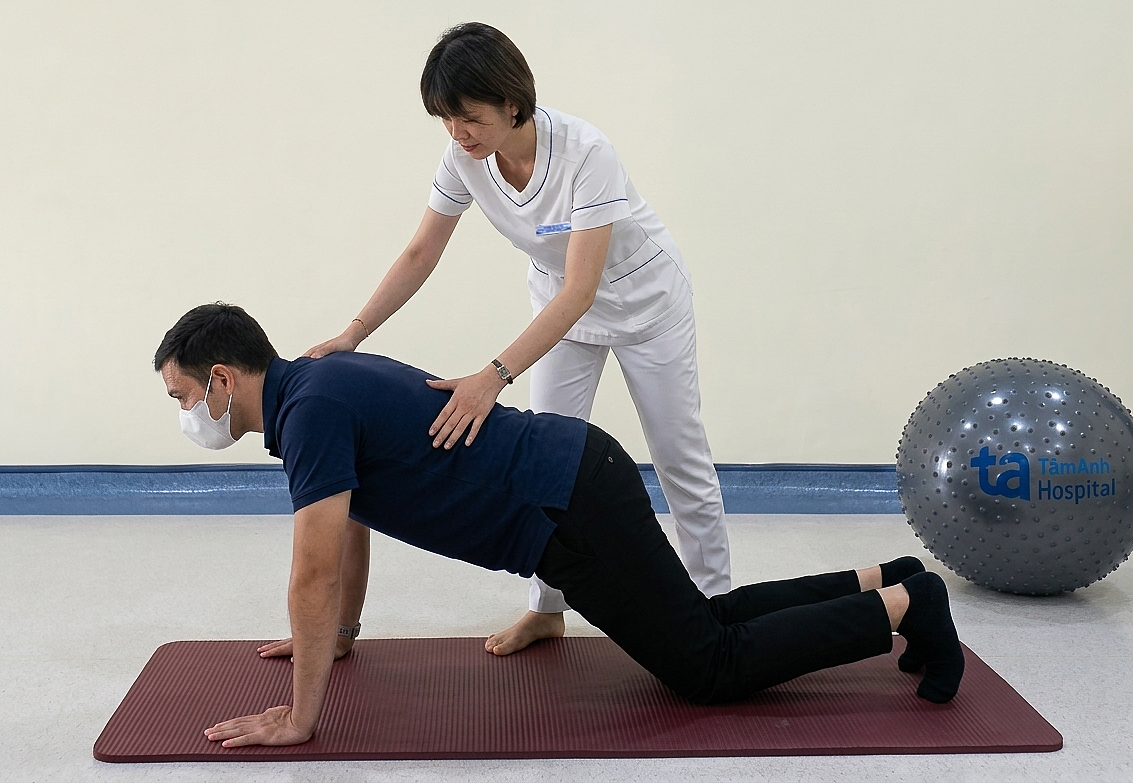 |
A physical therapist guides a patient in performing knee push-ups. Photo: Tam Anh Cau Giay General Clinic |
Correct push-up technique can improve blood circulation, reduce muscle fatigue, and support motor function in individuals with herniated discs. Incorrect form, such as a non-straight or arched back, places excessive force on the spine, worsening the herniation.
You should visit a specialized physical therapy and rehabilitation facility, either at a hospital or a multidisciplinary clinic equipped with diagnostic imaging, musculoskeletal clinics, and orthopedic trauma services, for a thorough evaluation and exercise guidance. Mild herniated discs can improve with a specialized physical therapy and rehabilitation regimen, which helps reduce reliance on medication and the risk of future surgical intervention.
Master Tran Van Dan
Chief Technician, Department of Physical Therapy and Rehabilitation
Tam Anh Cau Giay General Clinic