Sleep-disordered breathing is a growing global health burden, with experts warning of a significant increase in patient numbers in the coming decades. This information was highlighted by Doctor Phan Thi Hanh, Deputy Head of the General Internal Medicine Department at Phenikaa University Hospital, during a scientific seminar on OSA treatment held on 21/3 in Hanoi. During the event, the Vietnam Sleep Medicine Society, along with regional federations, awarded the hospital a certification for its standard-compliant polysomnography lab.
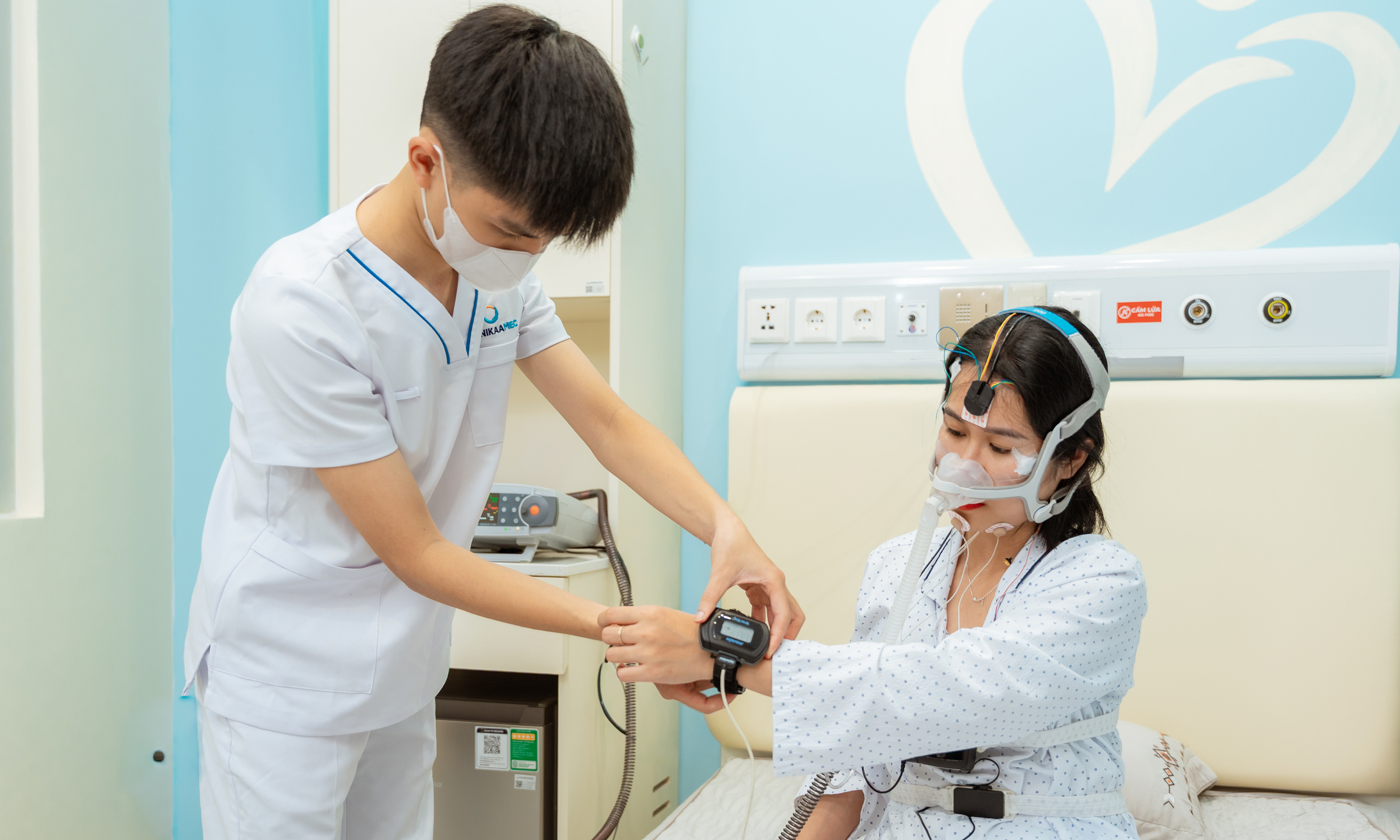 |
Nurses perform polysomnography for patients. *Photo: Hospital provided* |
Repeated nocturnal oxygen deprivation severely damages organ systems. The condition directly increases the risk of coronary artery disease, high blood pressure, arrhythmias, heart failure, and stroke. Individuals with this syndrome are also prone to developing type 2 diabetes due to insulin resistance. From a neurological perspective, patients often experience memory impairment, loss of concentration, depression, and are more likely to cause traffic accidents due to prolonged daytime sleepiness.
The Ministry of Health reports that about 8,5% of Vietnamese adults suffer from this condition, primarily among men and individuals who are overweight or obese. Globally, about one billion people have the condition at a mild level, and over 400 million at a moderate to severe level. However, the medical community faces a significant challenge as the public often disregards warning signs like loud snoring and waking up gasping for air. A study in the United States indicates that healthcare facilities miss up to 80% of patients because most symptoms only appear during sleep.
To address this, hospitals employ polysomnography as a gold standard technique to comprehensively record patients' physiological parameters. The collected data helps doctors accurately assess the extent of damage and establish intervention strategies. Associate Professor, Doctor Nguyen Thanh Hoi, General Director of Phenikaa University Hospital, stated that the current medical trend has shifted from uniform protocols to personalized treatment. Depending on each individual's physiological characteristics, doctors will prescribe positive airway pressure devices, dental appliances, lifestyle changes, or surgery to achieve the highest recovery effectiveness.
Le Nga