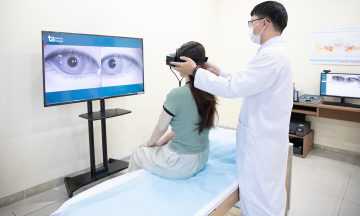
"Eye floaters", or the sensation of black spots in front of your eyes, can appear as small dots, threads, circles, or cobwebs that drift with your gaze, becoming more noticeable against bright backgrounds. This phenomenon often relates to changes in the vitreous humor, a gel-like substance inside the eyeball. While floaters may become less noticeable over time, some cases require examination and treatment to protect vision. Individuals experiencing floaters can adjust certain habits to reduce discomfort.
Adjusting light to make black spots less noticeable
Floaters are often more distinct when looking at bright backgrounds, such as a clear sky, a white wall, or a screen with a light background. Individuals experiencing this can reduce screen glare, adjust room lighting, and use UV-protective sunglasses when outdoors. When reading or working, maintain adequate lighting, avoiding overly dark spaces that can strain the eyes.
Some people find temporary relief by changing their gaze direction to move floaters out of their direct field of vision. However, this method only offers temporary obstruction and does not dissolve opacities in the vitreous. If black spots frequently interfere with reading, driving, or daily tasks, it is advisable to seek a specialist eye examination rather than just attempting to adjust lighting.
 |
Reducing screen glare and adjusting room lighting can help alleviate discomfort caused by eye floaters. Illustration: AI
Adequate rest and a balanced diet
Taking regular breaks when using computers or phones for extended periods can help reduce eye strain, especially if accompanied by dryness or discomfort. Individuals can consciously blink, look into the distance during breaks, and get enough sleep. However, there is no conclusive evidence that eye rest or reduced screen time can make vitreous floaters disappear.
A balanced diet also contributes to overall eye health. Carrots, sweet potatoes, and dark leafy greens provide beta-carotene or other essential nutrients for the body. Beta-carotene can be converted into vitamin A, which plays a role in vision. Adults can incorporate a variety of foods such as vegetables, fruits, eggs, fish, and nuts into their daily diet.
However, it is important not to assume that eating many carrots, sweet potatoes, or self-prescribing vitamins will dissolve black spots in front of your eyes. If floaters are seen frequently, individuals should determine the cause through a comprehensive eye examination instead of relying solely on dietary changes.
Individuals should seek immediate eye examination if black spots appear suddenly or increase rapidly in number, accompanied by light flashes, blurred vision, or a curtain-like shadow obscuring part of the vision. These could be signs of a retinal tear or detachment, which requires early intervention to prevent vision loss.
Bao Bao (Compiled)
| Readers can submit questions about ophthalmological conditions here for a doctor's response. |